
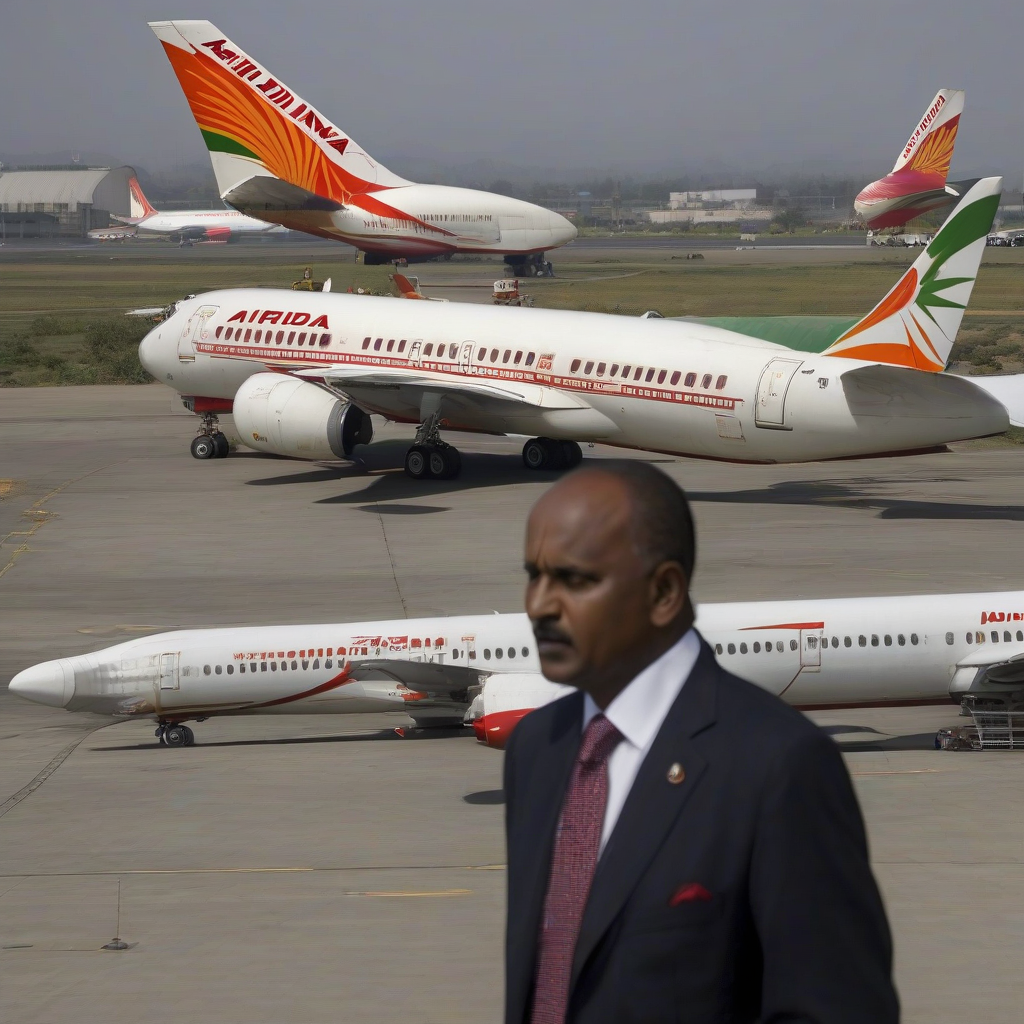

On August 5, 2026, the Board of Directors of Air India officially announced the appointment of Tewolde Gebremariam as the airline’s new Chief Executive Officer and Managing Director. According to Aviation Source News, Gebremariam is set to succeed Campbell Wilson, marking a transition point for the carrier as it shifts focus from initial stabilization efforts toward large-scale international expansion.
The selection process involved a special committee established by the Board, which vetted both internal and external candidates globally. The committee prioritized leaders with a demonstrated history of managing large-scale airline turnarounds and operational scaling. Gebremariam was chosen unanimously for his experience in driving profitability and operational efficiency.
Leadership Transition and Industry Background
Gebremariam previously served as the CEO of Ethiopian Airlines Group for more than a decade. His tenure there is often cited for significant growth metrics, including a revenue increase of more than four times and a nearly threefold expansion of the airline's fleet. His work included the development of comprehensive maintenance, repair, and overhaul (MRO) facilities, as well as substantial investments in aviation training and workforce development.
| Metric | Impact Under Gebremariam's Leadership |
|---|---|
| Tenure | More than 10 years |
| Revenue Growth | More than 4 times |
| Fleet Expansion | Nearly 3 times the original size |
N. Chandrasekaran, Chairman of Tata Sons and Air India, noted that the airline has concluded the primary phase of fleet commitments and integration under Campbell Wilson. The incoming CEO is expected to manage the execution phase of the carrier's growth strategy, focusing on long-haul network development and strict adherence to safety and engineering standards.
Why It Matters
The appointment of a CEO with a proven track record in the African aviation market signals a strategic pivot for Air India. By prioritizing a candidate who successfully scaled a regional carrier into a profitable global network, Tata Sons is signaling that Air India is moving beyond internal restructuring into a phase of aggressive market competition. This move highlights an increasing trend among legacy carriers to prioritize operational depth and hub-and-spoke efficiency over mere capacity expansion, which is essential for sustaining long-term financial health in a post-stabilization environment.
Reader Discussion & Insights