
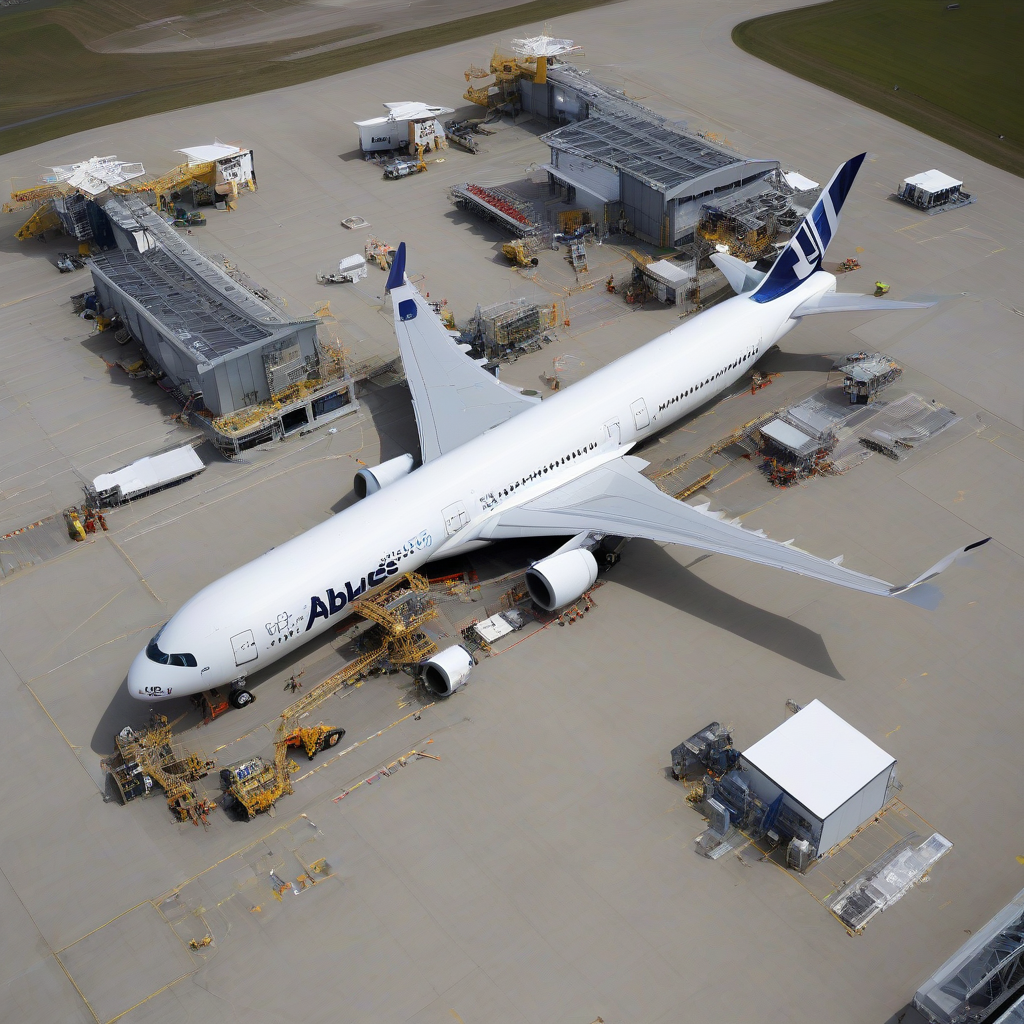

Airbus has officially confirmed the completion of ground vibration testing (GVT) for its new A350F freighter program, according to AeroTime. The manufacturer disclosed on August 3, 2026, that the evaluation occurred over a three-day period in June 2026 at its headquarters in Toulouse, France. This assessment marks a fundamental step in the aircraft’s path toward its inaugural flight, which is now scheduled to take place before the conclusion of 2026.
The GVT process involved applying external force to the airframe while simultaneously triggering the aircraft’s control surfaces to monitor mechanical responses. Airbus utilized an integrated data approach, synthesizing figures from the standard Flight Test Instrumentation (FTI) with data captured by supplementary autonomous sensors installed specifically for the program. Engineers are now utilizing these findings to validate structural integrity models and refine dynamic load computations.
Prior to the vibration assessments, Airbus focused on the A350F’s cargo handling components, specifically the Main-Deck Cargo Door (MDCD) and the Cargo Loading System (CLS). These demonstrations were performed at company facilities located in Bremen, Germany. The A350F is based on the A350-1000 platform, with which it maintains approximately 90% part commonality.
A350F Program Specifications
| Specification | Detail |
|---|---|
| Program Launch | 2021 |
| Payload Capacity | Up to 111 tons |
| Main-Deck Positions | 30 pallet positions |
| Expected First Flight | By end of 2026 |
| Entry into Service | 2027 |
Despite the original projections for a 2026 entry into service, the schedule has been adjusted, with the fleet now expected to begin commercial operations in 2027. The A350F serves as the dedicated freighter iteration of the A350-1000 and features the largest main deck cargo door currently available in its class.
Why It Matters
The completion of these vibration tests represents more than just a regulatory hurdle; it signifies the technical transition from simulation to physical validation of a widebody freighter designed to compete directly with legacy cargo platforms. By leveraging 90% commonality with the A350-1000, Airbus is signaling a strategy focused on lowering operator training costs and streamlining maintenance logistics for global carriers. As the air cargo market faces pressure to modernize, the A350F’s specific design for high-density, long-range freight could influence long-term fleet acquisition strategies for major international logistics firms.
Reader Discussion & Insights