
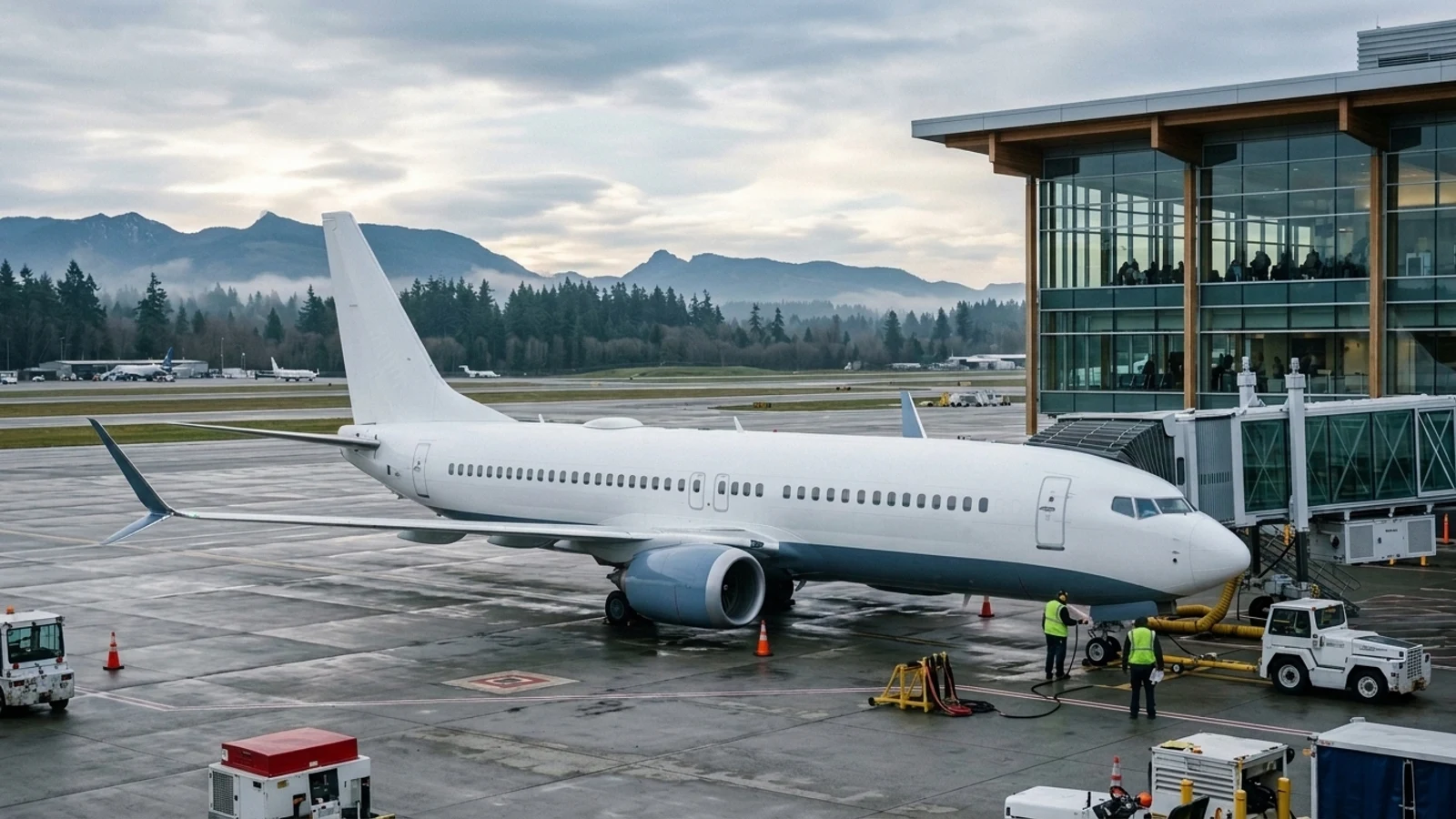
Fleet Modernization and Regional Operations
Alaska Airlines has begun a significant fleet modernization program, set to retire all its remaining passenger Boeing 737-700 aircraft by the end of 2027. These 25 to 26-year-old jets have historically operated the specialized 'Milk Run' routes connecting remote coastal towns between Seattle and Anchorage. To maintain these vital regional connections, the carrier is transitioning these routes to its fleet of nearly 60 Boeing 737-800 aircraft. This shift involves reallocating existing planes to accommodate the specific operational requirements of Southeast Alaska's shorter coastal runways. Source
The replacement strategy utilizes the 161-seat 737-800, which offers roughly 20 feet more length and 37 additional seats compared to the 124-seat 737-700. Simple Flying Aviation Discovery reports that this capacity increase provides approximately 50% more cargo hold space, supporting the transport of high-value goods and fresh seafood. While 737 MAX 10s are entering the fleet to handle busier cross-country domestic routes, their larger size makes them less efficient for the rapid, short-hop nature of the historic Milk Run air corridor. Source
Operational stability for this transition relies on the delivery of 27 new Boeing 737 MAX 10 aircraft scheduled for next year. Alaska Air Group maintains a firm orderbook of 168 737 MAX aircraft, primarily for the MAX 10 variant. Delays in this delivery pipeline would force the airline to recalculate its fleet strategy, as existing 737-800 frames are also needed to replace the Boeing 717 fleet in Hawaii by 2028, creating a competitive demand for narrowbody assets across the airline's expanded network. Source
In addition to passenger fleet changes, Alaska is expanding its dedicated cargo capabilities. Three 737-700BDSF freighters will continue service through 2028, supplemented by four leased 737-800BCF aircraft that will enter service during the first half of next year. These additions align with a strategic initiative targeting $150 million in new annual profit from cargo growth, ensuring that remote communities retain reliable access to essential supplies and freight delivery services during the modernization transition period. Source
Security Procedures and Operational Impact
Beyond fleet changes, the airline has faced operational challenges regarding law enforcement interactions. On November 21, 2026, during the boarding of Flight AS1306 to Los Angeles at Seattle-Tacoma International Airport (SEA), federal agents from US Immigration and Customs Enforcement (ICE) boarded the jet bridge at Gate N9 to conduct an arrest. The event caused significant distress among passengers and crew members, with reports indicating some staff requested to be replaced, resulting in a three-hour departure delay. Source
Simple Flying reports that the incident involved the arrest of two Mexican nationals, Ricardo Larrondo Mendoza and Sofia Hernandez Mejia, who were accused of overstaying visas. The operation was conducted without advance notification to Alaska Airlines, according to company statements. The Port of Seattle, which operates the facility, stated it was outraged by the enforcement action and has launched an investigation to determine if federal agents breached established protocols regarding access to restricted boarding areas. Source
Following the arrests, demonstrations occurred at Alaska Airlines headquarters as workers and union members demanded clearer protocols for law enforcement activity at airports. Participants called for a requirement that warrants be presented for agents to access jet bridges and requested the airline publicly advocate for restricted ICE presence in passenger boarding areas. Alaska Airlines confirmed it is currently engaging with government authorities to minimize the impact of such enforcement activities on travelers and employees. Source
The airline emphasizes its legal requirement to comply with federal regulations while maintaining its stated commitment to the safety and well-being of guests. Representatives from the carrier noted that established procedures are designed to guide staff interactions with federal agencies. However, the intensity of the November 21 event has prompted broader discussions within the industry, including input from organizations like Airlines for America regarding the necessity of consistent procedures for law enforcement operations. Source
Current and planned aircraft capabilities vary significantly across the fleet. The transitioning 737-800 frames will provide standardized amenities, while future MAX 10 cabins, beginning in 2028, will include premium products like lie-flat suites. Passengers can expect these infrastructure improvements to arrive alongside the carrier's broader effort to modernize its narrowbody operations. The following table summarizes key comparative figures for the affected aircraft types mentioned in the fleet replacement strategy. Source
| Aircraft Model | Passenger Capacity | Role / Key Route | Status | Source
| :--- | :--- | :--- | :--- | Source
| Boeing 737-700 | 124 seats | SE Alaska Milk Run | Retiring by late 2027 | Source
| Boeing 737-800 | 161 seats | SE Alaska / Hawaii | Replacing 737-700 / 717 | Source
| Boeing 737 MAX 10 | Up to 230 seats | Busy Domestic Routes | Delivering 2027-2028 | Source

