
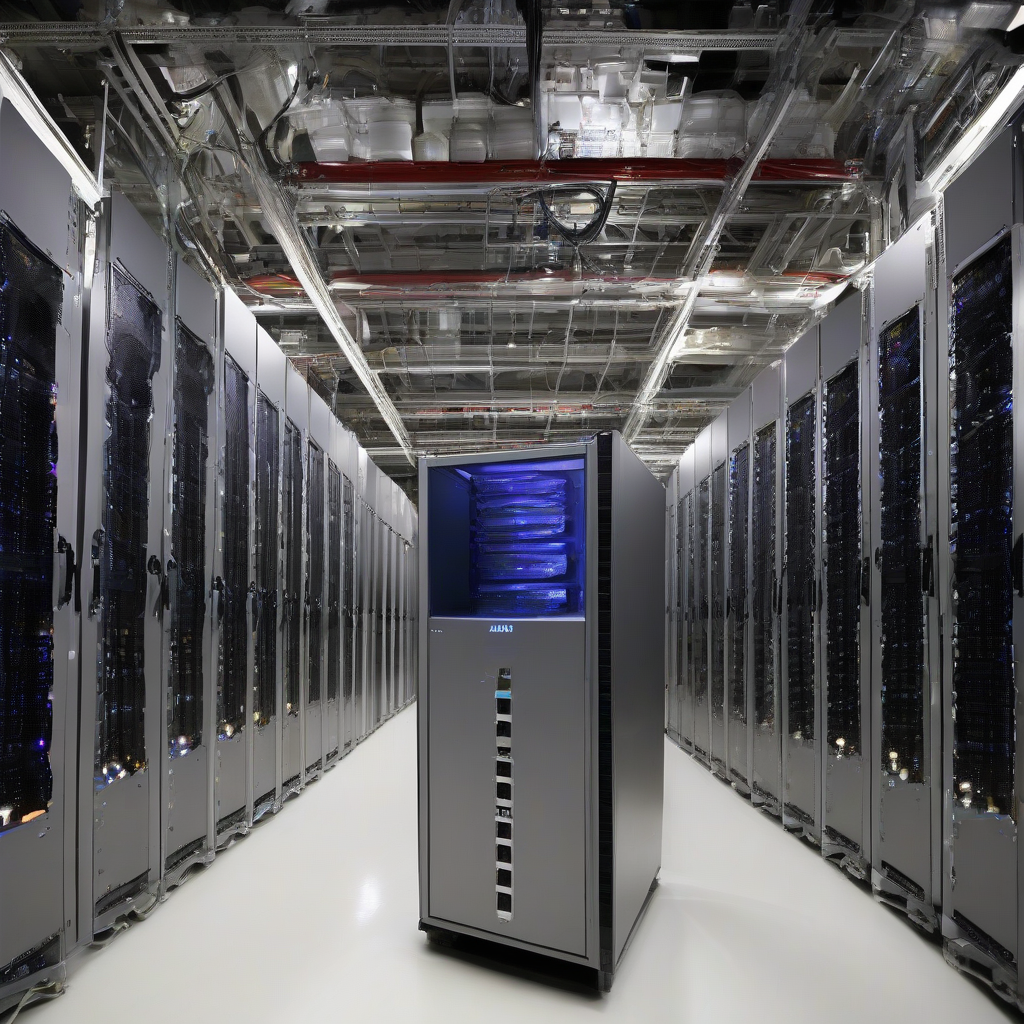
Advanced Micro Devices (AMD) posted a strong financial performance in its latest quarterly results, highlighted by a 50% climb in overall revenue. According to CNBC — Technology, the company’s data center segment acted as the primary engine for this expansion, recording a 107% increase compared to the previous year. Despite these high-growth indicators, market sentiment remained lukewarm, as the company's stock price moved downward following the announcement.
The firm's heavy reliance on the artificial intelligence and high-performance computing sectors has positioned it as a key competitor to established industry leaders. The data center unit's performance demonstrates a massive shift in how the company derives its earnings, transitioning away from legacy consumer markets toward enterprise-grade AI infrastructure.
Financial Summary
| Metric | Change / Performance |
|---|---|
| Overall Revenue Growth | 50% |
| Data Center Unit Growth | 107% |
While the company has exceeded expectations regarding its hardware deployment, the downward movement in share price suggests that investors were anticipating even higher growth margins or had priced the positive earnings report into the stock before the official release. Detailed financial disclosures regarding these figures can be verified through the company's official filings submitted to the Securities and Exchange Commission (SEC).
Why It Matters
AMD's ability to double its data center sales highlights a major shift in enterprise hardware spending. As corporations race to integrate generative AI models, the demand for GPU and high-performance processor capacity has decoupled from traditional PC cycles. However, the market's negative reaction to such strong growth figures suggests that hardware providers now face an 'expectations trap.' Investors are no longer merely looking for growth; they are searching for evidence of sustainable, long-term software-integrated profit margins. The cooling of the stock price indicates that the market is beginning to prioritize operational efficiency and margin expansion over pure year-over-year revenue velocity.
Reader Discussion & Insights