
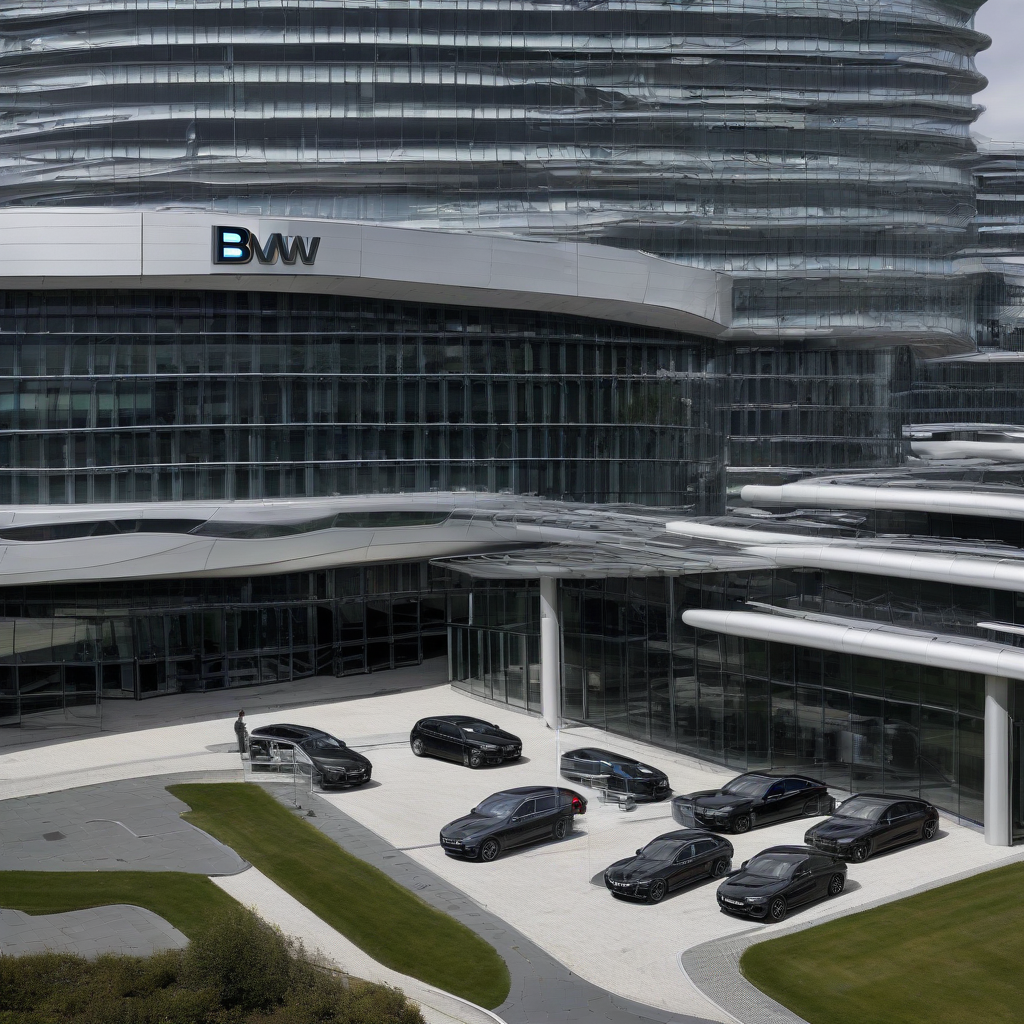
BMW Group has formally announced that agentic artificial intelligence is now a core component of its standard business operations. According to BMW Group, the shift represents a transition from conceptual exploration toward the practical implementation of autonomous AI systems that actively manage workflows within the manufacturer's automotive infrastructure.
Unlike traditional generative AI tools, which require constant human intervention for task completion, the agentic models deployed by the company are designed to autonomously execute complex multi-step processes. The automaker emphasizes that this technology is utilized daily to drive efficiency and process automation across its internal divisions.
Operational Integration
While specific granular performance metrics regarding current compute loads or the exact number of active agent nodes were not disclosed in the company's recent briefing, the move signifies an organizational commitment to moving past the proof-of-concept phase. The firm is actively mapping these agents to existing logistical and engineering requirements to ensure that data-driven decision-making remains consistent with its production standards.
| Feature | Status | Implementation Level |
|---|---|---|
| Agentic AI | Active | Daily Operations |
| Human Interaction | Minimal | Automated Workflows |
| Deployment Scope | Global | Core Business Units |
Why It Matters
The integration of agentic AI by a major automotive manufacturer signals a shift in industrial automation. By moving away from chatbots toward goal-oriented agents capable of autonomous execution, firms can lower operational latency in supply chain management and product development. This evolution suggests that the future of automotive manufacturing will depend less on rigid robotic programming and more on dynamic, self-correcting software agents capable of reconfiguring production priorities in real-time, thereby increasing throughput and reducing the administrative overhead associated with traditional manufacturing systems.
Reader Discussion & Insights