
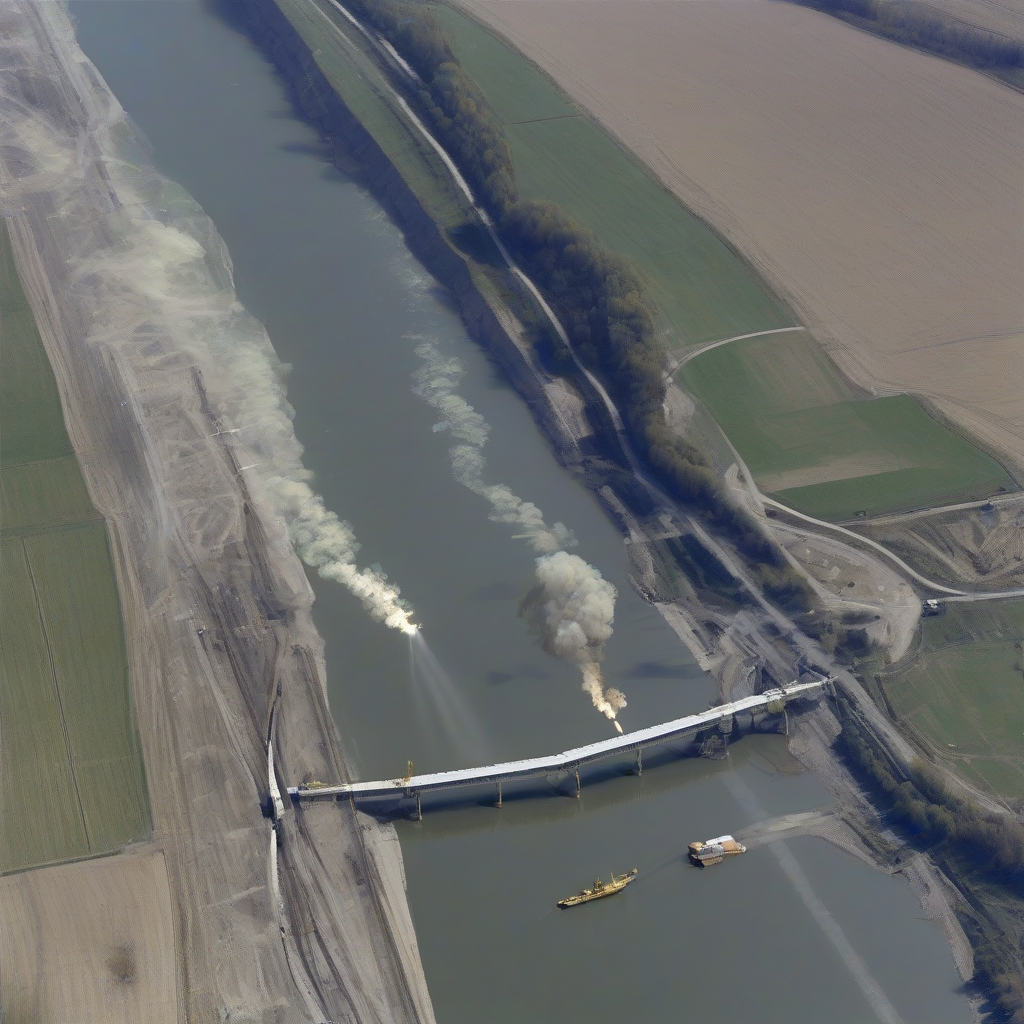

On August 3, Romanian naval engineers conducted a controlled detonation in the Bala Canal, a branch of the Danube River, to clear a rock outcrop that threatened critical cooling infrastructure. According to CleanTechnica, this operation involved the precise use of 180 kilograms of explosives to remove subterranean obstacles, allowing for the installation of a temporary dam essential for maintaining the operational safety of nuclear energy facilities.
The intervention highlights the intensifying reliance on civil engineering to mitigate the effects of environmental shifts on power production. As water levels and flow patterns in major European waterways become less predictable due to climate variability, the physical modification of river infrastructure has transitioned from an elective maintenance task to a primary requirement for grid stability. The removal of the rock outcrop in the Bala Canal is specifically designed to redirect water flow, ensuring that nuclear reactors have access to the volume of water required for core cooling systems during periods of low river discharge.
Operational Data Summary
| Detail | Specification |
|---|---|
| Operation Date | August 3 |
| Explosives Used | 180 kilograms |
| Primary Location | Bala Canal (Danube Branch) |
| Objective | Temporary dam installation |
| Industry Impact | Nuclear cooling water security |
Why It Matters
The necessity of using high-yield explosives to secure nuclear power station cooling cycles underscores a growing vulnerability in Europe’s energy infrastructure. Reliance on inland waterways for thermal regulation is becoming increasingly fragile as historical flow models fail to account for current climate trends. This development suggests that power providers will likely shift toward more permanent, costly hydraulic engineering solutions to decouple nuclear operations from natural river fluctuations. Future energy planning must now account for the massive logistical costs associated with re-engineering major river arteries to prevent catastrophic cooling shortages during peak summer heat.
Reader Discussion & Insights