
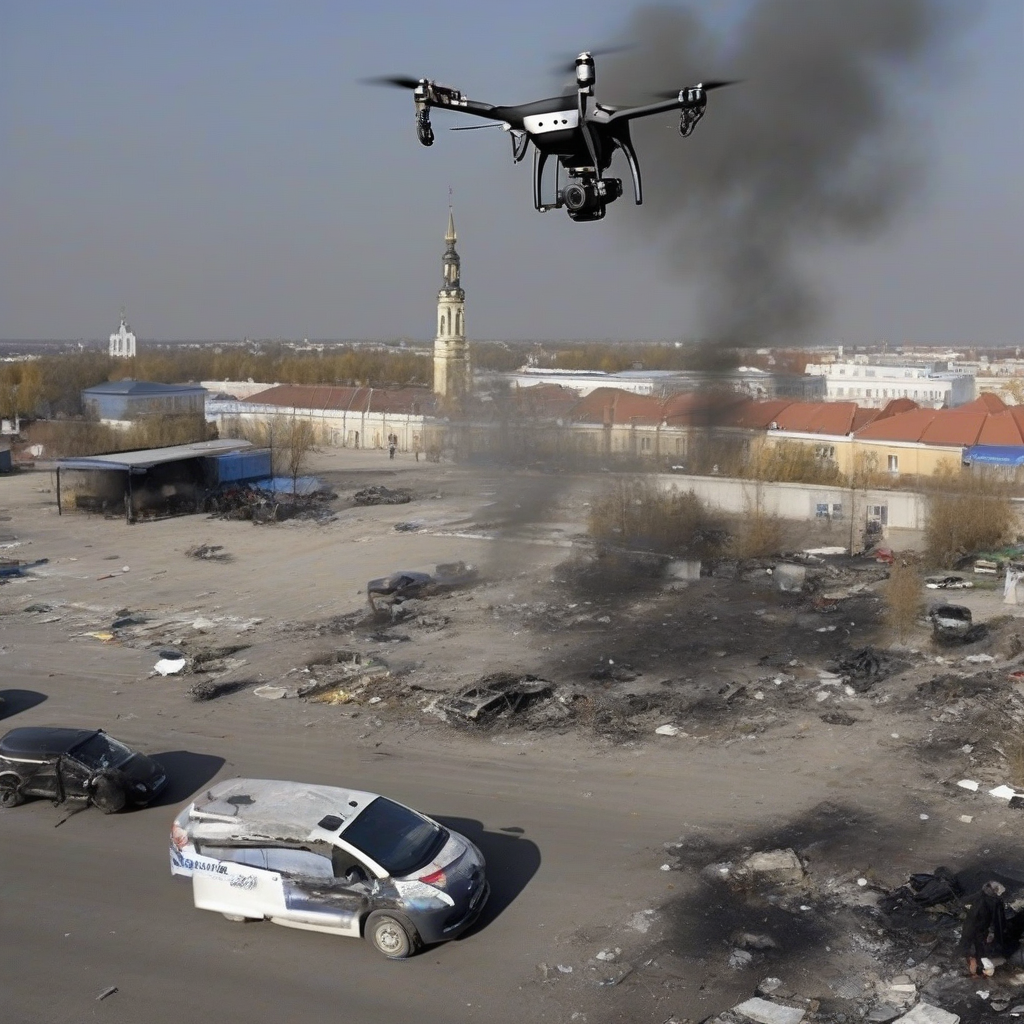
A suspicious incident occurred on Tuesday in Kherson, southern Ukraine, involving a remotely operated aircraft that targeted an individual in a public space. According to Al Jazeera, an unmanned aerial vehicle was observed tracking a man as he navigated a minibus-turned-market, an area frequently used by locals for commerce. Shortly after the pursuit, the device exploded in the vicinity of the target.
This incident highlights the rising prevalence of small, weaponized drones in active conflict zones. While initial reports do not specify the exact model of the drone, the tactical use of off-the-shelf technology to stalk and strike individuals indicates a shift in how aerial platforms are being utilized for precision targeting in urban environments.
Incident Summary
| Attribute | Detail |
|---|---|
| Event Date | Tuesday, August 4, 2026 |
| Location | Kherson, Ukraine |
| Target Type | Individual Pedestrian |
| Primary Incident | Drone pursuit followed by explosion |
Why It Matters
The integration of small-scale drones into infantry-level combat represents a permanent shift in urban security protocols. Unlike traditional military ordnance, these systems are inexpensive, commercially accessible, and difficult to track via conventional radar systems managed by the European Commission or international oversight bodies. This event underscores the vulnerability of civilians in areas where drone technology is easily modified to carry explosive payloads, necessitating new defensive strategies for ground-level protection in contested regions.
As these platforms become more autonomous, the requirement for localized anti-drone technology—often referred to as Counter-Unmanned Aircraft Systems (C-UAS)—becomes a priority for municipal security. Future humanitarian aid or civilian infrastructure projects in such areas will need to account for aerial threats as a standard operational risk, potentially forcing the abandonment of open-air marketplaces in favor of hardened or fortified transit zones.
Reader Discussion & Insights