
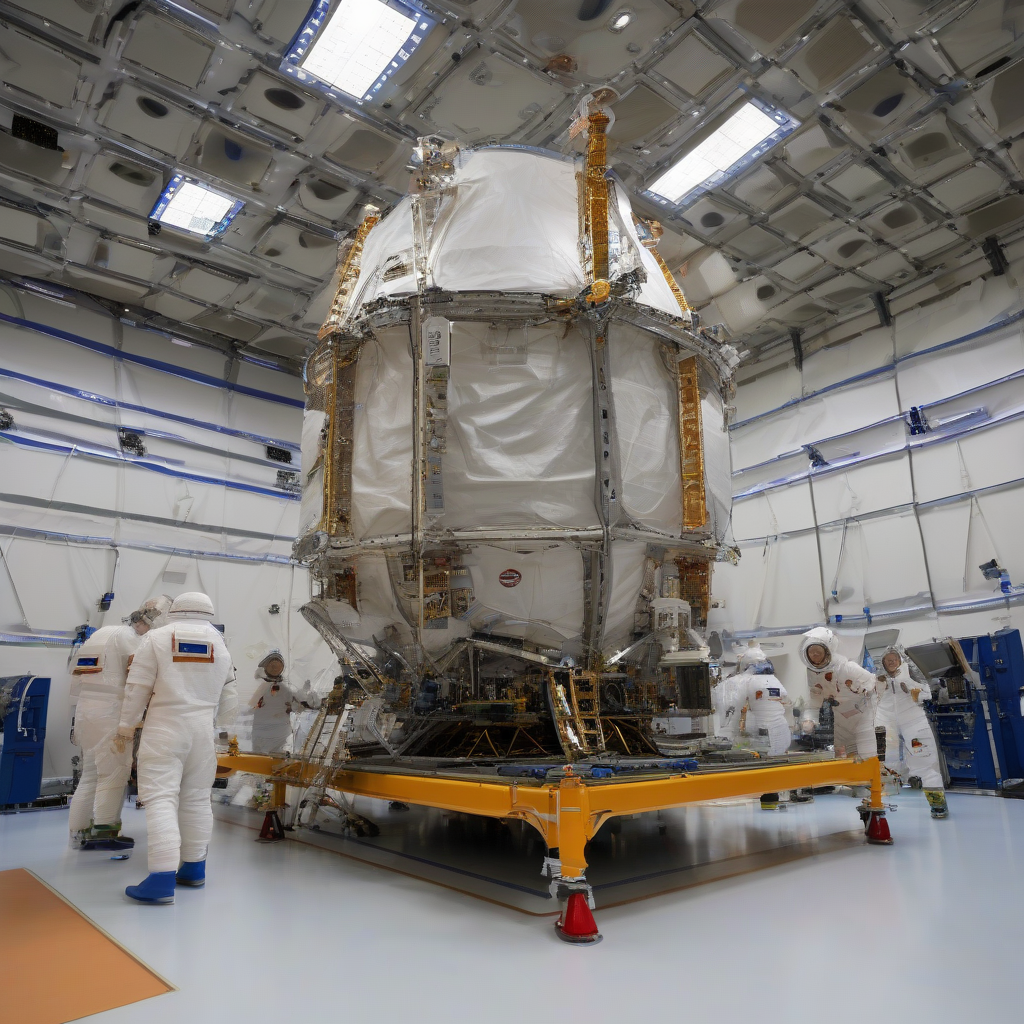

According to ESA Space News, the European Space Agency (ESA) has successfully demonstrated the mechanical deployment of landing legs for the upcoming ExoMars mission. The testing, conducted at Thales Alenia Space facilities in Turin, Italy, utilized a full-scale model of the landing platform to verify the performance of the hardware intended for the 2030 mission.
The deployment sequence involves two pairs of legs that release automatically in under one second. This rapid activation is triggered immediately following the jettisoning of the front shield, a sequence critical for preparing the craft for touchdown on the Martian surface. The hardware, designed and built by the Spanish firm Sener, uses non-explosive actuators to ensure the legs extend simultaneously as intended. While Airbus serves as the primary provider for the landing platform, Thales Alenia Space oversees the industrial leadership of the mission.
Hardware Deployment Specifications
| Component | Originating Entity | Deployment Method | Duration |
|---|---|---|---|
| Landing Legs | Sener (Spain) | Non-explosive actuators | < 1 second |
| Landing Platform | Airbus | Automated | Sequential pairs |
These tests confirm that the structural dimensions and mechanical integrity of the legs match the requirements for the ExoMars Rosalind Franklin rover mission. The legs represent only one component of the landing system; the spacecraft will also rely on an integrated suite of parachutes and descent engines to slow its velocity during the final approach to Mars.
Why It Matters
The reliability of non-explosive, automated deployment systems is a fundamental requirement for interplanetary robotic exploration. By utilizing non-pyrotechnic actuators, the mission minimizes vibrations and structural shock, which increases the likelihood of sensitive internal instrumentation surviving the descent. As the industry shifts toward higher-frequency planetary missions, the development of repeatable, rapid-deployment landing gear provides a template for future robotic landers. Ensuring these mechanical systems function with precision in terrestrial simulation is the baseline for mitigating mission-critical failure modes during the atmospheric entry and descent phases of the 2030 launch window.
Reader Discussion & Insights