
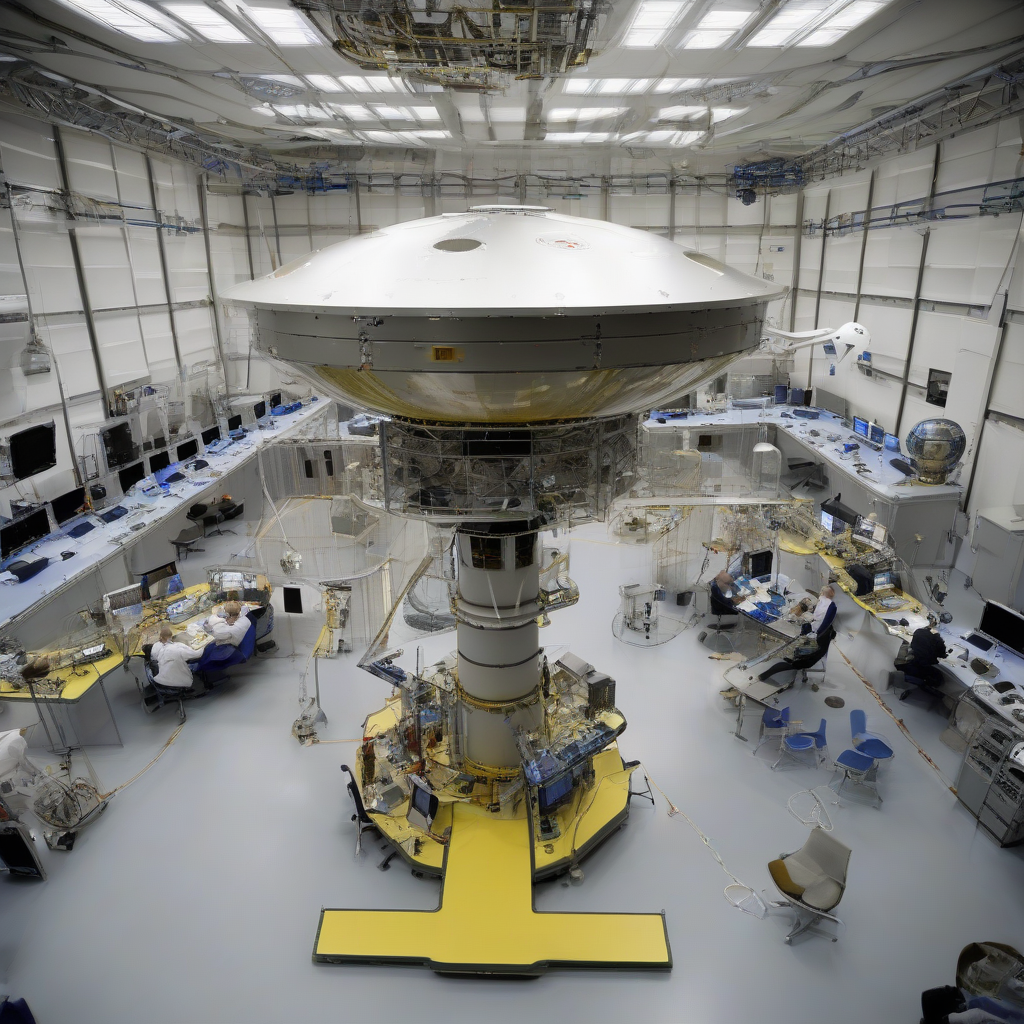
The European Space Agency (ESA) has opened a unique opportunity for European-based entities and researchers to execute custom software directly on the Hera spacecraft during its deep-space mission. According to ESA Space News, the agency is seeking proposals for innovative code to be processed in the harsh conditions of deep space, millions of kilometres away from Earth.
Mission Technical Overview
The Hera mission serves as a critical component in planetary defense research. By providing access to the spacecraft's onboard computing environment, ESA aims to foster technological advancements that can survive and function in the radiation-heavy, high-latency environment of space exploration.
| Feature | Details |
|---|---|
| Agency | European Space Agency (ESA) |
| Mission Name | Hera |
| Project Scope | Software deployment in deep space |
| Eligibility | European researchers and companies |
Accessing such infrastructure traditionally requires immense capital and lengthy development cycles. By opening the Hera platform to external code, ESA is lowering the barrier for space-grade software validation. Interested parties must ensure their software is optimized for space-hardened computing architectures, which differ significantly from terrestrial cloud environments.
Why It Matters
This initiative signals a shift toward a more modular, software-defined approach to deep space exploration. By permitting third-party code on a planetary defense mission, ESA is effectively crowdsourcing the intelligence required to navigate complex asteroid environments. This movement mirrors broader trends in the aerospace sector, where hardware lifecycles are increasingly supplemented by agile, updateable software packages. The success of this program could establish a repeatable model for future interplanetary missions, allowing private entities to validate proprietary algorithms in high-radiation environments without the prohibitive cost of launching a dedicated satellite, thereby accelerating the maturity of autonomous systems for deep-space applications.
Reader Discussion & Insights