
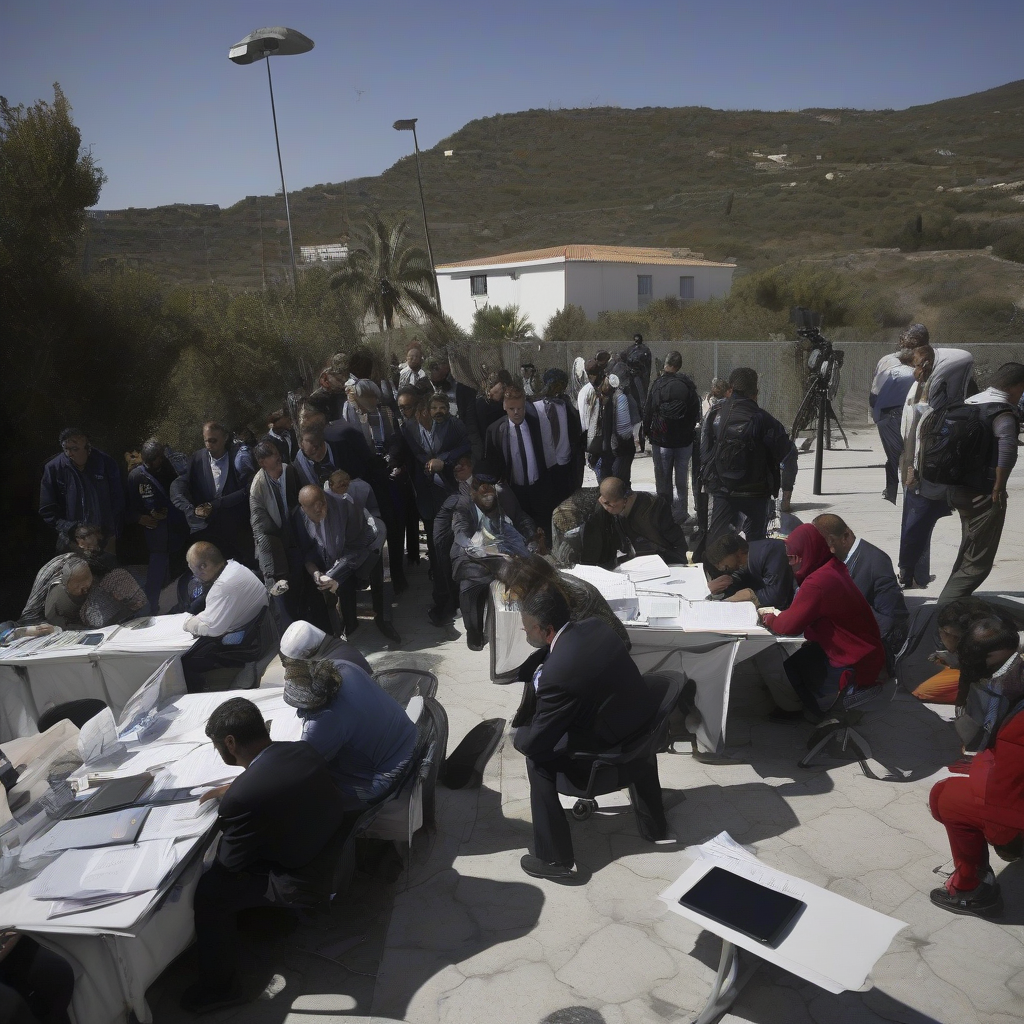
Families in the northern Moroccan town of Fnideq are searching for relatives who went missing during a recent mass migration event at the border of the Spanish enclave of Ceuta. According to The Guardian — World, citizens are displaying photographs of their loved ones in public spaces, hoping to identify individuals among those currently returning or being processed after the surge.
Recent data indicates that the mortality rate associated with this crossing is rising significantly, with the total death toll now nearing 100. The situation follows an extraordinary period of transit last week, during which approximately 72,000 individuals crossed the border into Ceuta. This small Spanish territory, located on the North African coast, has become the focal point of a major humanitarian and logistical challenge for European and Moroccan authorities.
| Metric | Figure |
|---|---|
| Estimated total border crossings | 72,000 |
| Reported death toll | Nearing 100 |
| Primary search location | Fnideq, Morocco |
Official monitoring from the European Commission and relevant border security agencies remains focused on the stability of the frontier. The influx has placed immense pressure on existing infrastructure and diplomatic relations between Spain and Morocco, as both nations attempt to manage the processing of thousands of individuals while addressing the growing list of casualties.
Why It Matters
The scale of this movement highlights the vulnerability of small, geographically isolated territories when confronted with sudden, high-volume migration surges. From a policy perspective, the inability of current border infrastructure to manage a flow of 72,000 people suggests a long-term requirement for integrated surveillance and rapid-response humanitarian protocols. For international entities, this incident serves as a stress test for existing bilateral migration agreements and indicates that physical barriers alone may not suffice without comprehensive regional cooperation and proactive resource allocation to prevent loss of life at transit points.
Reader Discussion & Insights