
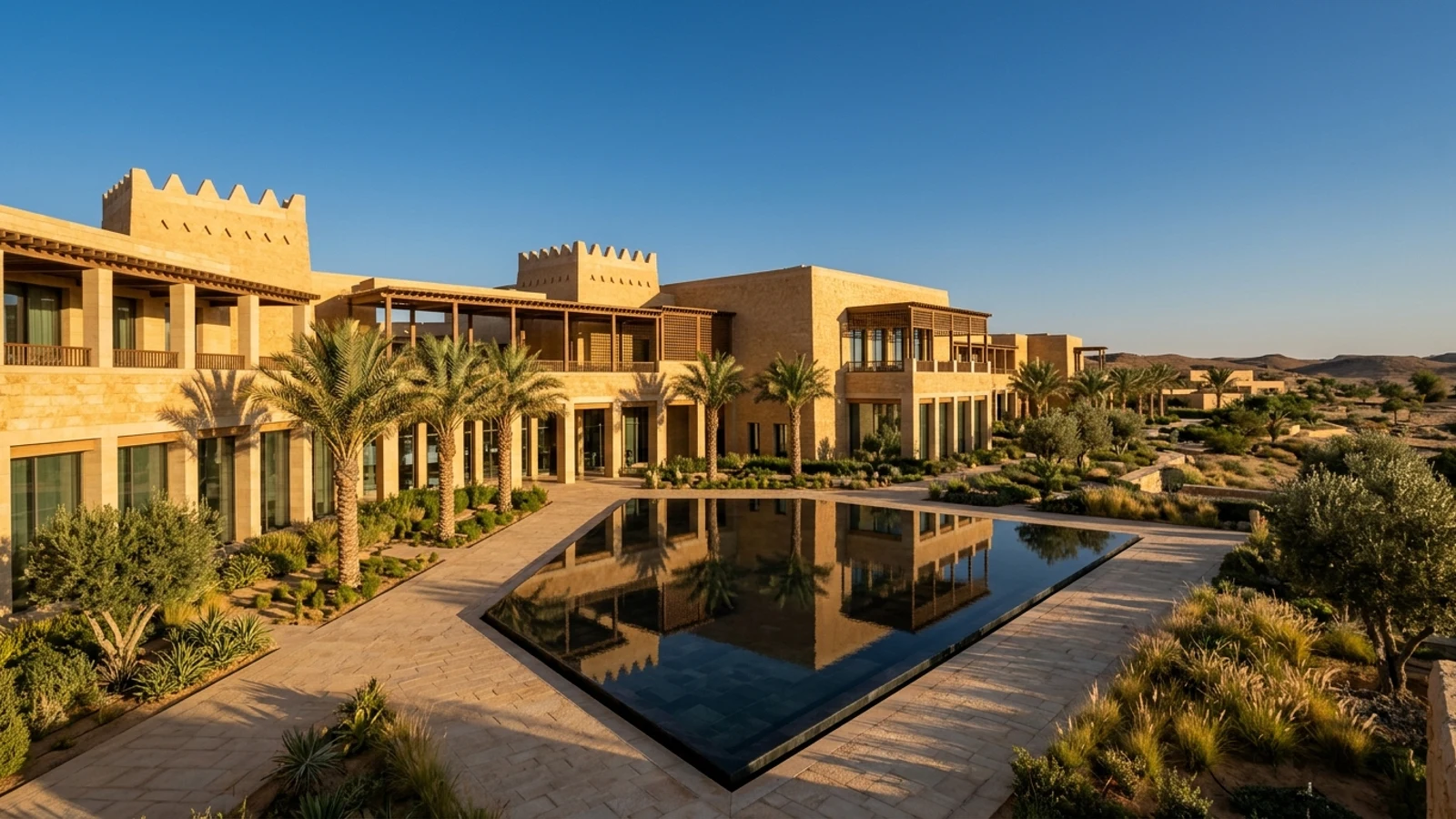
The Dubai-headquartered Global Hotel Alliance (GHA), a massive network encompassing 1,000 individual hotel properties across 100 countries, has announced a significant shift in its long-term development strategy. CEO Christopher Hartley recently informed the industry that the organization is actively looking to expand its presence within Saudi Arabia. This decision represents a strategic pivot away from the United Arab Emirates, where the alliance has already established a substantial footprint with approximately 70 existing properties under various brands. Source
The alliance’s current portfolio in the UAE is comprised of diverse and reputable operators, including home-grown names such as Rotana. Additionally, the network includes prominent international groups like Minor International, Kempinski, Nikki Beach, the Cheval Collection, and JA Resorts. Despite this existing range of options for travelers in the region, leadership has determined that further aggressive expansion within the UAE market is no longer a primary goal. The organization has clearly stated that it does not intend to pursue the addition of 30 or 40 more hotels in that specific market. Source
This directional change in development follows a difficult fiscal period for GHA within its home market. According to statements provided to Skift Travel Discovery, the alliance experienced a notable decline in loyalty revenue within the UAE throughout the year. Data indicates that the U.S.-Iran war acted as a primary factor in this performance dip, resulting in a 28% reduction in loyalty revenue on a like-for-like basis. By the end of October 2026, total loyalty revenue in the UAE had reached $134 million. Source
While the UAE market faced these specific regional challenges, the broader international performance of the network remained positive. Globally, the total revenue generated across the organization's member hotels saw an increase of 21% during the first nine months of the 2026 calendar year. The total revenue figure reached $2.8 billion during this period. This global growth provides the financial backdrop for the CEO's new focus on the Saudi Arabian market, despite existing reports suggesting that hotel performance in Riyadh has been struggling. Source
The commitment to Saudi Arabia is being framed by GHA leadership as a more promising growth opportunity than continued saturation in the UAE. This transition is not merely a change in geographic priority but an adjustment in the alliance's operational scaling plans. For travelers and loyalty members, this suggests that the future availability of hotels under the GHA network will likely lean more heavily toward new developments within the Kingdom of Saudi Arabia, rather than further consolidation of properties in the Emirati market. Source
The current network consists of over 60 distinct brands, providing a wide variety of stay options for guests. As the company looks toward 2027 and beyond, the focus on Saudi Arabia suggests an alignment with the broader tourism development goals being pursued in the country. While Riyadh has seen some reported struggles in hotel occupancy or performance, the alliance's leadership appears to be taking a long-term view on the viability of the Saudi hospitality market as a key hub for their future regional development efforts. Source
For stakeholders interested in the regional dynamics, the contrast between the UAE and Saudi performance is quite marked. The 28% decline in loyalty revenue in the UAE contrasts significantly with the aggregate 21% global growth rate reported by the alliance for the first nine months of 2026. This data serves as the foundation for the current strategic shift, as the organization seeks to insulate itself from market-specific geopolitical instability while maintaining its momentum within the global travel and hotel loyalty landscape. Source
The GHA remains one of the largest players in the loyalty space, and its influence on travel trends is substantial. By moving resources away from the UAE, the company is signaling that the era of rapid hotel network expansion in that territory may be reaching a point of stabilization. Instead, the focus on the Saudi market indicates a belief that there is untapped potential there for independent hotel brands to find a foothold, even if the current climate in Riyadh is described as a struggle for the hospitality sector. Source
In addition to the geographic shift, the alliance continues to manage its network of 1,000 hotels with a focus on retaining brand independence for its operators. The shift to Saudi Arabia implies that new partner hotels will likely be recruited from that country, further diversifying the GHA footprint. The organization has not specified the exact number of new properties it intends to sign in Saudi Arabia, but the clear stated intent is to make the country the focal point of future development efforts rather than the UAE. Source
The financial reporting provided by the alliance covers the period up to October 2026. This date is critical for understanding the impact of the U.S.-Iran war on the company’s regional revenue. The 28% drop serves as a tangible metric for why the CEO believes the market has become less attractive for further expansion compared to other, less affected regions. The management team at GHA continues to evaluate the performance of its global network on a quarterly basis to guide these ongoing development decisions. Source
While the strategy is to grow in Saudi Arabia, the existing base of 70 hotels in the UAE remains a vital part of the alliance's portfolio. The company is not suggesting a withdrawal from the region, but rather a halt to aggressive growth plans. This distinction is important for members of the loyalty program, as it ensures that their existing benefits and hotel options remain available even as the company redirects its future investment capital toward new projects in the developing Saudi hospitality market. Source
Ultimately, the strategic shift reflects a broader trend in the travel industry where companies are constantly rebalancing their portfolios to account for global events. The GHA, as a large, independent network, is uniquely positioned to adjust its growth trajectory across different markets. By prioritizing Saudi Arabia, the alliance is betting on the long-term potential of the kingdom's hospitality infrastructure, while acknowledging the immediate performance realities that defined the difficult year experienced by the alliance in the United Arab Emirates. Source

