
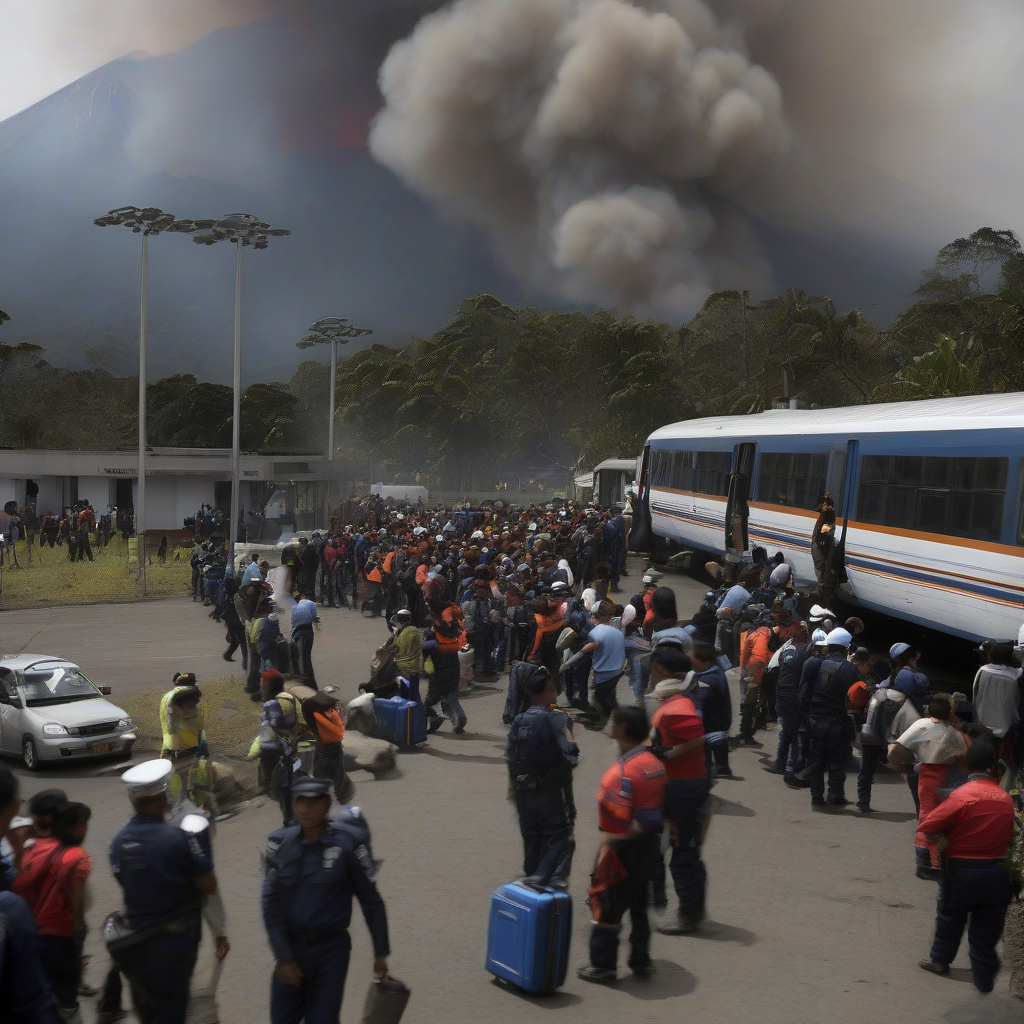
Guatemalan government officials commenced evacuation efforts on Monday for two settlements located in the immediate vicinity of the Fuego volcano, according to CBS News — World. This action follows the onset of an active eruption phase, prompting local authorities to prioritize civilian safety as volcanic activity increases in the region.
Incident Overview
The evacuation measures were enacted to relocate residents away from the direct path of potential volcanic debris and ash fallout. Fuego is recognized as one of Central America’s most active volcanoes, frequently requiring monitoring by disaster management agencies. While specific passenger or commercial flight disruptions were not immediately detailed in the reports, the proximity of volcanic activity often necessitates adjustments to regional aviation corridors to avoid ash plumes.
| Location | Action Taken | Current Status |
|---|---|---|
| Fuego Volcano | Monitoring Initiated | Erupting |
| Nearby Villages | Evacuation Started | Ongoing |
Official Monitoring
Regional emergency response teams and volcanic observatories maintain constant surveillance of the Fuego site. These government entities assess seismic data and atmospheric ash distribution to determine whether further village evacuations or exclusion zones are required. The current situation remains fluid as authorities track the intensity of the eruption.
Why It Matters
Beyond the immediate humanitarian response, volcanic activity in Guatemala presents a recurring challenge for regional logistics and infrastructure stability. Frequent eruptions near populated zones and transport arteries can trigger localized economic contraction and strain emergency resource allocation. For the broader industry, the primary concern lies in the unpredictability of airborne particulate matter, which poses risks to regional aviation safety and supply chain continuity. Developing more sophisticated, real-time alert systems for volcanic activity is essential for maintaining operational resilience in high-risk geographic areas prone to geological instability.
Reader Discussion & Insights