
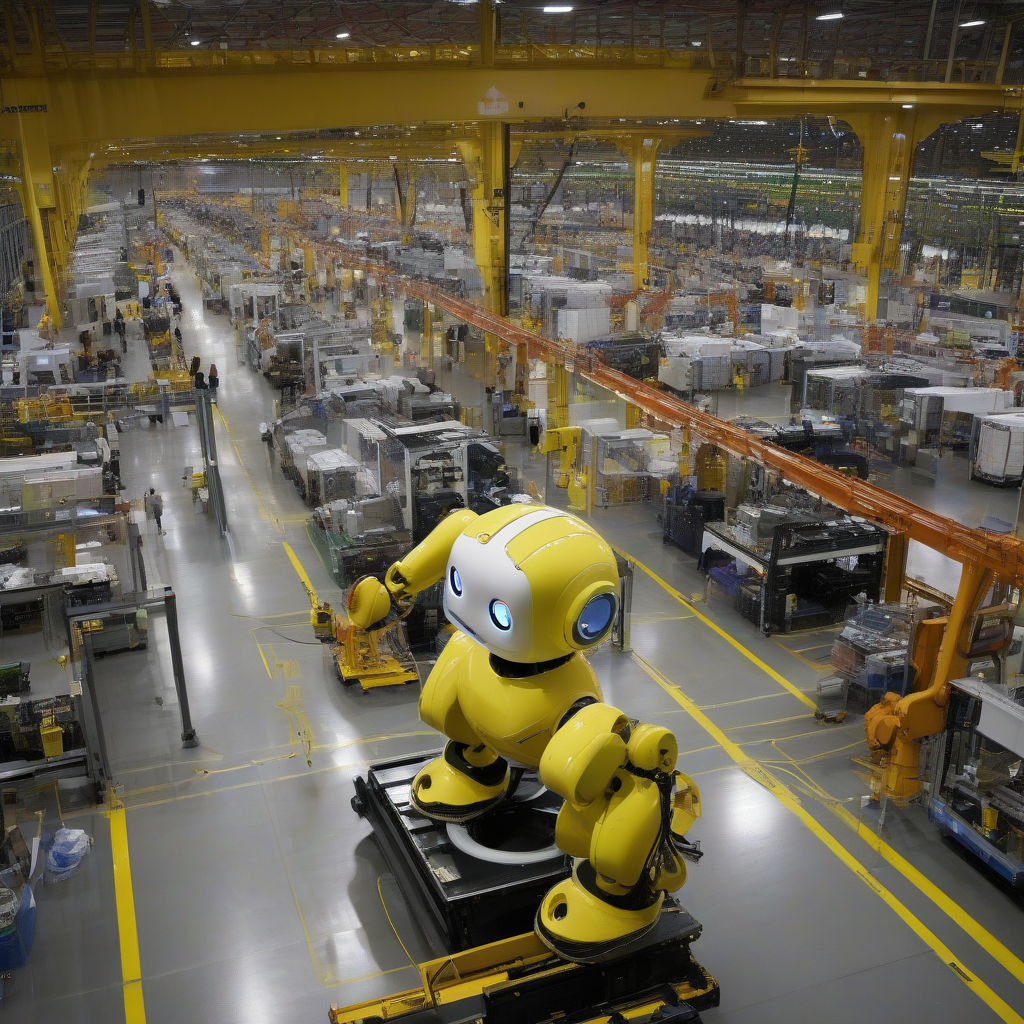
HappyRobot has achieved unicorn status following the successful closure of a $150 million Series C funding round, which places the company at a $1.2 billion post-money valuation. According to FreightWaves, the company has raised approximately $200 million across three funding rounds within a 20-month period, marking a 5x growth trajectory since its Series B round concluded in late 2025.
The capital raise was led by Prysm Capital, with Eurazeo serving as a co-lead. Existing institutional backers also participated in the round, including a16z, Y Combinator, Koch Disruptive Technologies, and WaVe-X, the corporate venture capital division of the Austria-based WALTER GROUP. Notably, this investment marks the first unicorn entry for WaVe-X within its portfolio of 13 investments.
HappyRobot’s technology, which utilizes AI agents to automate administrative tasks such as email management, phone correspondence, and logistical follow-ups, is currently deployed by over 150 enterprise customers. Key clients utilizing the platform include DHL, Uber Freight, Kuehne+Nagel, and LKW WALTER. Michal Lewandowski, a senior investment manager at WaVe-X, noted that the rapid valuation reflects the shift toward agentic AI in the real economy.
Financial and Operational Summary
| Metric | Figure |
|---|---|
| Series C Funding | $150 million |
| Post-Money Valuation | $1.2 billion |
| Total Capital Raised | $200 million |
| Timeline for Capital | 20 months |
| Enterprise Customers | > 150 |
At the WALTER GROUP, the integration of these AI agents has already expanded to between five and 10 active use cases, spanning dispatching operations, customer support, and payment collection processes. Quili Peña, head of strategy and operations at HappyRobot, stated that while earlier rounds focused on proof-of-concept testing with firms like Circle Logistics and Uber Freight, the current growth phase is dedicated to scaling delivery of enterprise-grade value.
Why It Matters
The transition of AI agents from experimental pilot programs to core operational infrastructure suggests a fundamental change in freight brokerage economics. By automating high-frequency, low-complexity communication tasks, logistics firms can significantly reduce administrative overhead without increasing headcount. As these agents become standard across the industry, the competitive advantage will likely shift from basic operational efficiency to the ability of firms to effectively integrate and manage autonomous digital agents within their existing supply chain workflows, forcing a re-evaluation of staffing requirements for mid-tier brokerage roles.
Reader Discussion & Insights