
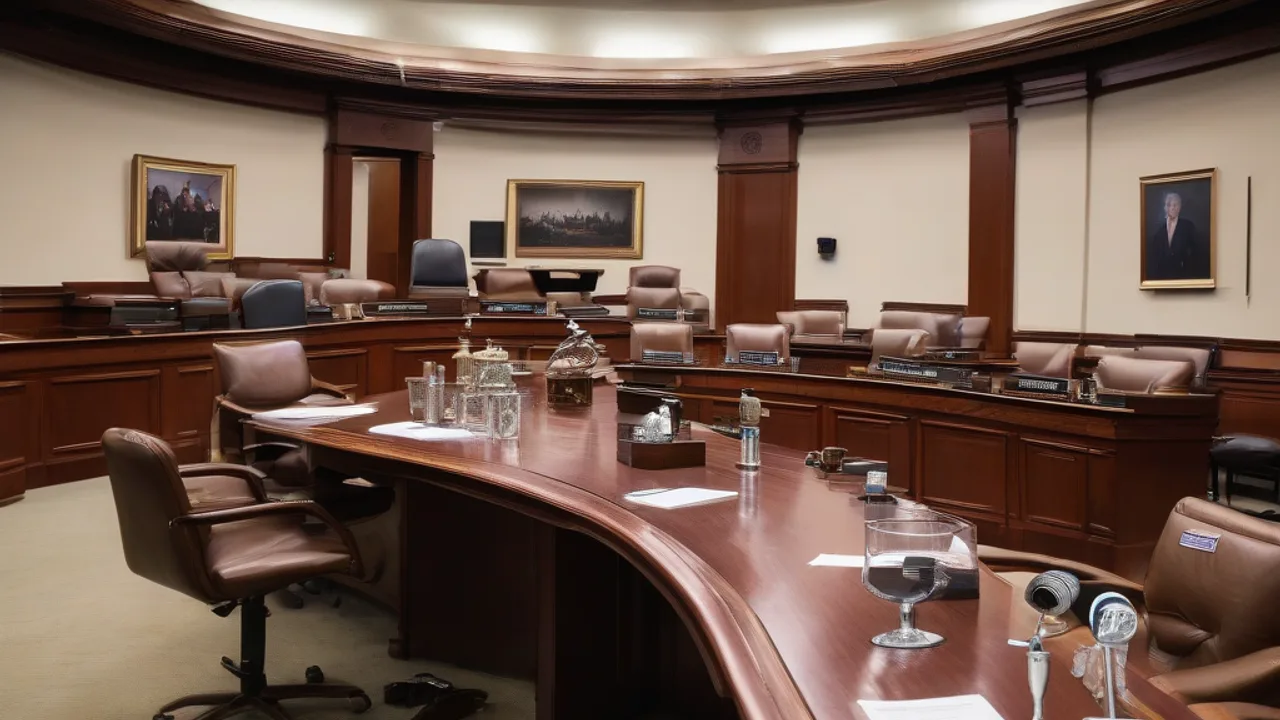
The U.S. House Subcommittee on Higher Education and Workforce Development convened a hearing on Capitol Hill to examine the growing prevalence of sports gambling among college students, as reported by CDC Gaming.
Chaired by Washington Representative Michael Baumgartner, the hearing focused on the behavioral, financial, and regulatory challenges that have emerged since the 2018 U.S. Supreme Court decision in Murphy v. NCAA struck down the Professional and Amateur Sports Protection Act (PASPA).
During testimony, Jordan Maynard, Chairman of the Massachusetts Gaming Commission (MGC), cited Boston University School of Public Health survey data showing that 34% of college students nationwide who use sportsbook apps are under the legal gambling age of 21. In Massachusetts, where the legal age to wager is 21, approximately 22% of college-age app users are underage. Maynard stated that mandated age-verification tools have blocked at least 11,000 underage account attempts in Massachusetts, though proxy betting—where underage students wager through older friends or relatives—remains an ongoing challenge.
Maynard and lawmakers also raised concerns over prediction markets offering sports-event contracts, such as Kalshi, arguing that these platforms bypass state laws, taxation, and problem-gambling oversight by operating under Commodity Futures Trading Commission (CFTC) jurisdiction. Representative Alma Adams (D-NC) urged stronger federal action to prevent prediction markets from using regulatory loopholes to circumvent state gaming laws.
A panel of experts—including Dr. Lindsey Mortenson of the University of Michigan, Dr. Daniel Durkin of the University of Mississippi, and Cindy Clouner of Ohio State University—unanimously recommended eliminating individual collegiate player prop bets to curtail problem gambling and protect student-athletes from targeted harassment. Baumgartner highlighted a 2023 NCAA survey indicating that 67% of campus-residing students had bet on sports, with 16% exhibiting problem-gambling behaviors.
