
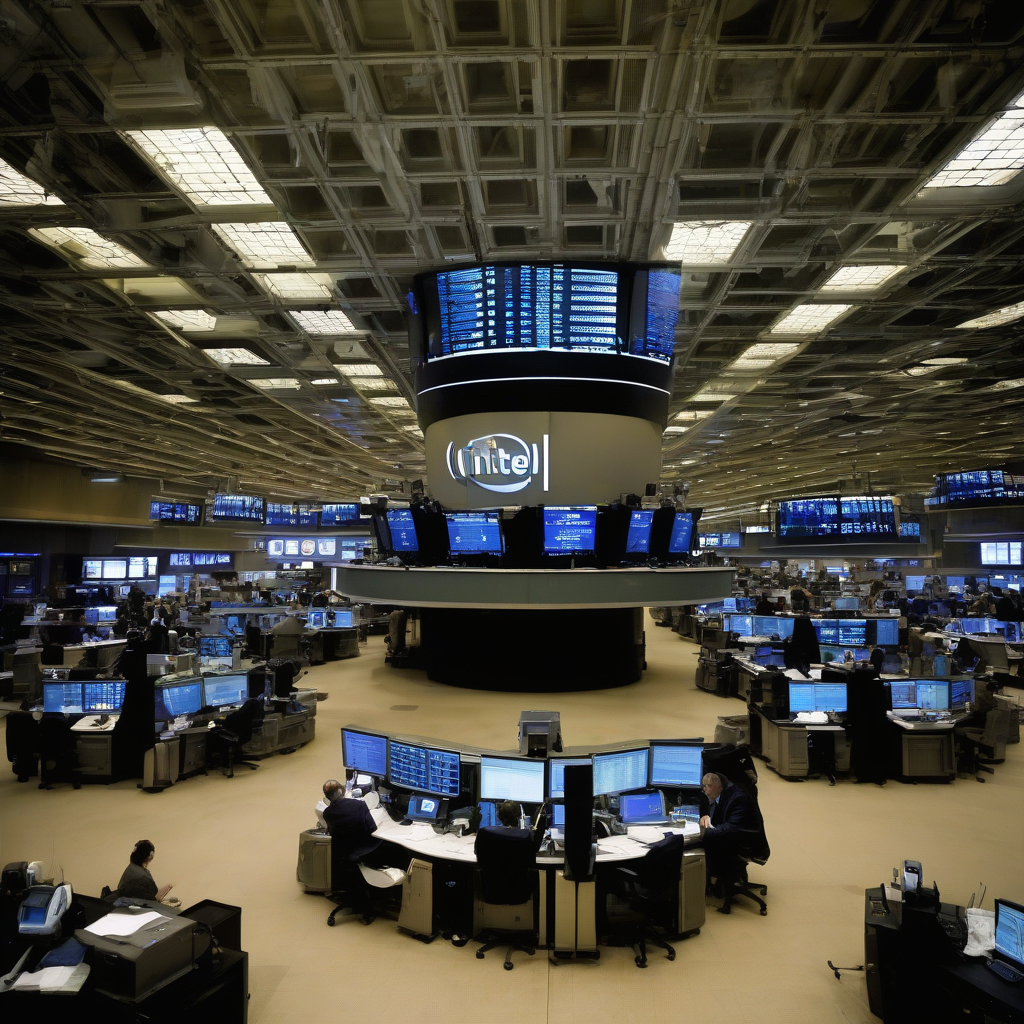
Intel has achieved a significant valuation milestone as its share price has quadrupled, according to Financial Times. Despite this substantial growth in investor confidence, the semiconductor giant remains in a tenuous position regarding its goal to challenge the global dominance of Taiwan Semiconductor Manufacturing Company (TSMC) in the foundry space.
While market enthusiasm has driven the equity value higher, analysts are closely monitoring Intel's operational capacity to scale its manufacturing division to meet the rigorous demands of modern chip architecture. The company, which is attempting to pivot toward an independent foundry model, must now demonstrate that its internal production capabilities can rival the efficiency and technological lead held by TSMC.
Competitive Manufacturing Overview
| Entity | Market Role | Core Challenge |
|---|---|---|
| Intel | IDM / Foundry | Scaling manufacturing output |
| TSMC | Dedicated Foundry | Maintaining technological lead |
Why It Matters
The broader implications of Intel’s struggle to bridge the gap with TSMC extend well beyond internal balance sheets. Global technology supply chains rely on a limited pool of advanced semiconductor fabrication facilities. If Intel fails to successfully operationalize its foundry business, the industry remains heavily reliant on concentrated production in Taiwan, which creates significant geopolitical and supply chain vulnerabilities. For the technology sector, a reliable alternative to TSMC is necessary for the diversification of semiconductor sourcing, which is currently essential for long-term hardware roadmap planning and stability.
Reader Discussion & Insights