
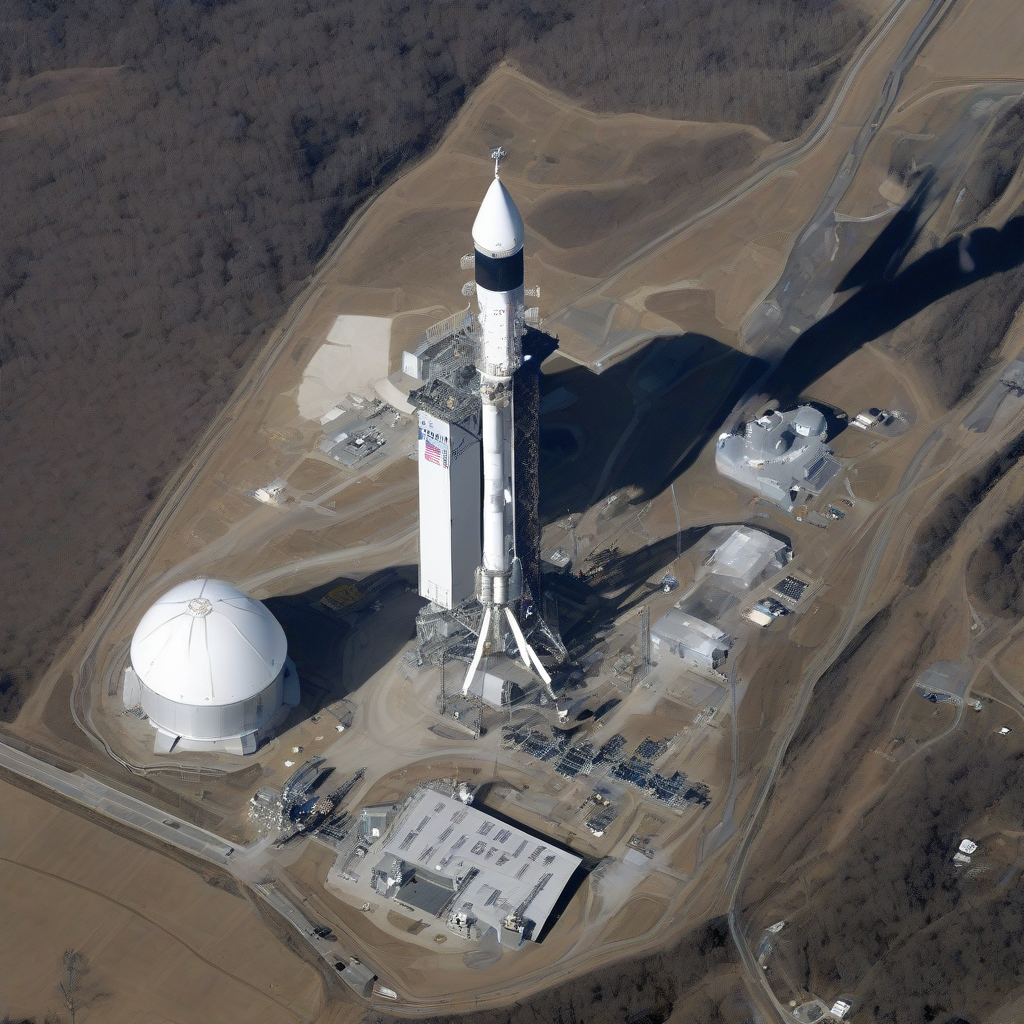

The Korea Pathfinder Lunar Orbiter, known as Danuri, has successfully identified the impact site of a SpaceX Falcon 9 upper stage on the lunar surface. According to Space.com, the Korea Aerospace Research Institute (KARI) confirmed the orbiter captured imagery of the crater generated when the spent rocket body collided with the moon early on Wednesday morning, August 5.
KARI officials detailed that Danuri conducted 8 distinct imaging sessions, beginning approximately 30 minutes prior to the collision. Through precise orbit control, the satellite passed over the impact site multiple times, successfully documenting the crater and the surrounding pattern of ejected lunar material. The mission provided a comprehensive set of before-and-after imagery, allowing researchers to evaluate the topographic alterations caused by the high-velocity impact.
The rocket body originated from a January 15, 2025, mission that deployed Firefly Aerospace’s Blue Ghost and ispace’s Resilience moon landers. While the first stage of the Falcon 9 was recovered, the upper stage remained in Earth orbit after exhausting its fuel supply to deliver the payloads. Gravitational forces and solar activity eventually transitioned the 8,800-pound (4,000 kilograms) hardware into a lunar trajectory.
| Feature | Specification |
|---|---|
| Impact Time | 2:34 a.m. EDT (0634 GMT) Aug 5 |
| Rocket Mass | 8,800 lbs (4,000 kg) |
| Impact Speed | 5,400 mph (8,690 kph) |
| Estimated Crater Width | Up to 89 feet (27 meters) |
Predictions indicated that the object would strike the surface at roughly 5,400 mph (8,690 kph), resulting in a crater spanning approximately 89 feet (27 meters). Data collected by Danuri is expected to be integrated with future observations from NASA’s Lunar Reconnaissance Orbiter (LRO) to facilitate international research efforts. Additionally, researchers at the Instituto de Astrofísica de Andalucía in Spain reported capturing video evidence of material ejecta at the predicted time of impact.
Why It Matters
The collision highlights the increasing density of objects in cislunar space, a region of the orbital environment that is rapidly populating with both operational payloads and discarded launch hardware. While the impact of an upper stage provides a unique opportunity for scientists to study lunar geology through controlled crater formation, it also underscores the limitations of current disposal methods. As moon-crossing traffic increases, space agencies face pressure to refine trajectory management to mitigate risks to active lunar assets and to better understand the long-term environmental impact of debris on the lunar surface.
Reader Discussion & Insights