
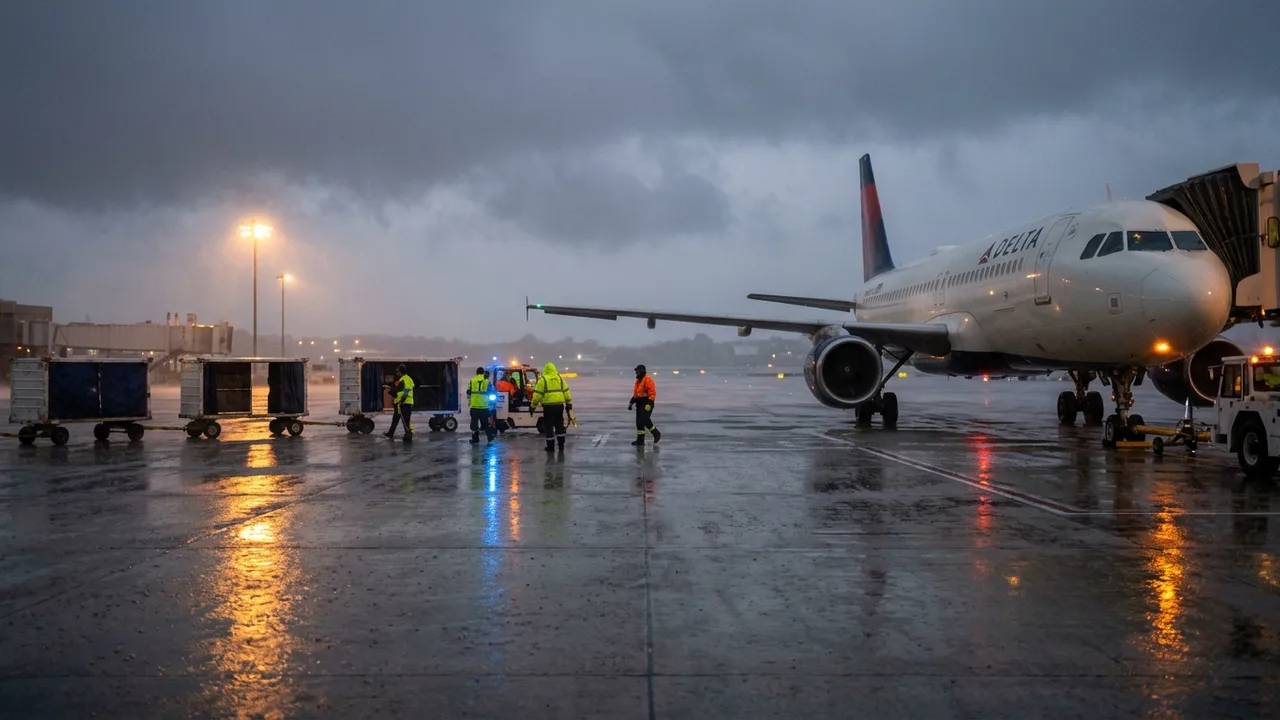
As of late November 2026, air and ground travel across the United States has faced significant disruptions due to the convergence of record-high Thanksgiving holiday passenger volumes and severe, multi-regional weather systems. According to Travel And Tour World, the American Automobile Association (AAA) estimated 81.5 million travelers during this period, including nearly 6 million domestic air passengers. The strain on transportation hubs is further compounded by adverse meteorological conditions, including heavy coastal storms, powerful winds, and winter snowfall.
Impacted Aviation Hubs and Weather Conditions
| Airport | Primary Weather Threat | Reported Operational Risks |
|---|---|---|
| LaGuardia (LGA) | 56 mph Winds | Ground stop; significant delays |
| JFK / Newark (EWR) | Coastal Storm | Flight cancellations; regional congestion |
| Boston Logan (BOS) | Heavy Rain/Wind | Reduced aircraft arrival capacity |
| Chicago O'Hare (ORD) | Regional Storms | Potential scheduling delays |
| St. Louis (STL) | Snowfall | Winter operational restrictions |
| Seattle (SEA) | Rain/Low Visibility | Reduced efficiency |
In the New York and New Jersey corridor, the impact has been particularly acute. LaGuardia Airport (LGA) reported wind gusts reaching 56 mph, which triggered a Delta ground stop and widespread scheduling adjustments. Nationwide, over 6,500 flight delays were logged on November 25, with Thanksgiving Day itself recording more than 2,300 delays and 451 cancellations.
Regional disruptions extend to the mid-Atlantic and Pacific Northwest. Coastal storms caused state-wide emergency declarations in New Jersey due to flooding and power outage risks, while persistent rainfall and mountain snowfall in the Pacific Northwest have complicated both airport ground operations and highway transit. The Federal Aviation Administration (FAA) managed over 417,000 operations during this nine-day holiday window, noting that dense demand leaves airlines with minimal recovery flexibility when weather reduces runway throughput.
Travelers are advised that while many hubs are operating, ground transportation corridors—such as the Long Island Expressway and the Baltimore-Washington Parkway—remain highly vulnerable to congestion, further complicating transfers to and from major airports. For further details on the travel outlook, visit the full report at Travel And Tour World.
