
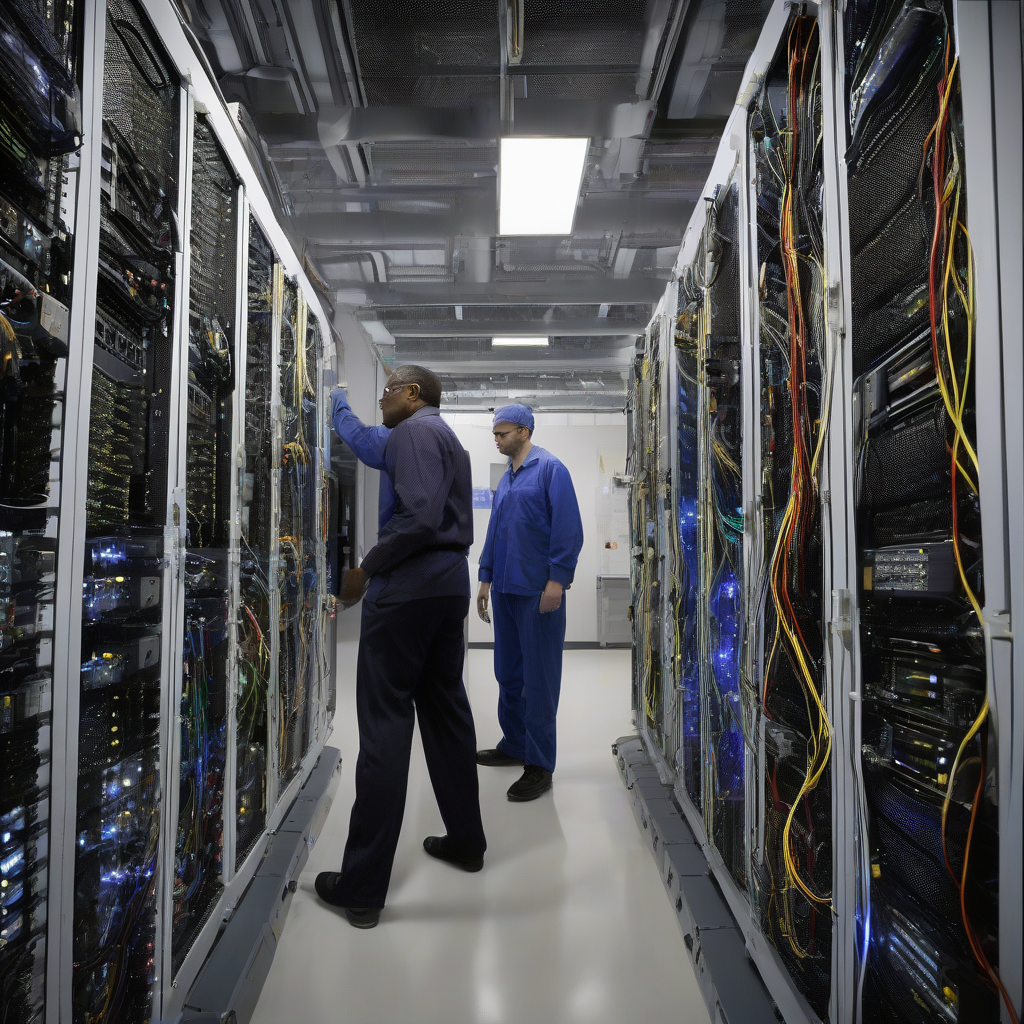
Traditional network architectures are proving insufficient for the requirements of artificial intelligence, according to VentureBeat. As organizations transition AI projects from experimental pilots to operational foundations, legacy systems are struggling to accommodate the unpredictable, high-volume traffic generated by agent-to-agent communication and real-time data pipelines.
Data from a Cisco study indicates that 80% of executives believe their company’s survival is linked to the adoption of agentic AI. However, there remains a significant gap between institutional ambition and technical reality. A recent Bloomberg study, titled "The Future-Ready Enterprise" and commissioned by Tata Communications, revealed that 3 in 4 leaders identify AI as a top priority at the board level. Despite this recognition, approximately 65% of enterprises continue to rely on transitional or legacy infrastructure.
This gap creates severe operational risks. Traditional business applications typically functioned with a latency tolerance between 100 to 500 milliseconds. In contrast, mission-critical AI workloads, such as real-time fraud detection or supply chain optimization, require latency to remain below 10 milliseconds. Kapil, Vice President of Global Network Services at Tata Communications, noted that this shift represents a new performance paradigm that invalidates previous network design assumptions.
Network Performance Benchmarks
| Metric | Legacy Application Requirement | AI Workload Requirement |
|---|---|---|
| Latency Tolerance | 100 to 500 milliseconds | Below 10 milliseconds |
| Infrastructure Status | 65% of enterprises | Transitioning/Legacy |
| Executive Priority | 75% of leaders | Board-level priority |
Failure to modernize results in direct financial costs. When networks are treated as simple transport layers rather than controlled environments, any congestion that impacts data flow effectively renders expensive AI stacks inefficient. Kapil warned that relying on a 'best-effort' network transforms substantial financial investments into high-stakes gambles where performance is left to external variables.
Why It Matters
The reliance on legacy infrastructure creates a hidden ceiling for AI innovation. While software developers focus on model optimization and algorithmic precision, the physical network layer is becoming the bottleneck for performance delivery. Without a dedicated, performance-oriented network architecture, enterprises risk overspending on AI models that cannot perform in production. This shift indicates that future competitive advantage will be determined not just by the quality of the AI model, but by the underlying architectural capability to maintain sub-10 millisecond data throughput across global operations.
Reader Discussion & Insights