
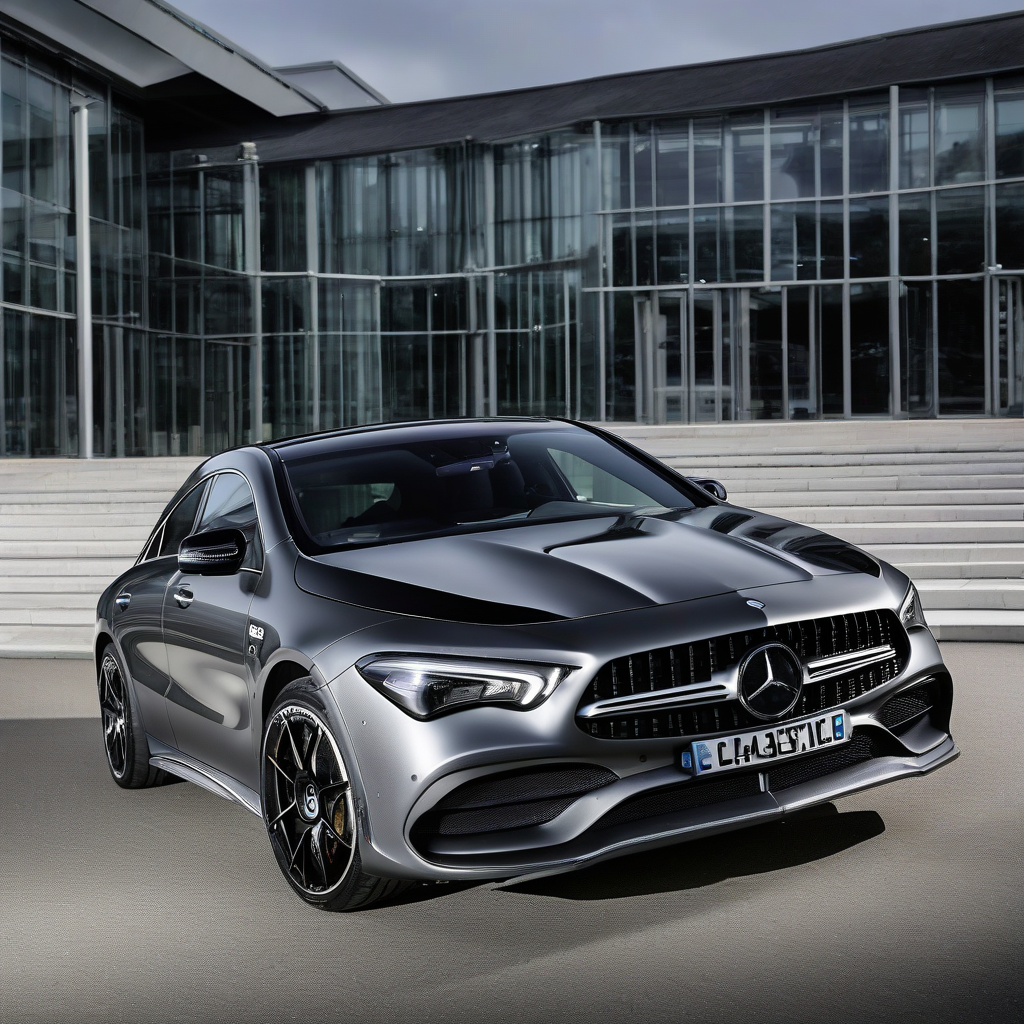
The automotive industry witnessed the unveiling of the new Mercedes-AMG CLA 45 4Matic+ at the Goodwood Festival of Speed, representing a significant shift toward electrification for the compact sport sedan segment. According to CarBuzz, this high-performance model marks a transition from internal combustion to a battery-electric powertrain, delivering a substantial increase in output compared to the vehicle it replaces.
The new electric iteration utilizes a three-motor setup to achieve a total output of 671 horsepower. This figure stands in stark contrast to the previous generation of the CLA 45, which relied on a turbocharged 2.0-liter four-cylinder engine generating 416 horsepower. The adoption of this electric configuration signals Mercedes-AMG’s intent to maintain competitive performance metrics as regulatory pressures and environmental standards influence vehicle engineering.
| Feature | Specification |
|---|---|
| Model Name | Mercedes-AMG CLA 45 4Matic+ |
| Power Output (Electric) | 671 hp |
| Power Output (Previous 2.0L) | 416 hp |
| Powertrain Type | Three-motor electric |
While the vehicle has already demonstrated its capabilities on the Nürburgring, internal testing and track records suggest that despite the significant power gains, the platform remains distinct from historical rivals in terms of specific track performance benchmarks. The shift to a tri-motor configuration allows for torque-vectoring capabilities that were not feasible with the older 2.0-liter turbocharged architecture.
Why It Matters
The transition of the CLA 45 to a pure electric platform illustrates the broader electrification strategy currently being executed by Mercedes-Benz under their AMG performance sub-brand. By integrating triple-motor setups into compact chassis, manufacturers are attempting to replicate the engagement previously associated with high-revving combustion engines. This approach highlights a pivot toward software-defined vehicle performance, where power delivery and handling characteristics are managed by digital controllers rather than mechanical linkages. As legacy manufacturers convert flagship performance nameplates to electric, the primary challenge remains balancing the additional weight of battery systems against the need for agile handling on demanding circuits like the Nürburgring.
Reader Discussion & Insights