
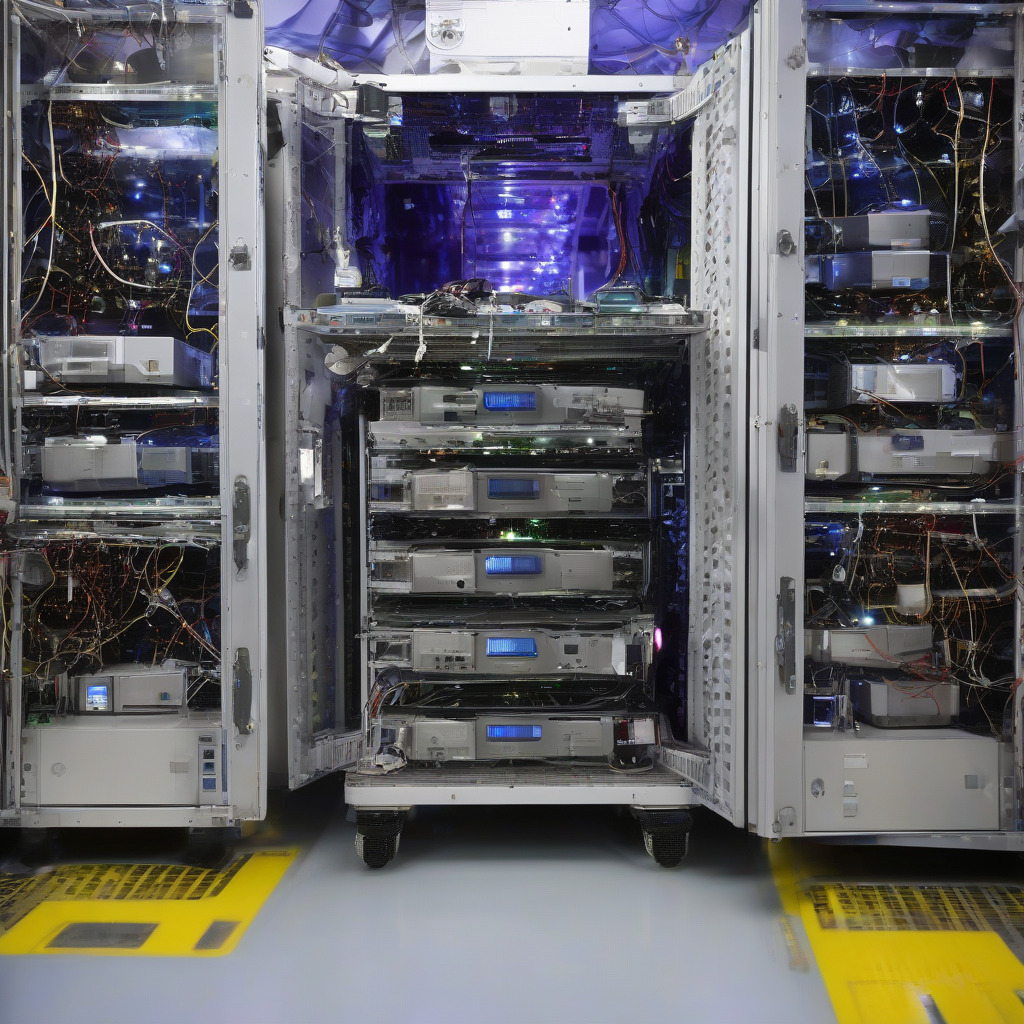
Researchers have successfully demonstrated the production of atomic quantum gas mixtures with high particle flux, a development that could transform physics experiments conducted in space. According to Phys.org, the scientific team utilized the MAIUS-B apparatus to generate Bose–Einstein condensates (BECs) composed of two distinct atomic species—rubidium and potassium—within the controlled environment of the Einstein Elevator at Leibniz University Hannover in Germany.
This experiment represents a significant technical milestone by achieving these results under microgravity conditions. The ability to maintain high particle flux is essential for precision measurements in fundamental physics, providing a new method for testing physical theories that are otherwise limited by gravity on Earth.
Experimental Data Summary
| Parameter | Detail |
|---|---|
| Apparatus Used | MAIUS-B |
| Atomic Species | Rubidium and Potassium |
| Test Environment | Einstein Elevator (Leibniz University Hannover) |
| Experimental State | Bose–Einstein condensates (BECs) |
The findings, recently published in the journal Nature Communications, detail how the miniaturization of complex laser hardware allows for these sophisticated quantum states to be generated outside of traditional laboratory constraints. By simulating microgravity through the Einstein Elevator facility, the team confirmed that the cooling and manipulation of these dual-species quantum gases can occur with the stability required for long-term space exploration missions.
Why It Matters
The miniaturization of quantum-sensing laser hardware represents a pivotal shift for space-based infrastructure. As orbital platforms move toward more autonomous and precise instrumentation, the capacity to perform complex quantum physics in vacuum environments without bulky ground-based equipment will lower the barrier for deep-space research. Beyond fundamental science, this technology provides the foundational stability required for next-generation satellite navigation, gravitational wave detection, and ultra-precise timing systems, moving these capabilities from theoretical physics models into viable, space-hardened hardware configurations.
Reader Discussion & Insights