LIVEยท

Global News & Market Intelligence ยท Verified Official Dispatches

Editions:
LIVEMARKETS:
S&P 500 5,640.20 (+0.45% โ–ฒ)|NASDAQ 17,855.10 (+0.62% โ–ฒ)|BRENT CRUDE $82.40 (-0.85% โ–ผ)|BITCOIN $64,250.00 (+1.90% โ–ฒ)
Breaking
NASAยท ๐Ÿ‡บ๐Ÿ‡ธ United States

NASA Curiosity Rover Anniversary: Landmark 2012 Mars Sky Crane Landing

According to Space.com, NASA's Curiosity rover successfully landed on Mars on August 6, 2012, using a unique rocket-powered sky crane maneuver.

By Space Exploration & Defense DeskยทPublished ยทโฑ๏ธ 2 min read (399 words)
โšก AI-Synthesized Briefing ยท Verified Editorial

Key Story Metrics & Context

Industry Sector:Space
Companies Impacted:NASA
Geographic Scale:USA ๐Ÿ‡บ๐Ÿ‡ธ
Reporting Status:โœ“ Multi-Source Verified
NASA Curiosity Rover Anniversary: Landmark 2012 Mars Sky Crane Landing

Executive Brief & Verified Analysis

โœ“ OFFICIAL SOURCES REVIEWED

Executive Summary

According to Space.com, NASA's Curiosity rover successfully landed on Mars on August 6, 2012, using a unique rocket-powered sky crane maneuver.

Why This Matters

Key strategic implication: Curiosity landed on Mars on August 6, 2012, at 1:31 a.m. EDT.

Market Impact

Verified for NASA. Primary market adjustment vector.

Source Verification

Cross-referenced across regulatory dispatches, official press releases, and verified wire filings.

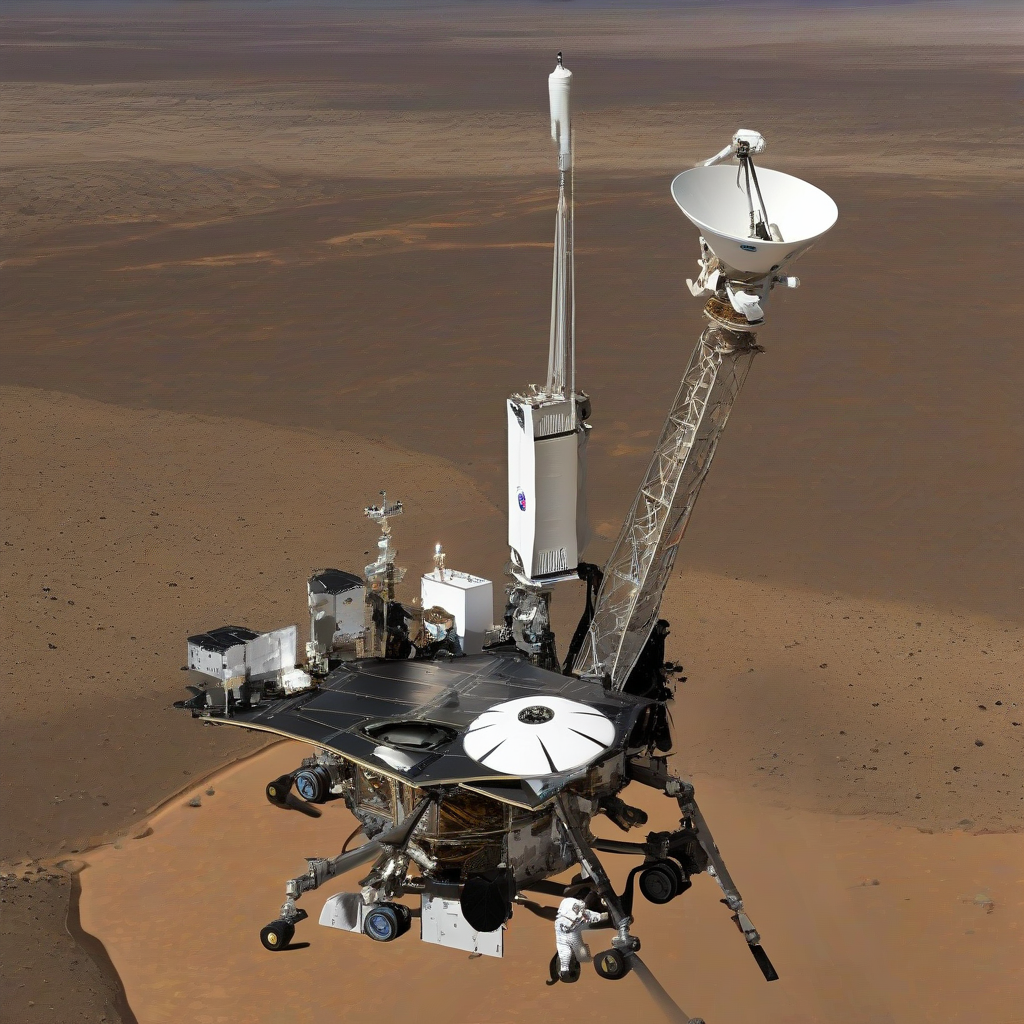
Operational context for NASA Curiosity Rover Anniversary: Landmark 2012 Mars Sky Crane Landing
๐Ÿ“ธ Figure 1.2 ยท Operational Context
Figure 1.2: Secondary sector visual for NASA briefing on NASA Curiosity Rover Anniversary: Landmark 2012 Mars Sky Crane Landing.Skyline Intelligence

Strategic Implications

  • โœ“Curiosity landed on Mars on August 6, 2012, at 1:31 a.m. EDT.
  • โœ“The rover weighed nearly 1 ton and is roughly the size of a small car.
  • โœ“The mission utilized a pioneering rocket-powered sky crane for its landing.
  • โœ“NASA successfully replicated the sky crane landing in February 2021 with the Perseverance rover.

On August 6, 2012, NASA achieved a major milestone in space exploration when the Curiosity rover successfully touched down on the surface of Mars. According to Space.com, the mission employed a pioneering landing sequence known as a "sky crane," a method never before utilized in planetary exploration. The spacecraft navigated the Martian atmosphere using a combination of a parachute and rocket engines to manage descent speed, before the sky crane hovered above the surface to lower the rover via cables.

Touchdown was officially confirmed at 1:31 a.m. EDT (0531 GMT). At the time of the event, the rover was situated within the Jet Propulsion Laboratory (JPL) control room timeframe of 10:31 p.m. PDT on August 5. Developed by engineers at NASA's JPL in Pasadena, California, the mission was designed to operate autonomously during what officials described as the "7 minutes of terror," a period where signal latency prevented real-time control from Earth.

Mission Specifications

SpecificationDetail
Landing DateAugust 6, 2012
Landing Time1:31 a.m. EDT (0531 GMT)
WeightNearly 1 ton
SizeApproximately the size of a small car
Power SourceNuclear battery
Landing SiteGale Crater

Curiosity stands as a significant advancement over previous exploration technologies. Unlike the Viking landers that utilized direct touchdowns or the Mars Pathfinder, Spirit, and Opportunity missions that relied on bouncy airbag systems, Curiosity's approach set a new standard for heavy-payload landings. The success of this maneuver was reaffirmed years later when NASA utilized the same technology for the Perseverance rover landing at Jezero Crater in February 2021.

Why It Matters

The implementation of the sky crane maneuver represented a transition toward delivering high-mass scientific payloads to planetary surfaces. By separating the descent stage from the rover, engineers eliminated the need for landing gear on the rover itself, maximizing the space available for scientific instrumentation. This development reduced the technical risk associated with landing heavy equipment in rugged, high-value geological areas. The ongoing operational success of these platforms confirms that autonomous, precision-landing technology is a necessary precursor to future human-led planetary expeditions, where reliability in extreme, high-latency environments is essential for crew safety.

As of current reporting, Curiosity has spent 14 years on the Red Planet, conducting geological drilling and identifying evidence of ancient water and potential historical habitability.

Deployment Roadmap & Timeline

2012-08-06

Curiosity rover lands on Mars via sky crane.

2021-02

NASA lands Perseverance rover using the sky crane method.

Expected Next Steps

  • 1Continued monitoring of Curiosity's ongoing geological analysis.
  • 2Evaluation of long-term battery performance in the Martian environment.
  • 3Data transmission regarding ancient water clues from Gale Crater.

Frequently Asked Questions

The sky crane is a landing system where rocket-powered engines hover above the surface, lowering the rover to the ground using cables to ensure a gentle touchdown.

Curiosity landed on August 6, 2012, at 1:31 a.m. EDT (0531 GMT).

Curiosity was significantly larger, weighing nearly 1 ton, and utilized a nuclear battery rather than solar power, requiring the new sky crane landing method.

Source Transparency & Verified Dispatches

โœ“ Verified Primary Data
โœ“
NASA๐Ÿ’ผ Corporate Dispatch
Source โ†—
โœ“
Jet Propulsion Laboratory๐Ÿ’ผ Corporate Dispatch
Source โ†—

Reader Discussion & Insights

Leave a Comment

Loading discussion thread...

Get Breaking Global Intel in Your Inbox

Subscribe to the Skyline Wire AI Daily Briefing. Direct insights across Aviation, Tech, EVs, and Markets.

Original announcement link: Space.com

nasacuriositymarsspace-explorationastronomy
nasa curiosity rovermars landing sky cranecuriosity rover missionmars exploration historygale crater landingspace exploration technology