LIVEยท

Global News & Market Intelligence ยท Verified Official Dispatches

Editions:
LIVEMARKETS:
S&P 500 5,640.20 (+0.45% โ–ฒ)|NASDAQ 17,855.10 (+0.62% โ–ฒ)|BRENT CRUDE $82.40 (-0.85% โ–ผ)|BITCOIN $64,250.00 (+1.90% โ–ฒ)
Breaking
NASAยท ๐Ÿ‡บ๐Ÿ‡ธ United States

NASA's Roman Telescope to Support Planetary Defense Missions

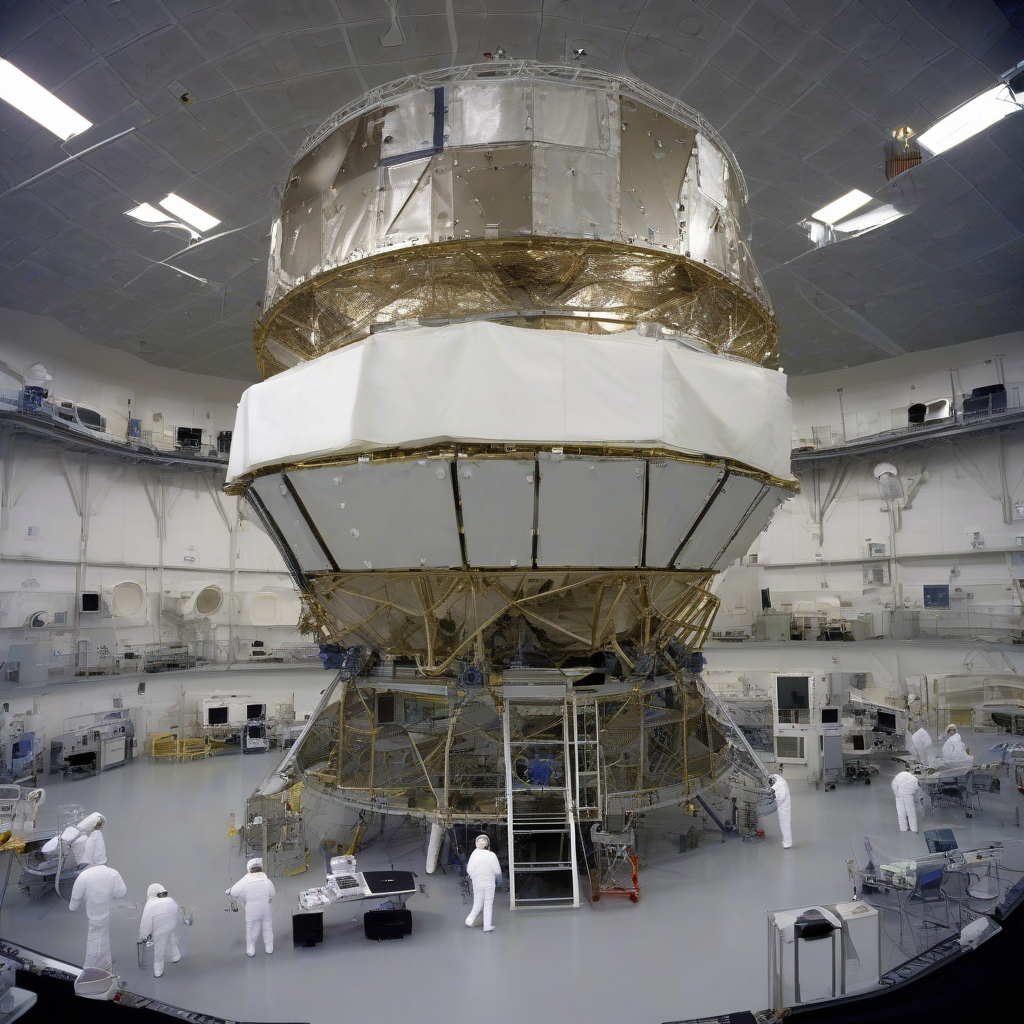
NASA's Nancy Grace Roman Space Telescope, launching in late August, is expected to assist in planetary defense by detecting asteroids alongside its deep-space mission.

By Skyline Wire Newsroom ยท Published Source: MIT Technology Review ยท Verified Reporting

Key Story Metrics & Context

Industry Sector:Space
Companies Impacted:NASA
Geographic Scale:USA ๐Ÿ‡บ๐Ÿ‡ธ
Reporting Status:โœ“ Multi-Source Verified
NASA's Roman Telescope to Support Planetary Defense Missions

Executive Brief & Verified Analysis

โœ“ OFFICIAL SOURCES REVIEWED

Executive Summary

NASA's Nancy Grace Roman Space Telescope, launching in late August, is expected to assist in planetary defense by detecting asteroids alongside its deep-space mission.

Why This Matters

Key strategic implication: NASA's Nancy Grace Roman Space Telescope launches at the end of August from Kennedy Space Center.

Market Impact

Verified for NASA. Primary market adjustment vector.

Source Verification

Cross-referenced across regulatory dispatches, official press releases, and verified wire filings.

Strategic Implications

  • โœ“NASA's Nancy Grace Roman Space Telescope launches at the end of August from Kennedy Space Center.
  • โœ“The telescope's 300-megapixel infrared camera allows it to view a field 100 times larger than the Hubble Space Telescope.
  • โœ“It is capable of detecting asteroids as small as 60 feet in length.
  • โœ“A team of planetary scientists will present their asteroid-tracking proposal at the Europlanet Science Congress in September.

According to MIT Technology Review, NASA is scheduled to launch the Nancy Grace Roman Space Telescope from the Kennedy Space Center in Florida at the end of August. While the primary mission of the observatory focuses on studying dark matter and dark energy, the project now includes a secondary function: planetary defense against near-Earth asteroids.

The telescope features a 300-megapixel infrared camera with a field of view approximately 100 times larger than that of the Hubble Space Telescope. This technical capacity will allow it to survey over a billion galaxies, while simultaneously monitoring the solar system for potential threats. Researchers note the telescope is capable of detecting asteroids as small as 60 feet in length, a size comparable to the 2013 Chelyabinsk meteor that released 500,000 tons of TNT and resulted in 1,500 hospitalizations.

Technical Capabilities and Comparisons

FeatureRoman Space TelescopeHubble Space Telescope
Camera Resolution300-megapixelVariable
Field of View100x larger coverageBaseline reference
Primary FocusDark energy/matterDeep space observation

Bryan Holler, a researcher at the Space Telescope Science Institute, has been working with colleagues to highlight these planetary defense capabilities to ensure continued mission funding following threats of budget cuts in 2025. The team will present their proposal for using the telescope to track asteroid trajectories, sizes, and compositions at the upcoming Europlanet Science Congress in The Hague this September.

Integrating this function requires software modifications. Currently, the telescopeโ€™s systems are programmed to discard streaks caused by cosmic rays or moving objects as noise. Andy Rivkin of the Johns Hopkins Applied Physics Laboratory indicated that astronomers intend to manually access and analyze these discarded streaks to identify potential asteroids.

Why It Matters

Transitioning high-cost scientific assets into multi-role surveillance platforms represents a strategic shift in government aerospace funding. By demonstrating that deep-space observatories can perform localized planetary defense, agencies like NASA can justify long-term capital expenditure to lawmakers by overlapping scientific research with national security requirements. This dual-use approach reduces the need for dedicated, single-purpose asteroid detection missions, effectively maximizing the return on investment for high-budget space projects while fortifying Earth's monitoring capabilities against localized celestial threats.

Deployment Roadmap & Timeline

July 2025

Bryan Holler and Rick Cosentino identified the need to promote planetary defense capabilities.

August 2026

Scheduled launch of the Nancy Grace Roman Space Telescope.

September 2026

Planetary scientists to present mission capabilities at the Europlanet Science Congress.

Expected Next Steps

  • 1Execute launch from Kennedy Space Center.
  • 2Present asteroid detection proposal at the Europlanet Science Congress.
  • 3Develop software modifications to stop discarding asteroid detection streaks.

Frequently Asked Questions

The telescope is scheduled to launch at the end of August from the Kennedy Space Center in Florida.

The telescope is capable of spotting asteroids up to 60 feet long.

The current software is designed to discard streaks caused by moving objects; astronomers will need to manually analyze these streaks to identify asteroids.

Source Transparency & Verified Dispatches

โœ“ Verified Primary Data
โœ“
NASA๐Ÿ’ผ Corporate Dispatch
Source โ†—
โœ“
Space Telescope Science Institute๐Ÿ’ผ Corporate Dispatch
Source โ†—
โœ“
Johns Hopkins Applied Physics Laboratory๐Ÿ“ฐ Global News Wire
Source โ†—

Reader Discussion & Insights

Leave a Comment

Loading discussion thread...

Get Breaking Global Intel in Your Inbox

Subscribe to the Skyline Wire AI Daily Briefing. Direct insights across Aviation, Tech, EVs, and Markets.

Original announcement link: MIT Technology Review

nasaasteroidstelescopespace explorationplanetary defense
nancy grace roman space telescopeplanetary defensenasa asteroid detectionkennedy space centerjames webb space telescopespace sciencedark energy