
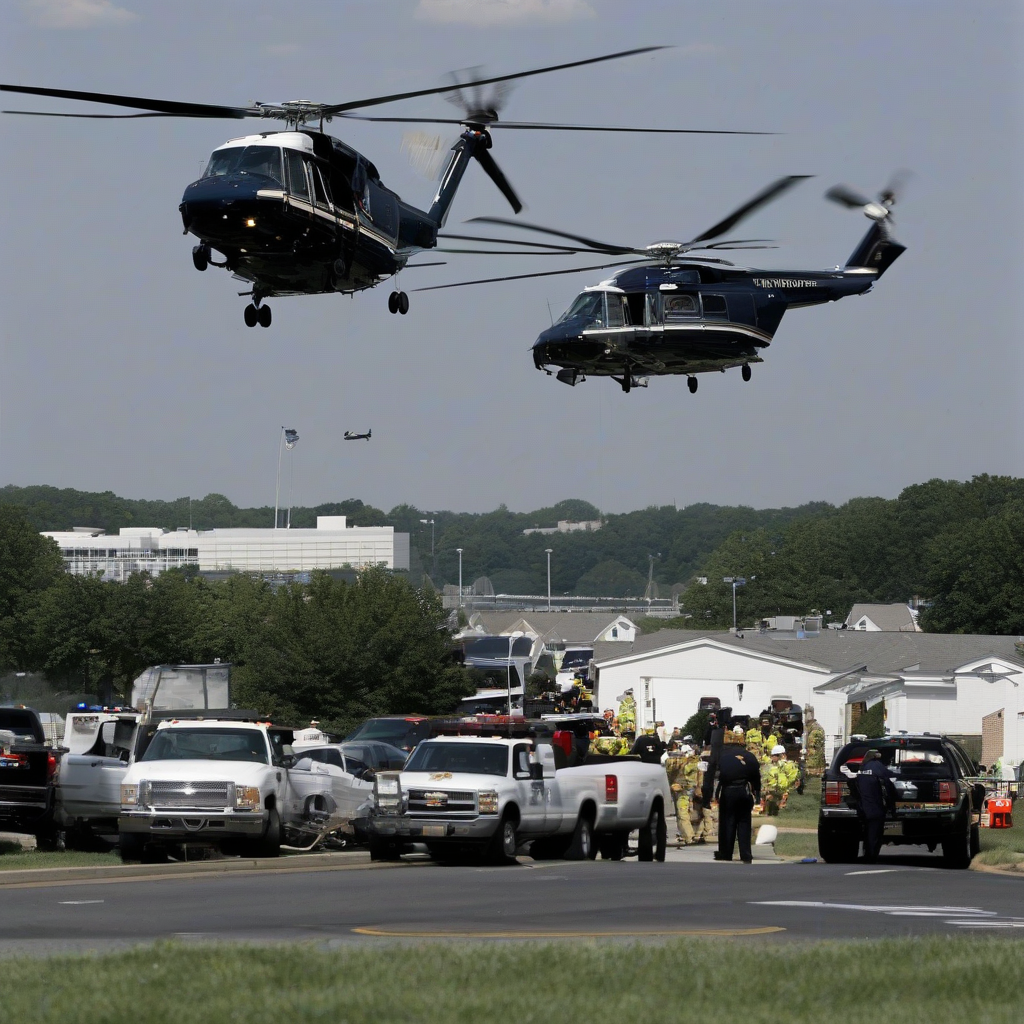
Federal aviation regulators have launched an official inquiry into an air-safety incident involving Marine One, the helicopter used to transport the President of the United States. According to Axios, the National Transportation Safety Board (NTSB) is currently examining a "loss of separation" event that occurred on Tuesday when the presidential helicopter came into close proximity with a commercial airliner departing from Ronald Reagan Washington National Airport (DCA).
The Federal Aviation Administration (FAA) confirmed that its air traffic controllers maintained communication with both the commercial pilot and the crew of Marine One during the maneuver. Preliminary findings released by the FAA indicate that the incident involved a momentary reduction in the required safe distance between the two aircraft. The agency stated that both vehicles continued on their respective paths away from each other following the event.
White House spokesperson Kush Desai addressed the incident, emphasizing that the President was not at any point in danger. The administration is reportedly coordinating with the FAA, military officials, and security personnel to review safety protocols. This event occurs against the backdrop of increased scrutiny over airspace management in the Washington, D.C. area. Following a fatal midair collision in January 2025, the FAA implemented strict, permanent restrictions on mixed helicopter and jet traffic surrounding Reagan National Airport.
| Feature | Detail |
|---|---|
| Incident Date | Tuesday |
| Reported By | The Wall Street Journal |
| Agency Investigating | NTSB / FAA |
| Primary Concern | Loss of separation |
| Location | Reagan National Airport (DCA) airspace |
Why It Matters
The incident highlights the persistent challenges of managing high-density, multi-modal airspace in restricted corridors. While the FAA has tightened regulations, the presence of presidential flight operations complicates the traffic flow near commercial hubs like DCA. For the broader commercial aviation industry, this investigation underscores the sensitivity of air traffic control (ATC) to non-standard aircraft movements. Future policy shifts may involve advanced automated separation technologies or stricter real-time data integration between military and civilian traffic control centers to prevent similar proximity triggers in congested urban airspace.
Reader Discussion & Insights