LIVEยท

Global News & Market Intelligence ยท Verified Official Dispatches

Editions:
LIVEMARKETS:
S&P 500 5,640.20 (+0.45% โ–ฒ)|NASDAQ 17,855.10 (+0.62% โ–ฒ)|BRENT CRUDE $82.40 (-0.85% โ–ผ)|BITCOIN $64,250.00 (+1.90% โ–ฒ)
Breaking
Rocket Launchesยท ๐ŸŒ Global

Rocket Lab Deploys iQPS Radar Satellite After Five-Week Delay

A Rocket Lab Electron vehicle successfully launched the QPS-SAR-13 satellite into orbit on Aug. 6, following a five-week delay from the original June 30 mission date.

By Space Exploration & Defense DeskยทPublished ยทโฑ๏ธ 2 min read (384 words)
โšก AI-Synthesized Briefing ยท Verified Editorial

Key Story Metrics & Context

Industry Sector:Space Exploration, Defense
Companies Impacted:Rocket Lab, iQPS
Geographic Scale:Japan ๐Ÿ‡ฏ๐Ÿ‡ต, New Zealand ๐Ÿ‡ณ๐Ÿ‡ฟ, USA ๐Ÿ‡บ๐Ÿ‡ธ
Reporting Status:โœ“ Multi-Source Verified
Rocket Lab Deploys iQPS Radar Satellite After Five-Week Delay

Executive Brief & Verified Analysis

โœ“ OFFICIAL SOURCES REVIEWED

Executive Summary

A Rocket Lab Electron vehicle successfully launched the QPS-SAR-13 satellite into orbit on Aug. 6, following a five-week delay from the original June 30 mission date.

Why This Matters

Key strategic implication: Rocket Lab launched the QPS-SAR-13 satellite on Aug. 6, 2026, after a five-week delay.

Market Impact

Verified for Rocket Lab, iQPS. Primary market adjustment vector.

Source Verification

Cross-referenced across regulatory dispatches, official press releases, and verified wire filings.

Operational context for Rocket Lab Deploys iQPS Radar Satellite After Five-Week Delay
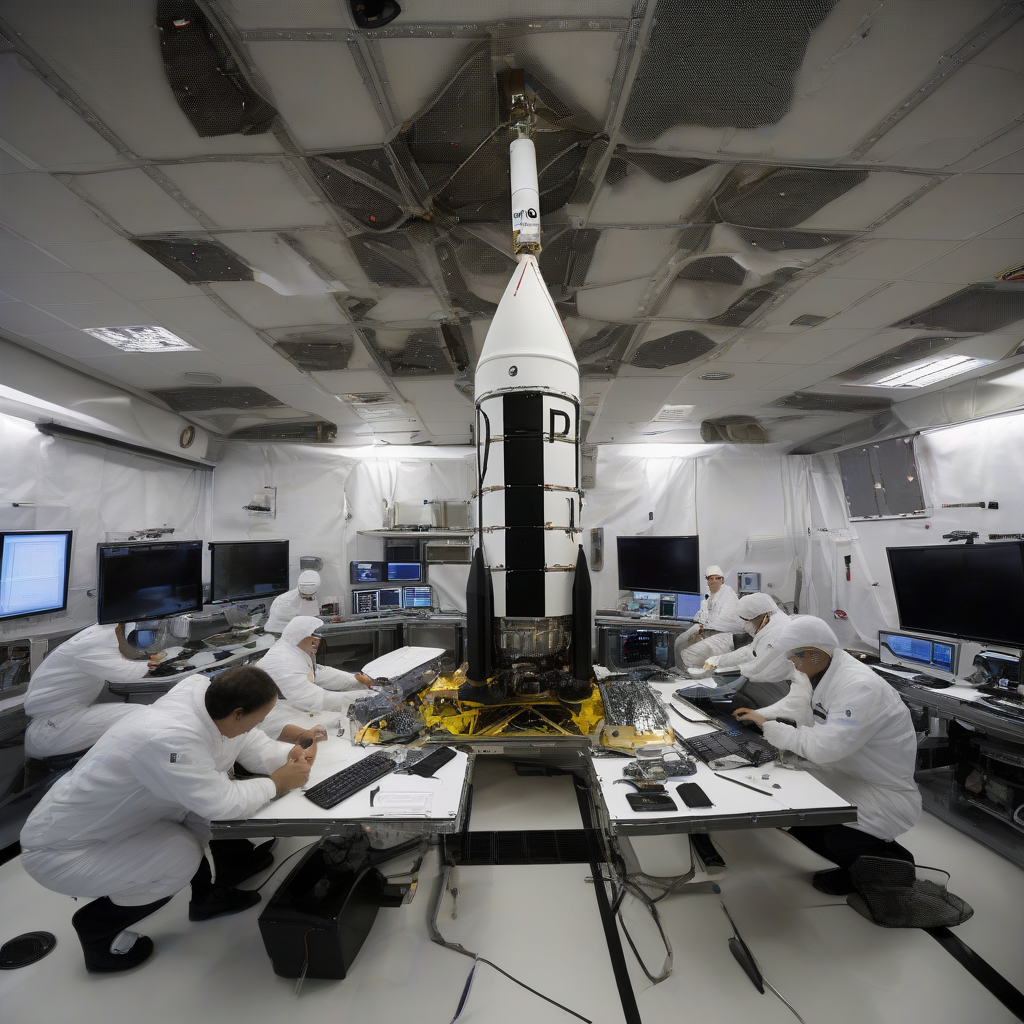
๐Ÿ“ธ Figure 1.2 ยท Operational Context
Figure 1.2: Secondary sector visual for Rocket Launches briefing on Rocket Lab Deploys iQPS Radar Satellite After Five-Week Delay.Skyline Intelligence

Strategic Implications

  • โœ“Rocket Lab launched the QPS-SAR-13 satellite on Aug. 6, 2026, after a five-week delay.
  • โœ“The satellite was deployed to an orbit of approximately 357 miles (575 kilometers).
  • โœ“This was the 92nd overall mission for Rocket Lab and their 13th launch of 2026.
  • โœ“Rocket Lab holds a $266 million contract with the U.S. Space Force for up to 18 suborbital missile-defense missions.

A Japanese Earth-observation satellite, QPS-SAR-13, achieved orbit early on Aug. 6 following a successful launch from New Zealand, according to Space.com. The mission, designated "The Grain Goddess Provides," saw the spacecraft reach its target orbit approximately 357 miles (575 kilometers) above Earthโ€™s surface.

The launch, conducted using a Rocket Lab Electron vehicle, proceeded after a five-week delay. While a previous attempt occurred on June 30, it was aborted at the final second; the company has not publicly disclosed the reason for that specific cancellation. This flight marked the 92nd mission overall for Rocket Lab and the 13th for the company in 2026.

Mission and Technical Data

SpecificationDetail
Satellite NameQPS-SAR-13 (MIKURA-I)
Launch DateAug. 6, 2026
Launch Time5:18 a.m. EDT (0918 GMT)
Target Orbit357 miles (575 kilometers)
Mission DesignationThe Grain Goddess Provides
Total Mission Count92nd overall, 13th in 2026

Known as MIKURA-I, the satellite utilizes high-resolution synthetic aperture radar (SAR). This technology enables the collection of imagery regardless of lighting or cloud cover. The spacecraft is part of a planned 36-satellite constellation managed by the Tokyo-based firm iQPS. This launch represents the eighth out of a contracted 15 missions that Rocket Lab is slated to perform to establish the constellation.

Beyond standard satellite deployment, Rocket Lab is diversifying its operations. The company utilizes the 59-foot-tall (18 meters) Electron for small satellites and the HASTE variant for hypersonic testing. Furthermore, Rocket Lab has secured a $266 million contract with the U.S. Space Force to support as many as 18 suborbital missile-defense tests, which will largely originate from launch sites in Alaska.

Why It Matters

The integration of private launch providers into national defense and commercial observation networks highlights a shift toward high-cadence, responsive space infrastructure. By securing large-scale government contracts like the $266 million deal with the U.S. Space Force, Rocket Lab is transitioning from a niche small-satellite carrier to a primary logistics provider for critical defense systems. This transition creates competition for legacy aerospace firms while accelerating the deployment of global SAR constellations, which are becoming essential for commercial maritime monitoring, disaster response, and persistent intelligence gathering in contested global territories.

Deployment Roadmap & Timeline

June 30, 2026

Original launch attempt aborted at the last second.

Aug. 6, 2026

Successful launch of the QPS-SAR-13 mission.

Expected Next Steps

  • 1Continued launches to complete the 36-satellite iQPS constellation.
  • 2Execution of the 18 suborbital missile-defense missions for the U.S. Space Force.
  • 3Potential increase in the launch cadence for the HASTE hypersonic variant.

Frequently Asked Questions

The mission, titled 'The Grain Goddess Provides,' launched on Aug. 6, 2026, at 5:18 a.m. EDT.

The satellite, also known as MIKURA-I, uses high-resolution synthetic aperture radar to observe Earth through clouds, both day and night.

The iQPS constellation is designed to include 36 SAR satellites.

Source Transparency & Verified Dispatches

โœ“ Verified Primary Data
โœ“
Space.com๐Ÿ’ผ Corporate Dispatch
Source โ†—
โœ“
Rocket Lab๐Ÿ’ผ Corporate Dispatch
Source โ†—

Reader Discussion & Insights

Leave a Comment

Loading discussion thread...

Get Breaking Global Intel in Your Inbox

Subscribe to the Skyline Wire AI Daily Briefing. Direct insights across Aviation, Tech, EVs, and Markets.

Original announcement link: Space.com

rocket-labiqpssatellitesspace-launchelectron
rocket lab electroniqps satelliteradar satellitespace missioncommercial satellite launchspace-comsatellite constellation