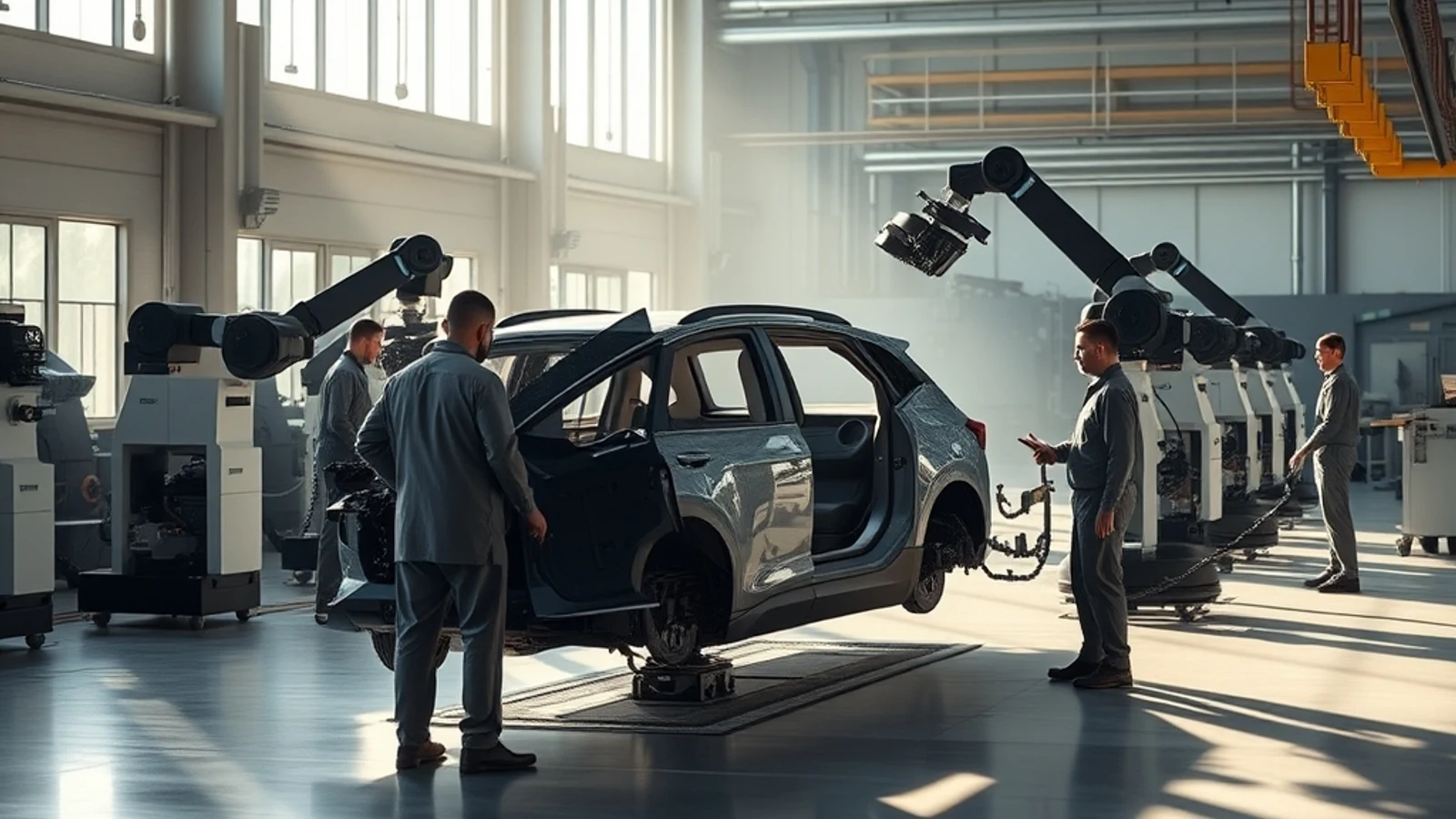
Factory Production and Validation Launch
Scout Motors has officially transitioned from factory construction to vehicle manufacturing at its new facility in Blythewood, South Carolina. As of November 12, 2026, the automaker confirmed the commencement of validation vehicle assembly. This phase serves to test the functionality of new equipment and refine manufacturing processes before full-scale production begins. The company describes this milestone as a move toward transforming its previously conceptual vehicle plans into tangible reality within the factory environment. Source
The Blythewood production complex, which represents a $2 billion investment, is now in its final construction phase. According to reports, most of the essential manufacturing equipment has been installed and is currently operational. These early builds are intended to verify the assembly line sequencing, stress-test tooling, and identify potential bottlenecks without the time pressures associated with high-volume production. This methodical approach is intended to ensure the readiness of the infrastructure for future scaling requirements. Source
The facility is highly automated, particularly within the body shop. Scout Motors utilizes more than 750 robots to assemble each vehicle, which consists of approximately 160 individual components. By the time a vehicle body finishes the assembly stage, it features roughly 5,000 weld points. To maintain high standards, the automaker employs AI-supported monitoring systems and advanced measurement technology that evaluates every body against strict engineering specifications before it progresses to the paint shop. Source
While the body shop is engineered to reach a capacity of approximately 40 vehicles per hour, the facility is currently operating well below this speed during the validation phase. Management is prioritizing calibration and repeatability over sheer output volume. This focus allows teams to resolve quality issues early in the developmental life cycle. Sample bodies are subject to thousands of individual measurements as part of these comprehensive quality assurance checks before moving further down the assembly line. Source
Following the body shop stage, vehicles enter an electrified paint shop for a series of processes including cleaning, anti-corrosion coating, painting, and drying. Once finished, they proceed to the final assembly area. Here, personnel perform the installation of critical components such as wiring, windows, seats, steering wheels, and tires. This stage marks the integration of the vehicle's interior and electronic systems into the completed body structure developed during the earlier manufacturing steps. Source
Scout Motors plans to continue these validation builds throughout 2027. Following this period, the company will advance into formal pre-production runs. These subsequent phases are intended to bridge the gap between current testing and final production readiness. The ultimate objective is to ramp up to full series production speed, though the timeline remains centered on achieving market readiness for the upcoming 2028 model year launch for both the Traveler SUV and the Terra pickup truck. Source
Strategic Pivot to Range-Extended Models
The development strategy focuses on body-on-frame off-road vehicles. While the company initially anticipated strong demand for purely electric models, pre-order data revealed that a significant majority of reservation holders preferred the extended-range option. Consequently, Scout has adjusted its strategy to prioritize the 'Harvester' model, which includes a rear-mounted internal combustion engine acting as a generator. This engine increases utility by providing power once the high-voltage battery charge is depleted, addressing potential range concerns. Source
Market data suggests that over 80% of current pre-orders for the Traveler and Terra have been for the Harvester range-extended configuration. This shift has prompted the manufacturer to accelerate the market arrival of the range-extended version compared to the pure-electric variants. By providing an alternative to traditional battery-only systems, the company aims to mitigate the pricing and range challenges that have faced the broader electric truck segment in recent years, potentially broadening the appeal of the brand. Source
Beyond the assembly plant itself, Scout Motors is building a broader industrial ecosystem. The company previously announced a $300 million investment in an on-site Supplier Park. This secondary project is expected to create approximately 1,000 supplier-related jobs in addition to the 4,000 direct positions at the main facility. This industrial footprint is intended to consolidate supply chain logistics and improve coordination between the automaker and its primary component partners as it gears up for mass production. Source
Workforce development remains a critical component of the company's operational ramp-up. Scout Motors is collaborating with regional colleges and universities to establish a pipeline for workers with experience in manufacturing and automotive engineering. This hiring effort is designed to prepare employees to manage the high-tech equipment installed at the Blythewood facility, including the AI-assisted assembly and welding robots that underpin the company's production management structure for the forthcoming 2028 vehicles. Source
Current estimates from the manufacturer indicate that customer deliveries are on track to begin in 2028. The company is navigating a challenging environment that includes legal disputes with dealership networks and shifting market trends regarding truck electrification. Despite these pressures, the ability to transition from an empty construction site to an operational factory building validation units represents a significant progress marker for the Volkswagen Group subsidiary as it strives to fulfill its delivery goals for the 2028 model year. Source
The long-term success of the brand remains subject to external market conditions. However, the current status confirms that the production machinery is active. While the vehicles are not yet available for sale, the validation period provides the essential feedback loop needed to prepare for the final production of the Traveler and Terra. The company continues to project that the initial sales will commence in late 2027, followed by the rollout of customer vehicles in 2028, pending the completion of pre-production maturity stages. Source