
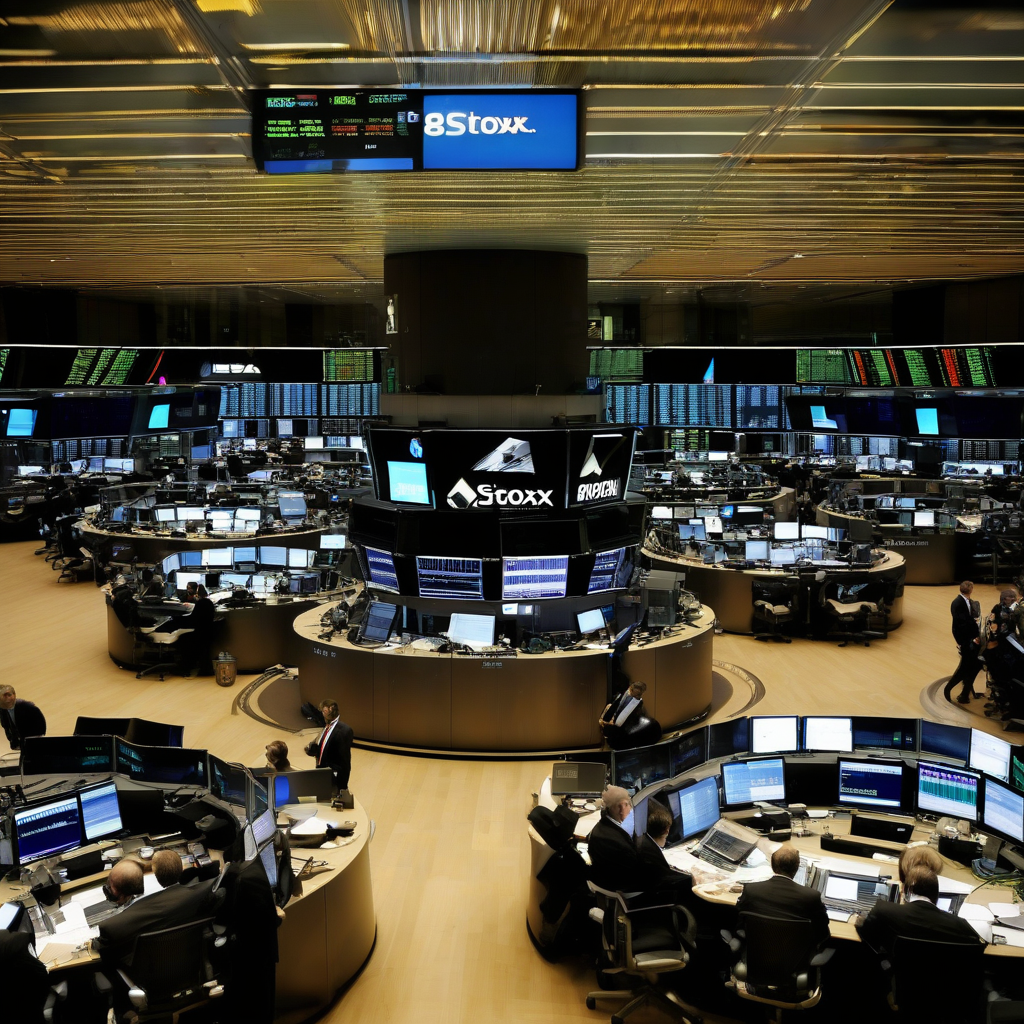
The pan-European Stoxx 600 index has officially touched a record high, maintaining a trajectory that has yielded a 10% increase year-to-date in 2026. According to CNBC — Technology, while the headline figure suggests broad-based prosperity across European equities, the internal mechanics of the market reveal a more complex sectoral distribution rather than a uniform rise across all industries.
Market Performance Data
| Metric | Value |
|---|---|
| Index | Stoxx 600 |
| 2026 YTD Growth | 10% |
| Status | Record High |
Investors are observing that while the index serves as a primary benchmark for European economic sentiment, the growth is not evenly dispersed. Digging beneath the surface-level appreciation, specific sectors are significantly outpacing others, highlighting a shift in capital allocation strategies among institutional participants in the Eurozone. Analysts note that while the headline figure captures the magnitude of the rally, it masks the volatility present within the underlying constituents that drive the index.
Context provided by the European Central Bank (ECB) and official regional exchange filings suggest that macroeconomic factors, including interest rate expectations and regional inflation data, continue to dictate the inflow of capital into these markets. The current environment has forced a re-evaluation of portfolio weightings as technology and industrial sectors respond differently to the 2026 monetary policy cycle.
Why It Matters
The record performance of the Stoxx 600 serves as a critical barometer for the European economy, yet it presents a potential 'valuation trap' for passive investors. When an index hits all-time highs while sectoral performance varies, it indicates that a narrow subset of companies—likely those benefiting from current AI infrastructure spending—is disproportionately carrying the index upward. This concentration risk suggests that if sector-specific tailwinds dissipate, the headline index could face a sharp correction despite ostensibly 'stable' aggregate growth, complicating the risk-adjusted returns for diversified European equity funds in the coming quarter.
Reader Discussion & Insights