
LIVEยท

Global News & Market Intelligence ยท Verified Official Dispatches

Editions:
LIVEMARKETS:
S&P 500 5,640.20 (+0.45% โ–ฒ)|NASDAQ 17,855.10 (+0.62% โ–ฒ)|BRENT CRUDE $82.40 (-0.85% โ–ผ)|BITCOIN $64,250.00 (+1.90% โ–ฒ)
Breaking
Shippingยท ๐ŸŒ Global

Trans-Pacific Container Rates Fluctuate Amid Shifting Peak Season Demand

Trans-Pacific shipping rates show renewed volatility as recent data indicates peak season demand may be sustaining longer than initially projected by industry experts.

By Global Markets & Intelligence DeskยทPublished ยทโฑ๏ธ 2 min read (423 words)
โšก AI-Synthesized Briefing ยท Verified Editorial

Key Story Metrics & Context

Industry Sector:Logistics, Shipping
Companies Impacted:Freightos
Geographic Scale:USA ๐Ÿ‡บ๐Ÿ‡ธ
Reporting Status:โœ“ Multi-Source Verified
Trans-Pacific Container Rates Fluctuate Amid Shifting Peak Season Demand

Executive Brief & Verified Analysis

โœ“ OFFICIAL SOURCES REVIEWED

Executive Summary

Trans-Pacific shipping rates show renewed volatility as recent data indicates peak season demand may be sustaining longer than initially projected by industry experts.

Why This Matters

Key strategic implication: Asia-U.S. West Coast rates are currently $6,129 per FEU, while East Coast rates remain at $9,012 per FEU.

Market Impact

Verified for Freightos. Primary market adjustment vector.

Source Verification

Cross-referenced across regulatory dispatches, official press releases, and verified wire filings.

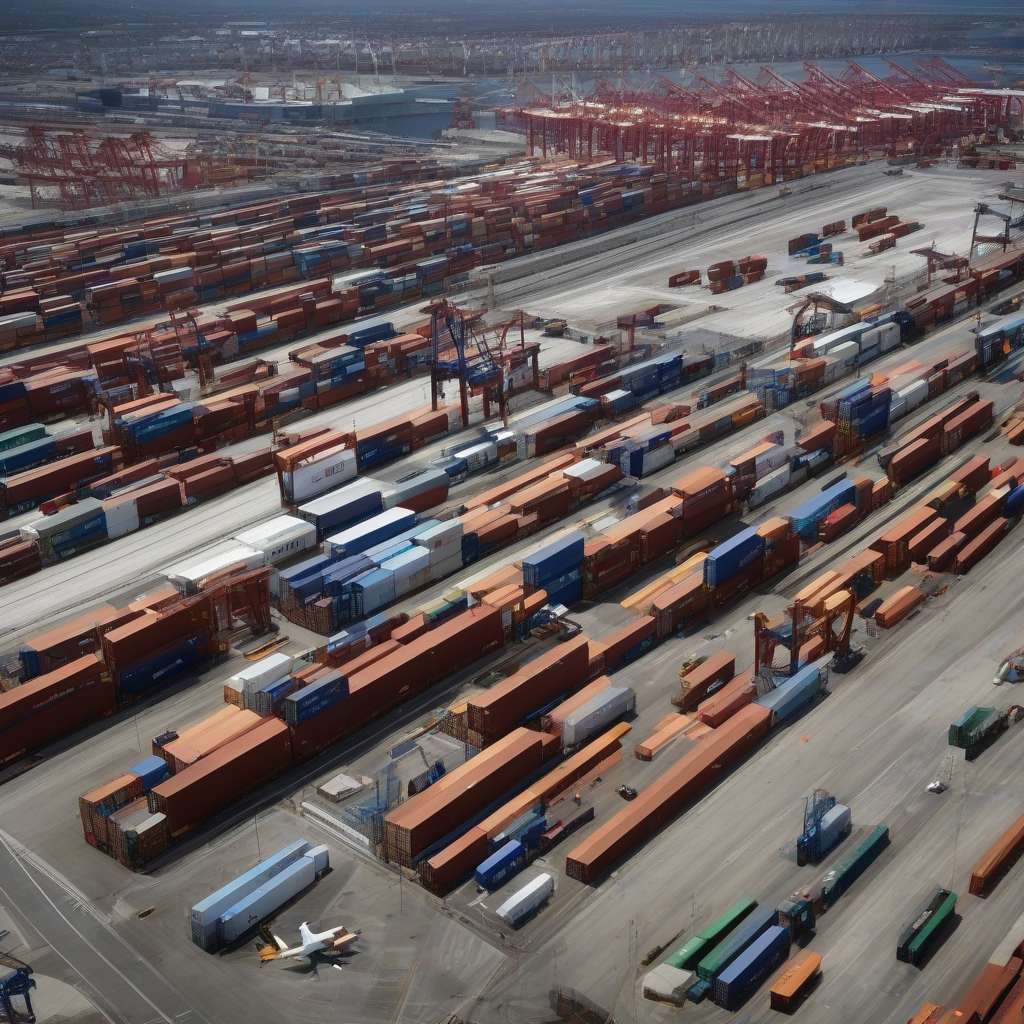
Operational context for Trans-Pacific Container Rates Fluctuate Amid Shifting Peak Season Demand
๐Ÿ“ธ Figure 1.2 ยท Operational Context
Figure 1.2: Secondary sector visual for Shipping briefing on Trans-Pacific Container Rates Fluctuate Amid Shifting Peak Season Demand.Skyline Intelligence

Strategic Implications

  • โœ“Asia-U.S. West Coast rates are currently $6,129 per FEU, while East Coast rates remain at $9,012 per FEU.
  • โœ“West Coast rates briefly surged above $7,500 in early July before dropping 20% and rebounding due to August 1 general rate increases.
  • โœ“Section 122 tariffs were replaced by Section 301 tariffs, ranging from 10% to 12.5%, for over 60 trade partners.

Shipping rates across the trans-Pacific trade lanes are exhibiting unexpected volatility, signaling that the traditional peak season may possess more longevity than earlier forecasts suggested. According to FreightWaves, while initial projections indicated a cooling period following an early, tariff-driven rush, recent market data suggests sustained demand levels.

Data from the Baltic Index, as reported via Freightos (NASDAQ: CRGO), shows a 1% decline in Asia-to-U.S. West Coast prices, bringing them to $6,129 per forty-foot equivalent unit (FEU). Conversely, Asia-to-U.S. East Coast rates have remained stagnant at $9,012 per FEU. This follows a period where West Coast prices hit a high exceeding $7,500 per FEU in early July before experiencing a 20% correction to approximately $6,000 per FEU. However, recent general rate increases (GRI) implemented on August 1 have pushed daily West Coast rates back above the $7,000 per FEU threshold.

Current Trans-Pacific Freight Rate Snapshot

Route LaneRate per FEUStatus
Asia to U.S. West Coast$6,129Decreased 1%
Asia to U.S. East Coast$9,012Level

Judah Levine, an analyst at Freightos, noted that the anticipated slowdown in August, initially estimated by the National Retail Federation, appears to be challenged by the recent rate adjustments and forwarder reports indicating strong volume. This trend is partially attributed to the transition from expiring Section 122 tariffs to Section 301 tariffs. These updated duties, ranging from 10% to 12.5%, were applied to more than 60 trade partners, effectively replacing the previous regime rather than resulting in the sharp hikes that shippers had anticipated during their earlier frontloading efforts.

Regulatory uncertainty remains a persistent factor for logistics providers. The U.S. Trade Representative is currently finalizing a Section 301 investigation concerning excess manufacturing capacity in 16 of the largest U.S. trading partners. There is ongoing speculation that these investigations could lead to a return of emergency-level tariff structures.

Why It Matters

The current rate volatility highlights the extreme sensitivity of global supply chains to regulatory policy rather than purely organic consumer demand. Shippers are caught between the necessity of inventory management and the risk of sudden tariff escalations. This unpredictability suggests that carriers are finding limited success in sustaining peak season surcharges beyond short-term tactical spikes. For the broader industry, the persistence of these rates indicates that supply chain planners can no longer rely on traditional seasonal models and must instead build significant fiscal buffers against immediate legislative shifts from the U.S. government.

Deployment Roadmap & Timeline

July 24

Expiration of Section 122 tariffs, replaced by Section 301 duties.

August 1

Implementation of general rate increases (GRI) for trans-Pacific shipping.

Expected Next Steps

  • 1Monitor U.S. Trade Representative findings on Section 301 manufacturing capacity investigations.
  • 2Track potential adjustments to emergency tariff levels for the 16 major trading partners.
  • 3Assess whether consumer demand in the latter half of Q3 aligns with current freight volume trends.

Frequently Asked Questions

As of the latest Baltic Index data, rates are at $6,129 per FEU, having recently bounced back from a low near $6,000.

Shippers were frontloading volumes ahead of the July 24 expiration date of Section 122 tariffs, fearing that duties could increase significantly.

The U.S. Trade Representative is investigating manufacturing capacity in 16 countries, which could potentially result in higher emergency-level tariffs.

Source Transparency & Verified Dispatches

โœ“ Verified Primary Data
โœ“
FreightWaves๐Ÿ’ผ Corporate Dispatch
Source โ†—
โœ“
Freightos (NASDAQ: CRGO)๐Ÿ’ผ Corporate Dispatch
Source โ†—
โœ“
U.S. Trade Representative๐Ÿ’ผ Corporate Dispatch
Source โ†—

Reader Discussion & Insights

Leave a Comment

Loading discussion thread...

Get Breaking Global Intel in Your Inbox

Subscribe to the Skyline Wire AI Daily Briefing. Direct insights across Aviation, Tech, EVs, and Markets.

Original announcement link: FreightWaves

shippingfreighttariffslogisticstrans-pacific
trans-pacific shipping ratescontainer freight pricesfreightos baltic indexshipping tariff newsu.s. import demandlogistics market update