
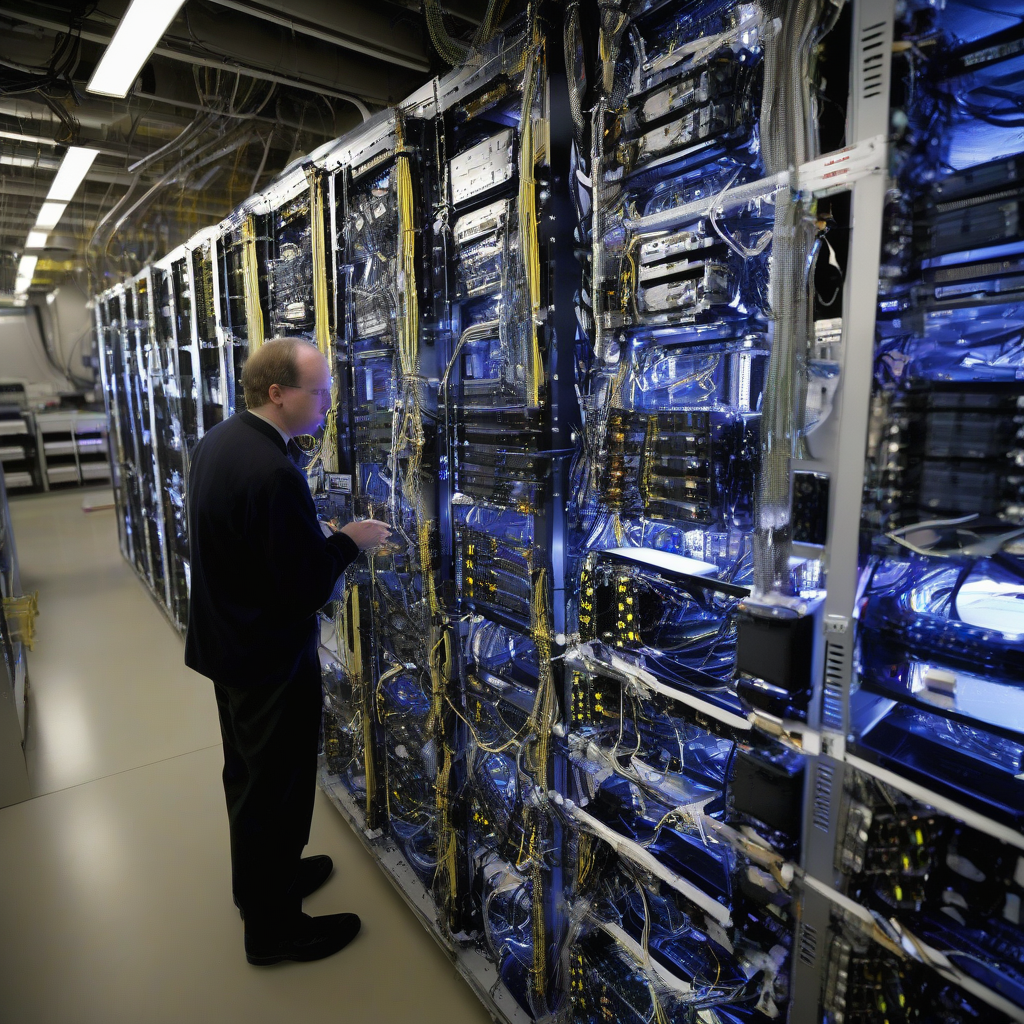
Researchers at the University of Michigan have developed two novel computer chip architectures specifically engineered to handle the intensive data processing requirements of future space telescopes. According to Phys.org, these designs are optimized to assist in the identification of Earth-like exoplanets by streamlining how on-board systems manage and compute vast amounts of astronomical data.
The findings are scheduled for formal presentation at the upcoming IEEE Space Computing Conference in August. These architectures focus on a memory-centric approach, which minimizes the energy consumption typically lost when moving data between memory banks and processors—a common bottleneck in deep-space hardware.
Technical Data Comparison
| Feature | Conventional Design | Memory-Centric Design |
|---|---|---|
| Data Throughput | Standard | High-Efficiency |
| Energy Consumption | High | Reduced |
| Primary Application | General Computing | Space Telescope Data Processing |
By integrating processing capabilities directly into the memory structure, these chips aim to overcome the traditional constraints of radiation-hardened electronics, which often lag behind commercial terrestrial hardware in raw performance. The University of Michigan team suggests that this innovation will allow future missions to capture higher-resolution data without requiring excessive power reserves, which are critically limited in deep-space environments.
This research aligns with long-term initiatives by organizations such as NASA to modernize the technological stack for next-generation observatory missions. As telescopes grow more sophisticated, the volume of raw information generated threatens to exceed the downlink bandwidth available for transmission back to ground stations. Reducing the computational load on the satellite through on-board, memory-centric processing ensures that only the most relevant, compressed data is transmitted to researchers on Earth.
Why It Matters
The move toward memory-centric computing represents a shift in how satellite hardware must evolve to meet the data-intensive requirements of modern astrophysics. Traditionally, power budgets for deep-space missions have been severely constrained by the need to maintain low-temperature, high-stability environments. By shifting the computational paradigm, these chips could effectively double the scientific output of orbital missions without increasing their launch mass or battery requirements. This technology has the potential to become the standard for future unmanned space exploration, directly impacting the speed and accuracy of exoplanetary discovery.
Reader Discussion & Insights