
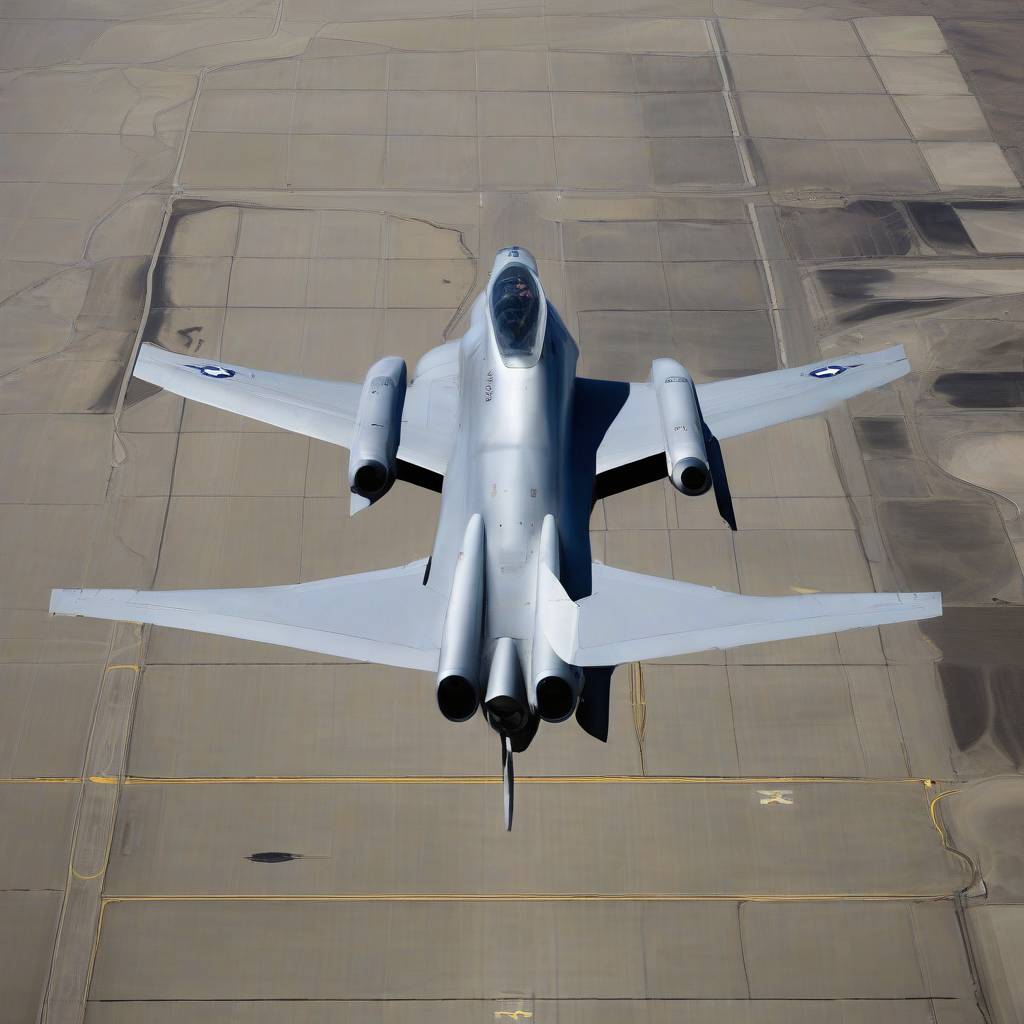
The United States Air Force has achieved a significant milestone in aerial autonomy, successfully demonstrating an artificial intelligence agent’s capability to interpret infrared sensor data and direct an aircraft to intercept a hostile target. According to FlightGlobal, these trials involved the X-62 VISTA, a heavily modified Lockheed Martin F-16D, which utilized autonomous software to track and engage a Northrop T-38 trainer jet in tactical maneuvers.
The experimental series, officially designated "Have Heat," was conducted at the Edwards AFB test hub in the California High Desert. During this program, the X-62 completed 27 individual AI-controlled intercepts across a total of eight flights. Lockheed Martin’s secretive Skunk Works unit confirmed that the autonomy agent operated by ingesting classified infrared search and track feeds from a Legion pod mounted on the test aircraft. The system was then required to navigate the fighter into a precise tactical intercept position without human intervention in the flight controls, although safety observers remained onboard the aircraft.
Experimental Data Summary
| Feature | Specification |
|---|---|
| Test Aircraft | X-62 VISTA (Modified F-16D) |
| Target Aircraft | Northrop T-38 |
| Total Intercepts | 27 |
| Total Flight Series | 8 Flights |
| Software Integration Time | 3 Months |
| AI Development Tool | Skunk Works "Supermassive" |
According to Lieutenant Colonel Joshua Strafaccia, dean of faculty for research at the USAF Test Pilot School, the Have Heat trials serve to bridge existing capability gaps in mission autonomy and integrated sensor control. The project utilized a proprietary Skunk Works AI generation tool known as "Supermassive," which significantly accelerated the development cycle, allowing the integration and ground testing of the autonomous agents to reach completion in just three months. While the Air Force did not disclose the specific autonomy agent utilized for these specific tests, the platform is known to have previously hosted Shield AI’s Hivemind software during autonomous air combat drills in 2023.
Why It Matters
The successful execution of the sensor-to-action loop by an autonomous agent signals a transition from theoretical AI research to practical, real-time combat utility. By mastering the integration of infrared target acquisition with flight-path maneuvering, the Air Force is effectively reducing the cognitive load on human pilots in high-stress, high-speed environments. This development suggests that the future of air superiority will rely on a hybrid model where AI manages rapid-response tactical engagements, allowing human commanders to focus on strategic oversight and complex mission decision-making rather than instantaneous mechanical tracking.
Reader Discussion & Insights