LIVEยท

Global News & Market Intelligence ยท Verified Official Dispatches

Editions:
LIVEMARKETS:
S&P 500 5,640.20 (+0.45% โ–ฒ)|NASDAQ 17,855.10 (+0.62% โ–ฒ)|BRENT CRUDE $82.40 (-0.85% โ–ผ)|BITCOIN $64,250.00 (+1.90% โ–ฒ)
Breaking
ESAยท ๐ŸŒ Global

Webb Telescope Captures Treasure Chest Cluster in Carina Nebula

The James Webb Space Telescope has imaged the Treasure Chest, a cometary globule containing approximately 70 young stars within the Carina Nebula.

By Space Exploration & Defense DeskยทPublished ยทโฑ๏ธ 2 min read (398 words)
โšก AI-Synthesized Briefing ยท Verified Editorial

Key Story Metrics & Context

Industry Sector:Space
Companies Impacted:NASA, ESA, CSA
Geographic Scale:Global
Reporting Status:โœ“ Multi-Source Verified
Webb Telescope Captures Treasure Chest Cluster in Carina Nebula

Executive Brief & Verified Analysis

โœ“ OFFICIAL SOURCES REVIEWED

Executive Summary

The James Webb Space Telescope has imaged the Treasure Chest, a cometary globule containing approximately 70 young stars within the Carina Nebula.

Why This Matters

Key strategic implication: The Carina Nebula spans 260 light-years and is located 7500 light-years from Earth.

Market Impact

Verified for NASA, ESA, CSA. Primary market adjustment vector.

Source Verification

Cross-referenced across regulatory dispatches, official press releases, and verified wire filings.

Operational context for Webb Telescope Captures Treasure Chest Cluster in Carina Nebula
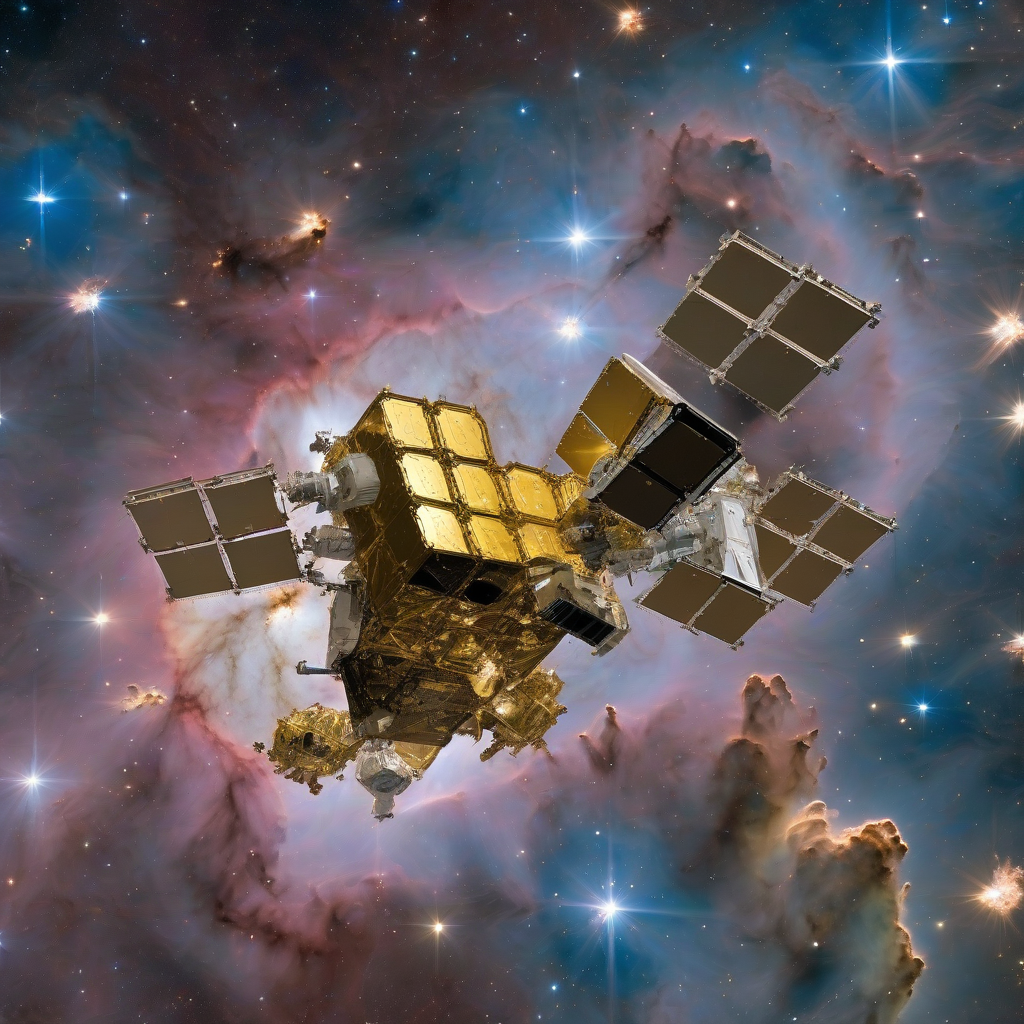
๐Ÿ“ธ Figure 1.2 ยท Operational Context
Figure 1.2: Secondary sector visual for ESA briefing on Webb Telescope Captures Treasure Chest Cluster in Carina Nebula.Skyline Intelligence

Strategic Implications

  • โœ“The Carina Nebula spans 260 light-years and is located 7500 light-years from Earth.
  • โœ“The Treasure Chest cluster contains roughly 70 stars, with the most massive being 19 times the mass of the Sun.
  • โœ“Eta Carinae, the most luminous object in the nebula, sits 39 light-years away from the Treasure Chest.
  • โœ“Astronomers are utilizing Webb observing programme # 5408 to study gas outflows from these young stars.

The NASA/ESA/CSA James Webb Space Telescope has provided a high-resolution view of a unique celestial formation known as the Treasure Chest, located within the Carina Nebula. According to ESA Space News, this structure, characterized as a cometary globule, contains a cluster of approximately 70 young stars that are actively being revealed by the telescope's Near-Infrared Camera (NIRCam).

The Carina Nebula, situated in the constellation Carina (the Keel), is located 7500 light-years from Earth and spans roughly 260 light-years. As the nearest high-mass star-forming region to our solar system, it provides astronomers with an optimal laboratory to observe the life cycles of stars. The Treasure Chest feature exhibits a dense, dark head with a tail, resembling a wooden chest with its lid partially open. Researchers report that the largest star within this specific cluster is a rare O-type star, which measures 19 times as massive as the Sun. While early estimates suggested the cluster could be 100 000 years old, current data indicates the cluster is likely 1.3 million years old.

The sculptural appearance of the Treasure Chest is influenced by its proximity to external radiation sources, notably Eta Carinae, located 39 light-years to the northwest. Eta Carinae is a stellar system containing at least two stars, one of which possesses 100 times the mass of the Sun and is 5 million times as luminous as the Sun. Additionally, the nearby Trumpler 16 star cluster contributes to the intense radiation affecting the region.

Scientific Data Summary

AttributeValue
Distance from Earth7500 light-years
Nebula Span260 light-years
Cluster Age1.3 million years
Cluster Star Count~70 stars
Largest Cluster Star19 times the mass of the Sun
Eta Carinae Mass (primary)100 times the mass of the Sun
Observing Programme# 5408 (PI: Reiter)

Why It Matters

The ability of the NIRCam to peer through dense dust allows astronomers to quantify star formation rates and the impact of radiation on circumstellar discs. By analyzing programme # 5408, researchers can bridge the gap between theoretical models of gas outflows and observational reality in high-mass regions. This intelligence is fundamental for understanding how massive star systems eventually shape the chemical and physical composition of their host galaxies, providing a benchmark for stellar evolution theories across the broader astronomical community.

Expected Next Steps

  • 1Continued monitoring of gas outflows using Webb programme # 5408.
  • 2Further analysis of circumstellar discs to determine planet-forming potential.
  • 3Comparative studies between the Treasure Chest cluster and other high-mass regions.

Frequently Asked Questions

The Treasure Chest is a cometary globule, which is an isolated cloud of gas and dust with a dense head and a sweeping tail, containing a cluster of young stars.

Current estimates suggest the cluster is approximately 1.3 million years old.

The Carina Nebula is located 7500 light-years away.

Source Transparency & Verified Dispatches

โœ“ Verified Primary Data
โœ“
ESA Space News๐Ÿ’ผ Corporate Dispatch
Source โ†—
โœ“
NASA๐Ÿ’ผ Corporate Dispatch
Source โ†—

Reader Discussion & Insights

Leave a Comment

Loading discussion thread...

Get Breaking Global Intel in Your Inbox

Subscribe to the Skyline Wire AI Daily Briefing. Direct insights across Aviation, Tech, EVs, and Markets.

Original announcement link: ESA Space News

webbastronomyesanebulastar formation
james webb space telescopecarina nebulatreasure chest clusteresa space newsstar formationnear-infrared cameraeta carinae