
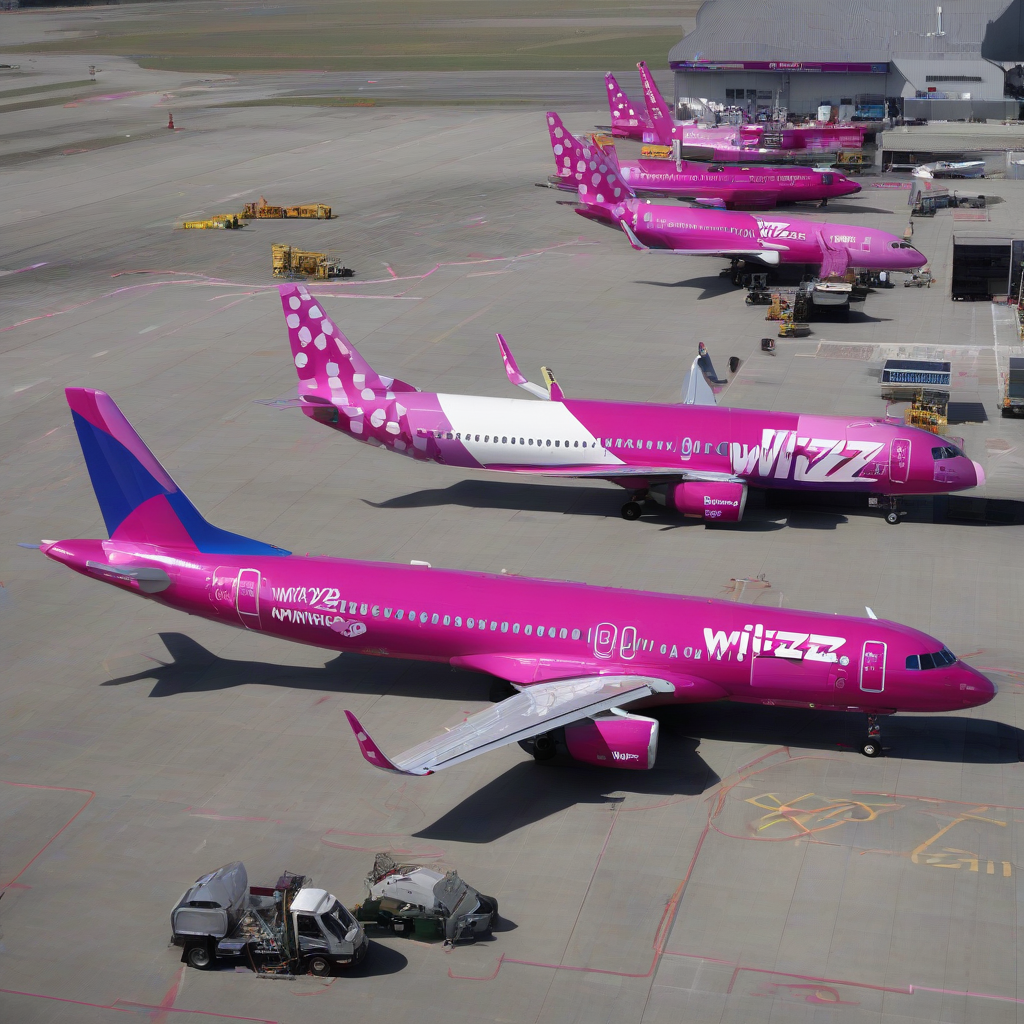

Central European budget airline Wizz Air recorded an operating loss of €183.3 million ($211.6 million) for the first quarter of its 2027 fiscal year, according to FlightGlobal. This marks a significant downturn compared to the same period in 2025, when the carrier posted an operating profit of €27.5 million. The financial results for the quarter ending June 2026 were primarily impacted by surging operational expenditures.
Financial Performance Overview
The airline reported a 6% revenue increase, totaling €1.5 billion. However, this growth was offset by a 21% rise in overall operational costs. A primary factor in this expenditure increase was the cost of fuel, which escalated by 39% compared to the previous year, reaching €610 million. Consequently, the airline shifted from a net profit of €38.4 million in the April-June period of 2025 to a net loss of €198.2 million during the same months in 2026.
| Financial Metric | April-June 2025 | April-June 2026 | Change (%) |
|---|---|---|---|
| Operating Profit/Loss | €27.5 million | -€183.3 million | N/A |
| Net Profit/Loss | €38.4 million | -€198.2 million | N/A |
| Passenger Volume | N/A | 21.2 million | +25% |
| Total Revenue | N/A | €1.5 billion | +6% |
Operational Adjustments
Despite the financial losses, Wizz Air Chief Executive Jozsef Varadi highlighted operational success, noting a 25% increase in passenger numbers, which reached 21.2 million. The airline is currently refining its network strategy to prioritize Central European and UK markets. This shift includes reducing stage lengths to enhance aircraft utilization and reallocating capacity from Middle Eastern routes—specifically Israel—due to regional instability involving Iran. Varadi indicated that this move aims to improve network integrity and sector productivity.
Why It Matters
Wizz Air’s results highlight the fragility of low-cost carrier business models when exposed to external macroeconomic shocks. The airline’s pivot from regional expansion to network densification reflects a broader industry trend of prioritizing operational efficiency over aggressive capacity growth. As regional conflicts continue to threaten fuel pricing stability and demand patterns, airlines are increasingly forced to manage yields by shortening average flight durations to minimize overheads. Investors are now watching to see if these structural adjustments can offset sustained high fuel costs without sacrificing the carrier's competitive fare positioning.
Reader Discussion & Insights