
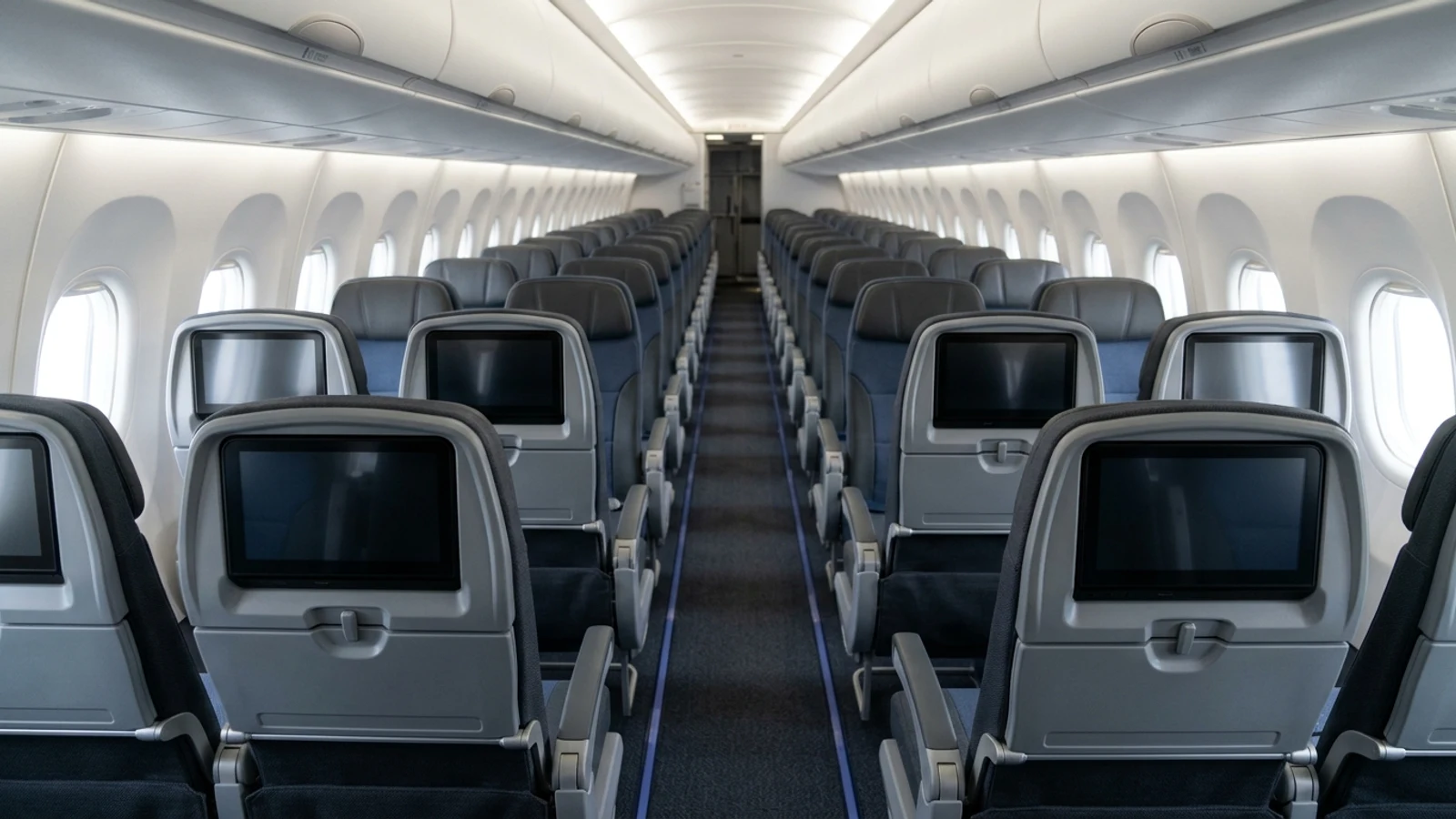
Fleet Cabin Upgrades and Entertainment Reversal
American Airlines has initiated a major shift in its cabin strategy, moving to restore seatback entertainment systems across its entire narrowbody fleet. This decision reverses a long-standing initiative that had prioritized personal-device usage for in-flight entertainment. Following an announcement on August 18, 2026, the carrier outlined a commitment to integrate new displays on all incoming narrowbody aircraft beginning in 2028. Existing aircraft in the current fleet are also slated for retrofits, with a target for fleet-wide implementation reaching into the early 2030s. Source
The change creates operational complexity for 32 legacy Airbus A319 aircraft currently moving through a scheduled cabin refurbishment program. Reporting from June 2026 revealed that 23 of these specific aircraft had already undergone a process to strip out their existing seatback displays. The remaining nine units in this sub-fleet were projected to complete the same screen-removal work by the conclusion of the summer period. These aircraft were kept in active service, undergoing interior modernizations rather than being removed from the operating lineup. Source
American Airlines has not yet provided a concrete schedule for when these 32 A319 aircraft will be retrofitted with the new entertainment systems. While the airline confirmed that existing planes remain within the scope of the future retrofit program, it has not specified if these upgrades will be aligned with the current cabin refreshment cycle or if they will be treated as an isolated project. The absence of a master schedule for this specific fleet subset highlights a gap between the company's broader entertainment goals and the immediate reality for these aircraft. Source
The airline's previous strategy, which leaned heavily on a bring-your-own-device model, was grounded in a 2017 observation that more than 90% of its passengers traveled with their own smartphones, tablets, or laptops. By removing built-in hardware, the company sought to reduce the maintenance requirements for different entertainment interfaces across its narrowbody cabins. However, the reliance on personal devices presented difficulties for travelers who possessed low battery levels or those who preferred not to use their own hardware for extended durations during long-haul flights. Source
Program Milestones and Operational Timelines
As the airline pivots back to hardware, the new entertainment units are described as a significant technology upgrade. American Airlines plans to install 4K displays that feature Bluetooth audio connectivity for personal headphones and USB-C fast charging ports. These systems are intended to provide additional utility through personalized movie and television recommendations, alongside interactive flight maps that offer destination details and real-time insights. The integration of these features aims to bridge the gap between personal device reliance and a full-service in-flight experience. Source
The cabin refurbishment program is also focused on increasing the share of premium seating across the narrowbody network. The airline reported that premium seats currently represent approximately 25% of seats on narrowbody departures, with an ambition to raise this figure to about 40% over time. For the A319 and A320 fleets, this specifically involves adding an extra row of First Class seating. Refurbished A319 aircraft are set to feature 12 First Class seats, while the A320 fleet is being updated to include 16 such seats. Source
The logistical coordination of these modifications remains a challenge, as cabin retrofits, entertainment installations, and connectivity upgrades operate through distinct workstreams. Beyond the seatback screens, American Airlines is planning to equip its entire mainline fleet of over 1,000 aircraft with Starlink satellite internet. While the carrier announced that the Starlink rollout is scheduled to commence in early 2027, it has not published an aircraft-specific timeline that shows how these internet installations will be synchronized with the entertainment system retrofits for the legacy A319 sub-fleet. Source
Because cabin refurbishment and technology installation programs follow different cycles, the early 2027 start date for the Starlink initiative does not guarantee an immediate screen upgrade for the 32 A319s. Some of these aircraft could undergo further modifications prior to their eventual retirement, but the airline's public announcements do not establish a firm completion date for the A319 group. The final state of these cabins will ultimately depend on how the airline sequences these overlapping projects relative to the long-term utility of the specific legacy aircraft. Source
The following table summarizes the anticipated timelines for the major technology and cabin initiatives currently planned for the American Airlines narrowbody fleet. Source
Program Milestones | Expected Start/Inclusion Date | Scope of Rollout. New Narrowbody Deliveries | 2028 | All incoming aircraft. Existing Fleet Retrofits | Early 2030s | Entire mainline fleet. Starlink Connectivity | Early 2027 | Entire mainline fleet. Source
While the airline has defined the passenger experience targets and the general fleet-wide implementation strategy, it has not disclosed the total cost or the identity of the hardware provider for the new screens. American Airlines notes that these displays will be among the largest on narrowbody aircraft in North America, but specific hardware dimensions remain unconfirmed. For passengers, the transition means that while the current cabin interior is in flux, the future standard will combine digital connectivity and integrated entertainment systems across the entire narrowbody network. Source
Ultimately, the case of the 32 A319s serves as a clear illustration of the timing difficulties associated with modernizing an aging fleet. As the airline balances the installation of new premium seats with the addition of Starlink and 4K entertainment, the lack of a detailed schedule for individual legacy aircraft leaves their exact cabin configuration uncertain for the immediate future. The airline's commitment to retrofitting the fleet indicates that these units will eventually receive the upgrades, but the specific window for this work is still to be determined. Source

