
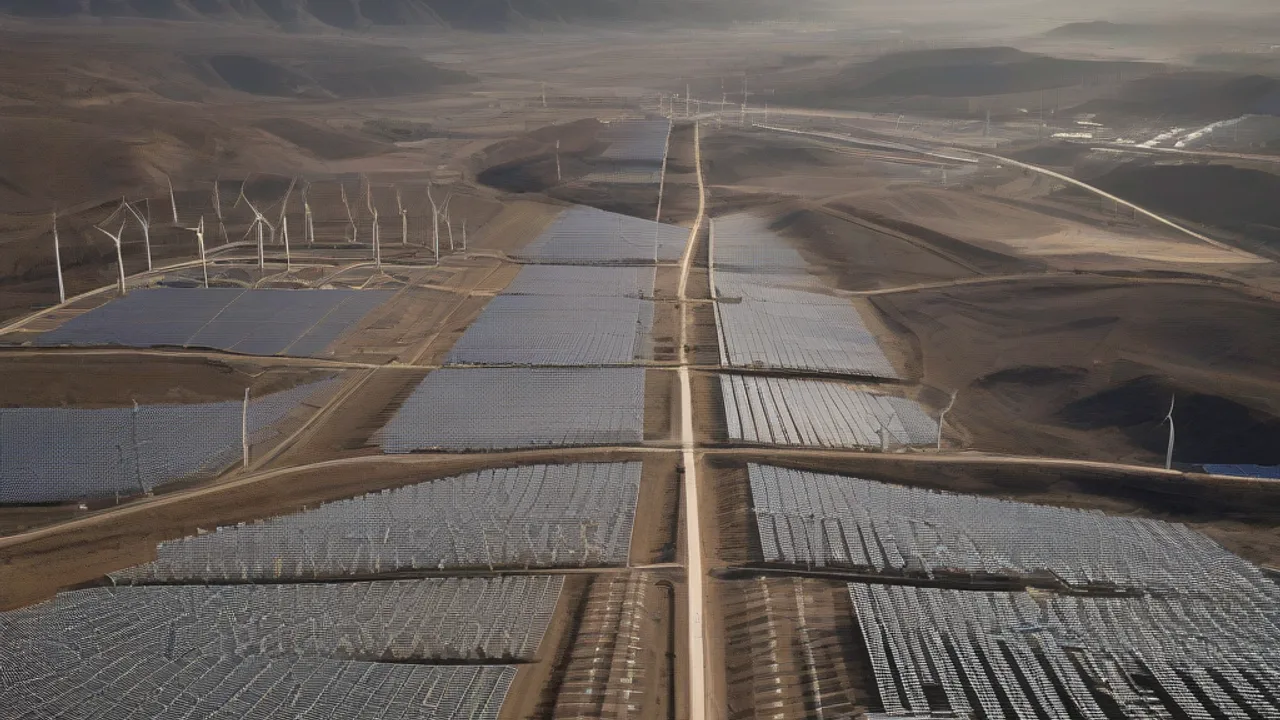
China is set to spend approximately $940 billion on alternative energy capacity and infrastructure in 2026, maintaining its status as the world's top investor in the sector, according to a report by OilPrice.com.
The figure originates from the Global Energy Transition Report released in November 2026 by the China Enterprise Reform and Development Society, a state-linked think tank. The report indicates that low-carbon energy sources accounted for 60.1% of China's total installed power generation capacity by the end of 2025. In 2025, China represented 63.6% of global additions to low-carbon capacity and produced 3.99 trillion kilowatt-hours of electricity from low-carbon sources, accounting for 38.3% of its national total generation.
According to data published by China's National Energy Administration (NEA), total installed wind and solar generation capacity exceeded 2 billion kilowatts (kW) by the end of September 2026. Over the first nine months of 2026, China added 170 million kW of new capacity. As of late September 2026, solar capacity stood at 1.31 billion kW—representing a 16.5% annual growth—while wind capacity reached 700 million kW, reflecting a 20.4% year-over-year increase.
However, the rapid buildout has created challenges including market overcapacity, severe competition, and corporate insolvencies, particularly within solar manufacturing and electric vehicle supply chains. To push players toward commercial viability, Chinese authorities have begun rolling back subsidies. Currently, China produces over 80% of global solar panel components and 70% of global wind equipment.
Additionally, coal's share of electricity generation in China dropped below 50% for the first time during the first half of 2026, reaching 49.7%, as reported by Bloomberg.
To resolve curtailment issues—where surplus power from remote wind and solar farms is wasted due to transmission limitations—spending is shifting toward grid expansion. The International Energy Agency (IEA) estimates China will invest $140 billion directly in grid expansion and related infrastructure in 2026. Furthermore, the State Grid Corporation of China plans to invest up to $574 billion in fixed assets through 2030, a 40% increase compared to its total spending over the 2021–2025 period.
