
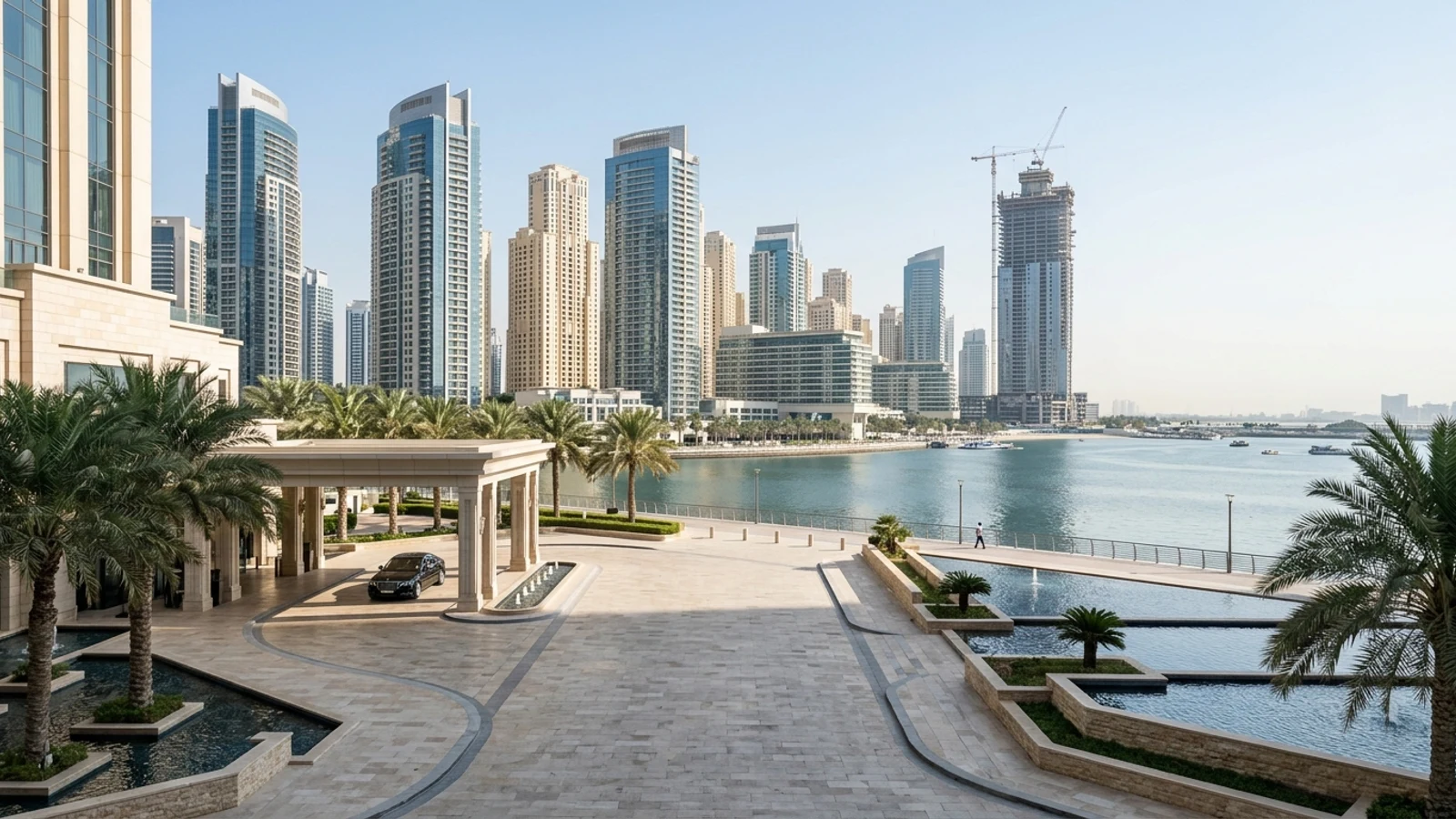
The hotel sector in Dubai is experiencing a period of significant pressure, as shifting geopolitical conditions and changing market dynamics impact traditional hospitality metrics. According to data provided by Skift Travel Discovery, the market is currently navigating the fallout from the U.S.-Iran war, which commenced in late February of this year. This conflict has introduced a level of instability that is clearly weighing on the overall hotel performance throughout the destination, leading to notable declines in both occupancy and visitor interest. Source
Despite these cooling trends in the hospitality segment, developers in the United Arab Emirates are moving forward with aggressive plans for branded residences. These properties represent a specialized segment of the real estate market where residential homes are developed under the banner of an established brand, typically a luxury hotel operator. Industry participants are maintaining a focus on long-term demand, betting that the premium nature of these branded offerings will continue to attract buyers even when the broader hotel market remains soft. Source
Several significant partnerships have recently been confirmed, indicating that development pipelines remain active despite the challenging environment. Avenew Development has announced the launch of The St. Regis Residences at Dubai Islands in collaboration with Marriott International. Simultaneously, Dubai South has formalized an agreement with the UK-based Cheval Collection to develop a project known as Cheval South Bay. Furthermore, Al Seeb Real Estate Development has reached a milestone by commencing the main construction phase of its Chedi Private Residences project in Dubai. Source
The performance metrics for the hotel industry highlight the extent of the current downturn. Statistics from CoStar’s STR reveal that hotel occupancy in Dubai dropped to 68.4% during October. This represents a substantial decline, falling 16.5 percentage points from the 84.9% occupancy rate recorded during the same period in the previous year. These figures underscore the difficulty that hotel operators are currently facing in maintaining stable foot traffic and room utilization levels within a highly competitive and shifting environment. Source
Financial indicators for the hotel sector provide further context regarding the severity of the market conditions. In addition to the dip in occupancy, the average daily rate for hotel rooms fell by 28.1% to $181. Revenue per available room, a key industry metric known as RevPAR, experienced a steeper decline, dropping 42% to reach $124. These combined metrics reflect a environment where both pricing power and overall revenue generation capacity have been significantly hampered by the prevailing economic and regional geopolitical climate. Source
The downward pressure is also reflected in the volume of international travelers arriving in the region. Data sourced from Dubai’s Department of Economy and Tourism indicates that the number of international visitors during the first ten months of the year reached 9.7 million. This figure represents a 38% decrease when compared to the corresponding period from the year prior. This reduction in the volume of international visitors serves as a foundational factor driving the reported softening in hotel occupancy and daily revenue rates. Source
To better understand the current shifts in the Dubai hospitality sector, the following table summarizes the reported performance changes for the hotel market, comparing the most recent data points against the performance from the previous year as documented by CoStar’s STR and the Department of Economy and Tourism. Source
| Metric | Performance Data | Change |
|---|---|---|
| Occupancy | 68.4% | -16.5 Points |
| Average Daily Rate | $181 | -28.1% |
| RevPAR | $124 | -42.0% |
| Int'l Visitors (10 Months) | 9.7 Million | -38.0% |
The divergence between the residential development sector and the hotel industry reflects a strategic recalibration among regional developers. By pivoting toward branded residences, firms are attempting to capitalize on the prestige associated with luxury brands to secure a premium market position. While the hospitality side is currently grappling with lower occupancy and reduced spending, these developers are betting that private residential buyers will prioritize the long-term asset value provided by these high-profile, brand-affiliated real estate developments. Source
The reliance on partnerships with established international operators remains a cornerstone of this residential strategy. Brands like The St. Regis, Marriott International, and Cheval Collection lend their operational expertise and marketing cachet to these projects. Such affiliations are designed to differentiate these residential offerings from the saturated conventional hotel supply, providing a stable alternative for investors even when the underlying tourism numbers are trending downward in the current global and regional climate. Source
The timeline of these developments is moving forward regardless of the broader market headwinds. Construction phases and site activations, such as those at the Chedi Private Residences, indicate that capital projects initiated before or during the onset of the current market volatility are being executed. As of late November 2026, the strategy remains to push forward with these luxury residential launches, relying on the appeal of a premium product to navigate through the ongoing regional instability and reduced visitor numbers. Source
While the hospitality market faces ongoing adjustments, the primary focus for the real estate sector remains the maintenance of development timelines and the securing of long-term buyer interest. The reported metrics serve as an indicator of the challenges within the hotel sector, but they do not necessarily reflect the outlook for luxury residential property sales, which are marketed on a different set of value propositions compared to short-term hotel stays, ultimately defining a split path for the two interconnected sectors in Dubai. Source

