
Nationwide Airspace Operational Halt
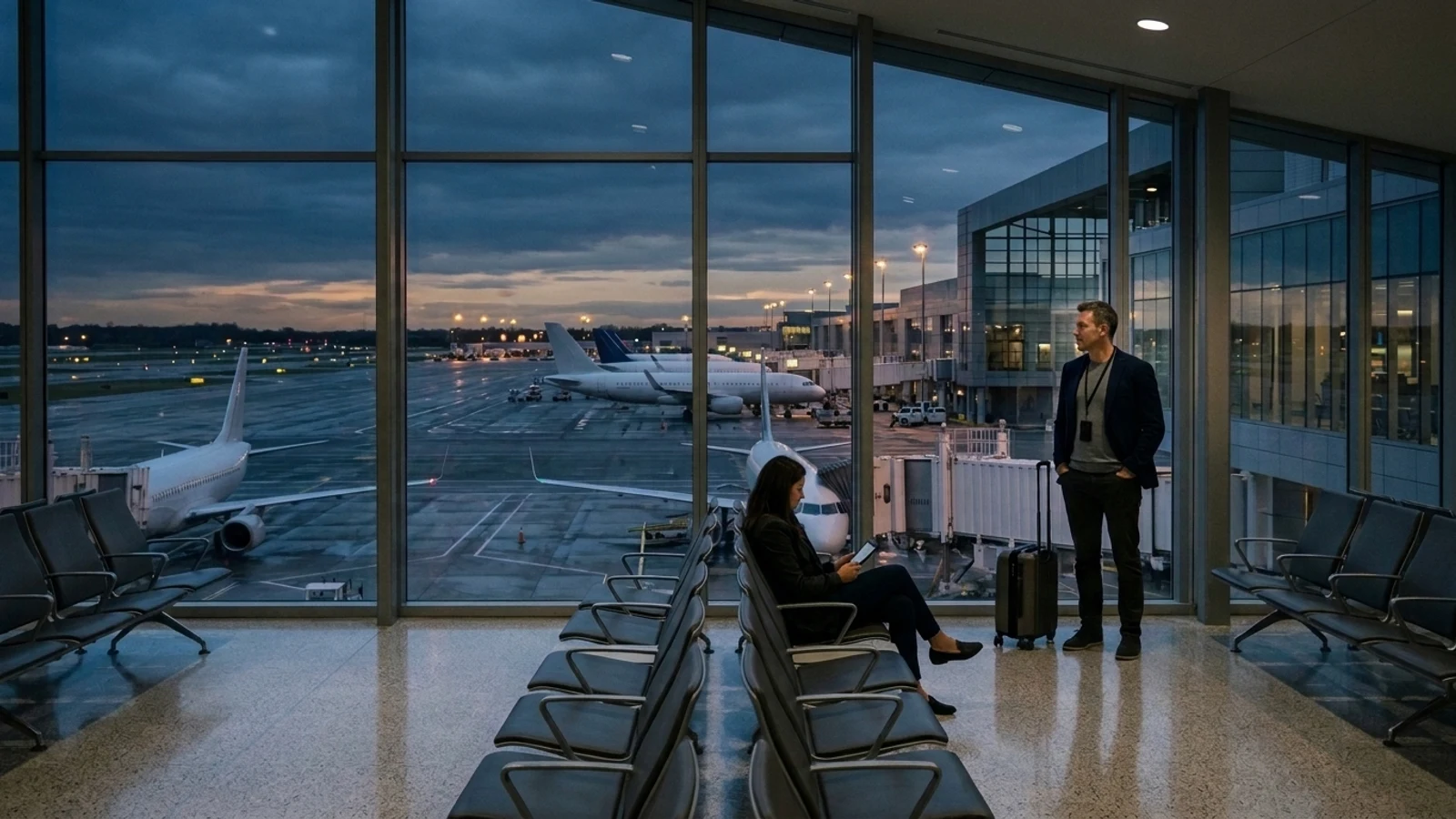
On November 13, 2026, the Federal Aviation Administration implemented a nationwide ground stop for all departing flights from airports within the United States. This measure, which represented only the third such nationwide cessation in twenty-five years, was prompted by a significant communication failure affecting all Air Route Traffic Control Centers. Transportation Secretary Sean Duffy confirmed that technicians were tasked with investigating the technical outage, which left roughly 11,000 flights carrying an estimated 1.5 million passengers grounded. Source
The operational halt created immediate logistical challenges for major conferences scheduled to begin across several cities, including Washington, D.C., Las Vegas, Chicago, and New Orleans. Skift Travel Discovery reported that the timing of the ground stop placed numerous event organizers, exhibitors, and attendees in a precarious situation. Pre-conference setup activities were particularly vulnerable, as thousands of participants faced delays in their travel itineraries, potentially impacting the start dates of several industry meetings. Source
The Society for Neuroscience annual meeting, hosted at the Walter E. Washington Convention Center, was one of many events facing uncertainty. With expectations of 20,000 to 23,000 participants—roughly a quarter of whom were traveling from approximately 80 different countries—the impact on international attendees remained a primary concern. The FAA indicated that inbound international flights were to be managed on a case-by-case basis, creating a distinct travel disparity compared to domestic passengers whose departures were halted entirely. Source
In Las Vegas, the HLTH USA conference at The Venetian Expo faced similar logistical pressure. The event, which expects over 12,250 attendees including more than 4,400 C-suite executives, relied heavily on Saturday arrivals to facilitate Sunday programming. The ground stop duration significantly influenced whether organizers would need to pivot their schedules. Concurrently, the SC26 conference in Chicago faced risks regarding exhibitor move-in, as technical teams and international personnel arrived for final setup at McCormick Place. Source
The Financial & Insurance Conference Professionals Annual Conference in New Orleans also faced disruptions, with more than 700 industry professionals expected to arrive. Similar to the Private Label Manufacturers Association trade show in Rosemont, the timing of the ground stop on Friday created a narrowed window for exhibitors to finalize booth installations. Event planners typically maintain contingency protocols, yet the scale of this aviation system failure challenged even the most experienced industry organizers. Source
Sports Logistics and Team Travel Disruptions
Beyond the conference circuit, collegiate and professional sports teams encountered significant travel obstacles. The USC women's basketball team was stranded in Los Angeles, threatening their ability to reach Greenville for a scheduled Sunday game against the top-ranked South Carolina squad. Yahoo Sports noted that the squad had to evaluate land-based transport options, as flight availability remained uncertain. This situation highlighted the fragility of sports logistics when high-altitude facility communications are compromised. Source
Several other college football programs faced comparable travel difficulties. While some teams successfully transitioned to ground transportation, others remained at the mercy of the FAA's containment strategy. The North Texas football program, for instance, organized buses for their travel to San Antonio, while Purdue's football team similarly opted for road travel to reach Iowa City after flight delays occurred. These adjustments provided a blueprint for other organizations struggling to reach their destinations during the airspace closure. Source
The impact extended to the collegiate football rivalry between Notre Dame and Boston College. Slap the Sign reported that the travel plans for this matchup were largely preserved because the Boston College team had successfully departed prior to the announcement of the nationwide ground stop. The team reached South Bend safely, ensuring that the scheduled game could proceed without a shift in timing. Such favorable outcomes remained the exception, however, as teams nationwide weighed their remaining schedule constraints. Source
Federal officials eventually cleared the airspace for resumption of flight activity by 8:15 p.m. on November 13, 2026. The restoration of normal service followed intense investigation by FAA technicians into the telecommunications outage. While the ground stop was lifted, the ripple effects on passenger logistics and event schedules were expected to persist throughout the weekend. The event mirrored the gravity of prior system outages while emphasizing the complexities of maintaining a modern, safe, and efficient air traffic network. Source
The FAA's response to the crisis was characterized as an effort taken out of an abundance of caution due to safety concerns. Because the issue affected all Air Route Traffic Control Centers simultaneously, the decision to halt all U.S. departures was deemed necessary to maintain situational awareness of aircraft already in the air. The management of international arrivals on a case-by-case basis allowed the agency to continue processing long-haul flights that were already in flight paths, while containing potential risks to the network. Source
The reliance on aging hardware within the air traffic control infrastructure was cited by officials as a contributing factor to the communications failure. This underlying technical debt, which has been the subject of ongoing scrutiny, became the focal point for discussions regarding aviation security and resilience. As organizers and travelers assess the resulting business losses, the necessity for robust, redundant systems in high-altitude facilities remains a critical concern for the transportation sector following this incident. Source
In summary, the November 13 ground stop served as a reminder of the vulnerability of contemporary travel schedules to technical interruptions. While many events continued as planned, the cumulative impact on those in transit, including athletes, corporate planners, and international researchers, was substantial. The industry will likely continue to evaluate how such widespread disruptions can be mitigated in the future, particularly when major national conventions and athletic competitions are concurrently scheduled across the United States. Source

