
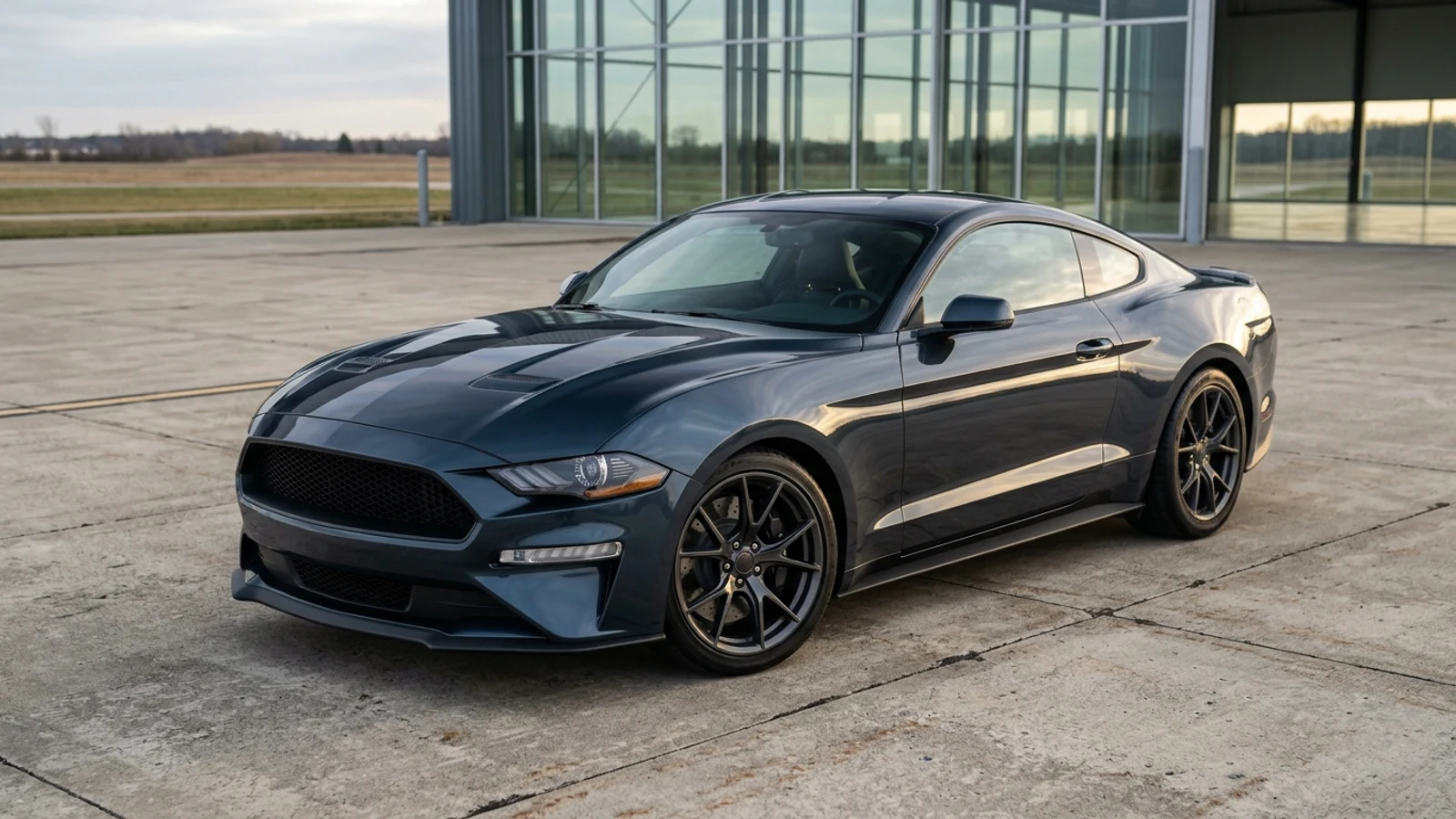
The Return of a Legend
Ford has officially begun teasing the return of the iconic Cobra badge to its current Mustang vehicle lineup. This development marks the first time the nameplate will reappear in more than twenty years, ending a long absence for a model that remains a staple of automotive enthusiast culture. While official technical specifications and launch dates remain unavailable at this time, the announcement has confirmed that the manufacturer is actively moving forward with plans to reintroduce this high-performance variant to the market. Source
The upcoming model faces a significant challenge in matching the reputation of its predecessor, the 2003–2004 SVT Cobra. Known to enthusiasts as the Terminator, the 2004 iteration featured a 4.6-liter supercharged V8 engine. While the manufacturer officially rated the engine at 390 horsepower and 390 pound-feet of torque, industry consensus and secondary estimates frequently suggest that the true output was higher, potentially reaching approximately 425 horsepower at the crankshaft when it left the factory floor. Source
Beyond its factory performance, the 2003–2004 engine platform became renowned for its high tuning potential. Owners discovered that relatively straightforward mechanical modifications could result in substantial power gains. Recent testing performed by Late Model Restoration (LMR) on a rare Mystichrome coupe—one of only 515 units produced—demonstrated the extent of these performance capabilities when the platform is subjected to aftermarket upgrades and specialized engine tuning compared to its original stock configuration. Source
During the LMR testing sessions, the modified 2004 Cobra underwent dyno analysis to measure its output. In its first recorded run, the vehicle achieved 454 horsepower at 5,800 rpm and 502 pound-feet of torque at 3,300 rpm. Analysts have extrapolated these results to estimate a potential crankshaft output of roughly 560 horsepower. A second testing attempt recorded lower figures of 439 horsepower and 494 pound-feet of torque, attributed to a mechanical issue involving a strap shifting during the run. Source
The modifications performed on this specific vehicle were limited in scope, consisting of an upgraded 2.8-inch pulley for the stock supercharger, a custom engine tune, a Bassani cat-back exhaust system, and an aftermarket airbox. These changes represent a minimal set of interventions that produced an estimated increase of approximately 170 horsepower over the original factory rating. Such results highlight the inherent flexibility of the 4.6-liter V8 engine architecture that earned the Cobra its reputation among performance-focused builders. Source
Market Context and Expectations
Looking toward the future, the automotive industry continues to watch for further announcements regarding the next-generation Cobra. While there is no official confirmation that the new model will possess the same level of tunability as the 2004 version, the heritage of the nameplate sets a high bar for performance expectations. Ford has not released any information regarding a reveal date, pricing, or the specific production timeline for the upcoming Mustang Cobra variant as of November 2026. Source
The company has demonstrated recent commitment to high-performance Mustang derivatives, such as the Dark Horse SC which debuted earlier in 2026. This history of releasing specialized variants provides a basis for industry interest in the forthcoming Cobra project. Despite the current lack of concrete manufacturing details, the manufacturer remains focused on capturing the essence of the original model after a hiatus spanning over two decades, though concrete technical specifications remain currently unknown to the public. Source
To better understand the performance discrepancy between a stock 2004 SVT Cobra and the modified variant tested by LMR, the following data provides a comparison of power and torque figures. Please note that factory ratings are based on manufacturer data, while the modified dyno figures represent the performance of a vehicle equipped with a 2.8-inch pulley, custom tune, and performance exhaust. The figures below summarize the key differences in measured output based on the provided technical reports. Source
| Configuration | Power (hp) | Torque (lb-ft) | Source
| :--- | :--- | :--- | Source
| Stock (Factory Rated) | 390 | 390 | Source
| Modified (Dyno Run 1) | 454 | 502 | Source

