
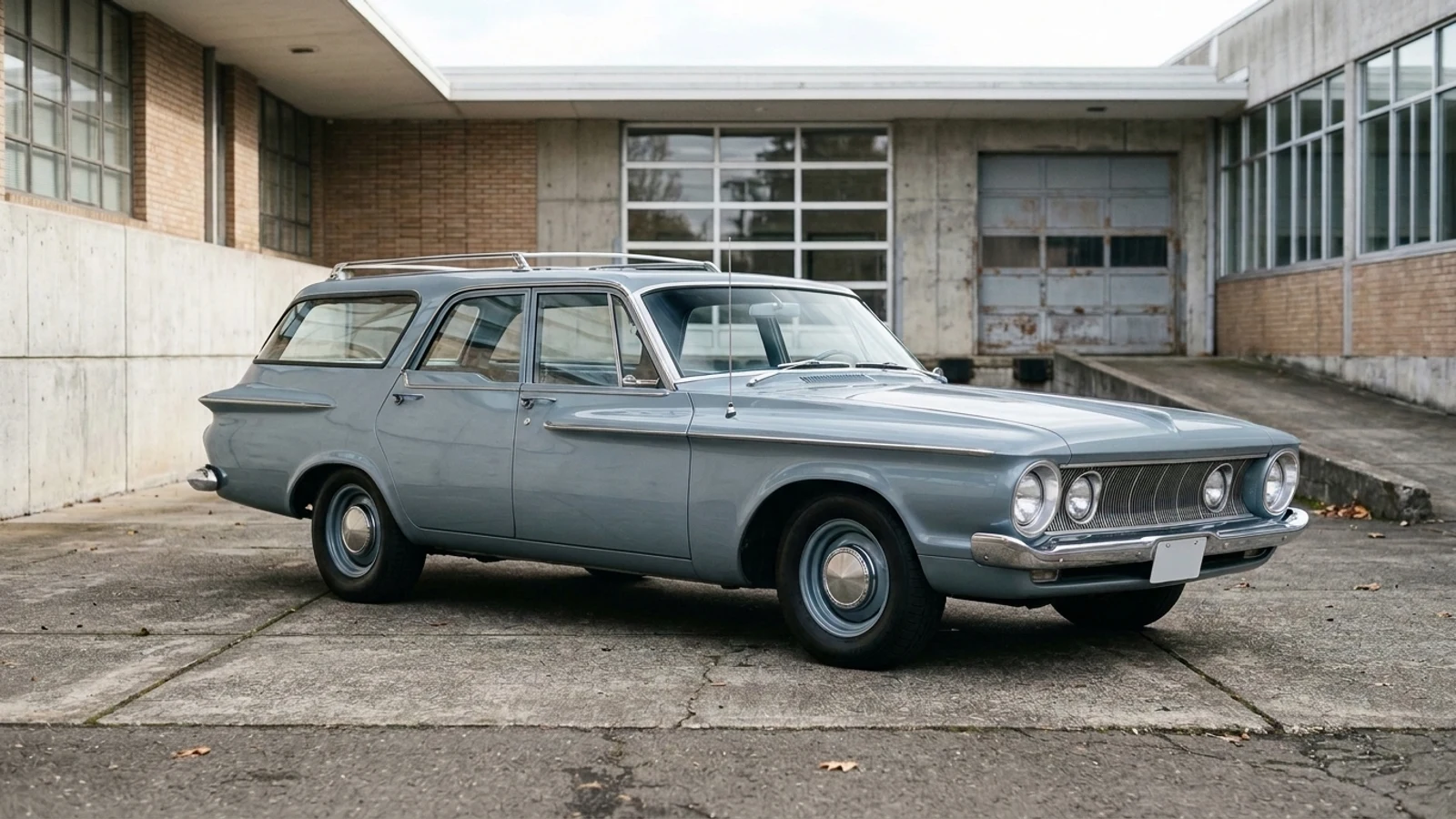
The 1962 Plymouth Savoy wagon, recently listed for auction on the Bring a Trailer platform, presents a distinct perspective on automotive history. While modern classic car shows frequently highlight high-performance Mopar muscle cars, this vehicle represents the common, everyday transportation seen on public roads during the early 1960s. Its presence on the auction block serves as a reminder of the mundane side of mid-century vehicular traffic, which was rarely characterized by the high-dollar, specialty models often found in premium auctions. Source
For historical accuracy in film and television production, picture car coordinators face significant challenges when sourcing period-appropriate vehicles. The industry has a tendency to prioritize the preservation of exotic or high-value models, which can misrepresent the reality of historical road conditions. This Savoy wagon serves as a functional contrast to the muscle car image. Unlike models equipped with large displacement V-8 engines, this unit retains its original inline-six engine configuration, paired with a three-speed manual transmission. Source
In the 1962 model year, the Plymouth Savoy occupied the lowest trim position in the manufacturer's series, situated below the Belvedere and the top-tier Fury. Despite this positioning, customers had the ability to specify upgrades such as air conditioning or more powerful V-8 engine options. These variants included the high-performance 413-cubic-inch Max Wedge engine, capable of producing outputs exceeding 400 horsepower. However, the specific wagon offered on the platform retains its standard, more modest mechanical specification. Source
The powertrain in this Savoy consists of a 225-cubic-inch six-cylinder engine, which provides approximately 145 horsepower. This configuration, paired with a column-shifted three-speed manual gearbox, requires more active driver input compared to vehicles equipped with automatic transmissions. While this model is less powerful than the high-output performance versions offered in 1962, it serves as a representative example of a budget-conscious family vehicle from that era, offering a distinct experience for drivers accustomed to modern automotive conveniences. Source
A notable aspect of this specific vehicle is its condition, which is uncharacteristic for a base model from this period. The wagon underwent an extensive restoration process in 2018. Although the total mileage accumulated over the vehicle's lifespan remains unconfirmed, reported figures indicate that the car has covered only a few thousand miles since the completion of the restoration work. The current state of the vehicle is noted as being in wonderful condition, suggesting a high level of care for a previously humble model. Source
The preservation of vehicles like the Savoy provides historical value, illustrating the broader context of mid-sixties automotive production. Because many of these workaday cars were not treated as collectible machines, few survivors remain today. While the car lacks the prestige or investment status typically associated with rare, performance-focused vehicles like a Hemi-powered Superbird, its rarity and condition make it a special specimen. It functions as documentation of an accurate, rather than romanticized, picture of the past. Source
The 1962 Plymouth Savoy represents a segment of the market that prioritized affordability and utility. By avoiding the excessive styling or engine configurations of premium trims, it stands as an example of a parsimonious manufacturing strategy. Prospective buyers and enthusiasts can use such vehicles to understand the constraints and realities of the average automotive consumer in 1962. The restoration ensures the vehicle maintains its functional capabilities, allowing it to remain a viable, drivable piece of automotive history. Source
Comparatively, the 1962 lineup offered several configurations that catered to different segments of the market. The difference between the Savoy, Belvedere, and Fury models was primarily defined by trim levels, amenities, and available high-performance options. The table below outlines the basic engine and trim position context as documented in the provided information for the 1962 Plymouth series, reflecting both standard options and the peak performance potential available to consumers during that specific model year. Source
Plymouth 1962 Trim and Power Overview
The following table summarizes the specifications for the 1962 Plymouth series as highlighted by Car and Driver. Source
Mechanical Configuration and Driving Experience
The vehicle's mechanical layout emphasizes simplicity and manual interaction, which defines the driving experience. Unlike high-end land yachts of the era that featured V-8 engines and automatic transmissions, the manual gear selection on the steering column provides a tactile engagement. This contributes to the wagon's appeal for collectors who value authentic period experiences over high-horsepower performance. The combination of the six-cylinder engine and manual transmission reflects the common practical engineering found in standard production vehicles of that era. Source
Maintenance and condition are key factors for collectors, particularly for vehicles that have undergone significant refurbishment. The 2018 restoration of this unit included addressing structural and mechanical elements to return the wagon to a presentable state. This effort is unusual for a vehicle that began as a low-trim model, as these were typically subjected to heavy daily usage. The preservation efforts highlighted in the auction listing demonstrate a growing appreciation for standard, non-performance automobiles from the mid-twentieth century. Source
The 1962 Plymouth model year is also notable for the departure in sizing and styling compared to the 1961 iteration. This change reflected shifting corporate design strategies. The Savoy, being the base model, best illustrates these design changes in their most restrained form. Collectors looking for an example of 1960s design evolution might find this wagon particularly representative. Its survival highlights the importance of archiving diverse examples of automotive history beyond the high-value, limited-production vehicles that dominate the market. Source

