
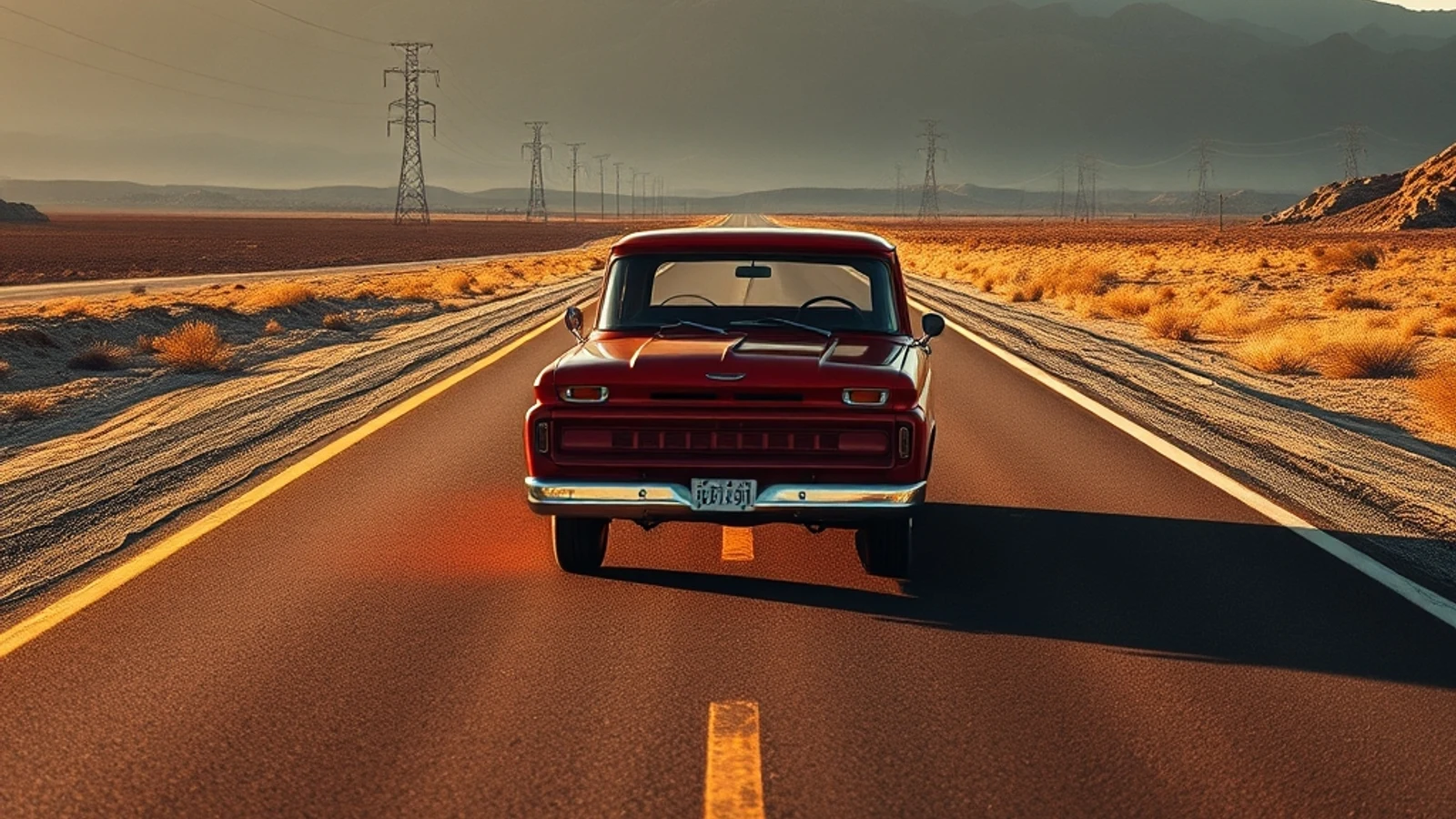
The development of the Dodge Li'l Red Express represents a unique historical intersection between automotive engineering and federal regulatory policy during the late 1970s. As emission standards tightened following the 1970s Oil Crisis, many passenger cars suffered significant performance losses due to the introduction of catalytic converters. Dodge leveraged a specific loophole in existing emissions legislation that exempted vehicles with a gross vehicle weight rating of 6,000 pounds or more, allowing the truck to retain its high-output engine. Source
By the mid-1970s, catalytic converters became standard equipment for most passenger vehicles, which effectively stifled the muscle car era. For instance, the 1975 Chevrolet Corvette saw its output drop by 30 horsepower, and the Cadillac 500 V8 experienced a reduction from 210 horsepower to 190 horsepower in its final model year. While these measures were designed to mitigate smog and address fuel shortages, they created a performance vacuum that enthusiasts and manufacturers were eager to fill through alternative vehicle segments. Source
Dodge identified the potential for a performance pickup based on the D150 model, which featured a 6,100-pound GVWR, comfortably exceeding the 6,000-pound threshold required to avoid catalytic converter mandates. The manufacturer optimized the truck for speed by utilizing a single-cab configuration paired with a short Utiline cargo box and two-wheel drive. This design approach minimized weight while maximizing the utility of the available mechanical components, positioning the truck as an unlikely competitor to contemporary performance coupes. Source
Under the hood, the Li'l Red Express was equipped with a 5.9-liter small-block V8, commonly known as a 360cid engine, which was typically reserved for law enforcement vehicles rather than civilian sedans. The configuration included a high-flow four-barrel carburetor, a Hi-Rise intake manifold, and a specialized exhaust system. The truck was visually distinguished by dual 2.5-inch chrome smokestacks, which contributed to its unique big-rig aesthetic. This setup produced 225 horsepower, providing a 50-horsepower increase over the standard D150. Source
The market impact of the Li'l Red Express was limited by its production runs, with Dodge manufacturing 2,188 units in 1978 and 5,118 units in 1979. Despite this exclusivity, the models remain relatively accessible in the secondary market compared to other classic muscle vehicles. Recent data indicates that the 1978 model has been trending at approximately $28,900, while the 1979 model has maintained a market valuation of around $25,500, according to figures tracked as of late 2026. Source
The evolution of the muscle truck segment continues in the modern era, though the driving factors have shifted from regulatory avoidance to consumer demand for high-performance utility vehicles. Manufacturers currently offer various high-horsepower trucks, such as the Shelby F-150 Super Snake, which delivers over 810 horsepower, and the forthcoming Ram Rumble Bee SRT with 777 horsepower. These modern vehicles represent a shift where performance and functionality are prioritized through advanced engineering rather than circumventing emissions regulations. Source
Historical production muscle trucks followed specific technical strategies to achieve their performance figures during a restrictive regulatory environment. The table below illustrates the key differences in specifications for the original Dodge Li'l Red Express and the modern 2027 Ram 1500 Rumble Bee, reflecting the evolution of the segment over the past five decades. These figures represent the documented manufacturer configurations for their respective time periods and emphasize the contrast between historical emissions-exempt designs and modern high-performance technology. Source
Comparing the historical output of the Li'l Red Express to contemporary trucks highlights the significant power increases achieved by modern automotive engineering. While the 1978-1979 models provided a notable 225 horsepower by utilizing police-spec hardware, current models like the Ram 1500 Rumble Bee base trim exceed these figures by producing 395 horsepower. This shift reflects both the advancement of forced induction technology and the departure from the specific environmental constraints that necessitated the innovative engineering of the late 1970s. Source
Market availability for these vintage trucks is consistent, as a small number of units regularly appear at major automotive auctions each year. The total production run of 7,306 units across both years ensures that the vehicles remain uncommon enough to be considered collectible, yet they have not reached price levels that would exclude most enthusiasts. For potential buyers, the primary challenge remains locating a well-maintained example that retains its original, period-correct performance components and factory styling. Source
The legacy of Dodge's muscle truck strategy serves as a foundational element in the history of the US automotive performance industry. By viewing regulatory hurdles as an invitation for creative design, the manufacturer established a template for the production-built muscle truck. This heritage has informed the development of subsequent models that blend utility with high-performance capabilities, continuing to attract buyers who appreciate the historical significance of the original 1978 and 1979 releases as the first fast trucks on the market. Source
Ultimately, the success of the Li'l Red Express relied on the strategic choice to combine a high-displacement V8 with the specific chassis constraints of the D150 pickup. This allowed the vehicle to remain compliant with federal GVWR requirements while providing enough power to outperform many contemporary passenger cars. The dual exhaust stacks and unique trim levels further distinguished the vehicle, reinforcing its identity as a performance machine that effectively bypassed the limitations imposed on traditional muscle cars during that era. Source
Recent trends demonstrate that interest in these models remains high among collectors who value the intersection of industrial history and performance engineering. As modern trucks continue to push the boundaries of power and capability, the Li'l Red Express remains a point of reference for the origin of the muscle truck segment. The shift from the 225-horsepower V8 of the late 1970s to the high-output engines of 2026 highlights a half-century of continuous innovation in the American pickup market. Source

