
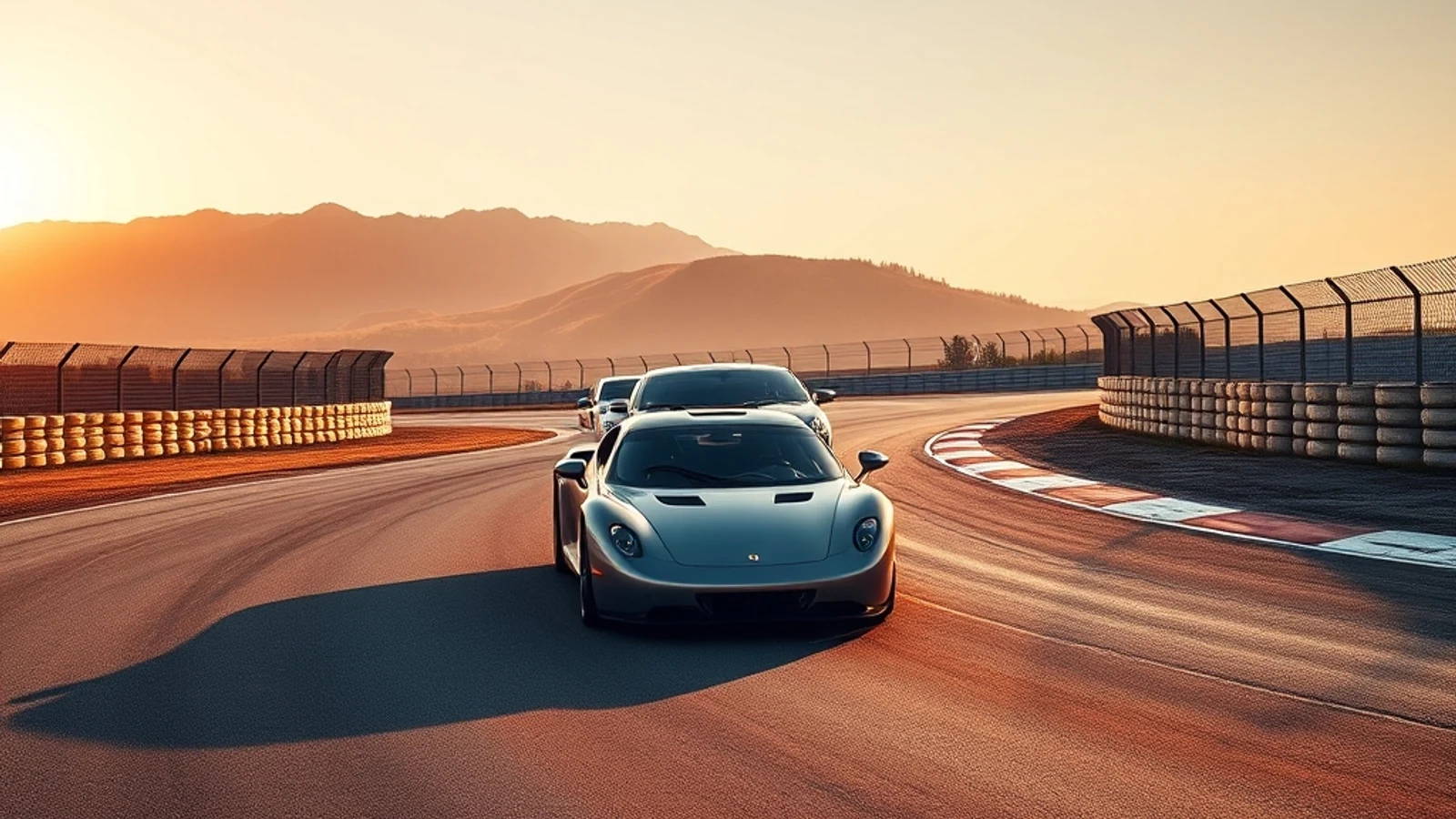
The evolution of American V8 performance cars has shifted from a primary focus on straight-line acceleration to comprehensive circuit capability. While engine power remains a central component, modern manufacturers now prioritize chassis engineering, suspension tuning, braking hardware, and thermal management to deliver consistent results under demanding road course conditions. This change in philosophy has resulted in specialized models that bridge the gap between street-legal passenger vehicles and dedicated track-oriented machines for enthusiasts. Source
For this analysis, we examine two prominent track-spec variants from recent years: the sixth-generation Chevrolet Camaro SS 1LE and the Ford Mustang Mach 1, which was available from 2021 to 2023. These vehicles represent a concentrated effort by their respective manufacturers to provide platforms capable of sustained high-load driving. Rather than merely increasing power output, the engineers focused on structural rigidity, cooling, and handling precision to ensure the cars could withstand repeated sessions on a track. Source
The Chevrolet Camaro SS 1LE utilizes the GM Alpha platform, an architecture recognized for its lightweight and rigid properties, also shared by the Cadillac ATS. This structure provides a stable foundation for an independent rear suspension setup designed to maintain tire contact on irregular surfaces. The 1LE variant enhances this foundation with the FE4 suspension package, incorporating revised dampers, springs, and stabilizer bars, bolstered by Magnetic Ride Control, which adjusts damping in real-time. Source
In comparison, the Ford Mustang Mach 1 utilizes the S550 platform, with specific modifications including revised suspension calibration and MagneRide adaptive damping. Ford integrated several components derived from the higher-performance Shelby GT350 and GT500 models to improve the vehicle's capability. This includes a more robust Tremec TR-3160 six-speed manual transmission, which features a twin-disc clutch and rev-matching technology, offering a distinct upgrade over the standard Mustang GT manual gearbox. Source
Thermal management is a critical requirement for sustained track performance, and both manufacturers implemented specific solutions to mitigate heat-related issues. The Ford Mustang Mach 1 features dedicated cooling for the engine oil, the transmission, and the rear axle. Furthermore, the front grille was designed to increase airflow to vital components, while underbody fins serve to direct cooling air toward the braking system during operation. These modifications ensure the vehicle maintains consistent performance levels throughout long driving sessions. Source
Chevrolet’s approach to cooling for the SS 1LE involves a comprehensive Track Cooling package, which manages temperatures for the engine, transmission, and differential. This system ensures that the 6.2-liter LT1 V8 and the drivetrain remain within optimal operating limits during extended use. Additionally, the Brembo braking system, featuring six-piston front calipers and four-piston rear calipers, provides the necessary thermal capacity to handle the intense heat generated during repeated hard braking events on a circuit. Source
Instrumented performance testing offers insight into how these design philosophies translate to real-world handling performance. Testing conducted by MotorTrend recorded a 22.9-second figure-eight time for the 2018 Camaro SS 1LE, compared to 23.7 seconds for a 2022 Mustang Mach 1 equipped with the optional Handling Package. Furthermore, the Camaro achieved an average of 0.91 g in cornering tests, compared to 0.82 g for the Mach 1, suggesting a performance advantage for the Camaro in handling maneuvers. Source
Technical Comparison
The following table summarizes the engine specifications and core performance hardware for these two vehicles as reported by CarBuzz: Source
| Specification | Chevrolet Camaro SS 1LE | Ford Mustang Mach 1 |
|---|---|---|
| Engine | 6.2-liter LT1 V8 | 5.0-liter Coyote V8 |
| Power Output | 455 hp | 480 hp |
| Torque Output | 455 lb-ft | 420 lb-ft |
| Transmission | 6-Speed Manual | 6-Speed Tremec Manual |
| Key Hardware | Magnetic Ride Control / FE4 | MagneRide / Shelby Components |
Performance and Testing
It is important to note that performance testing data, such as figure-eight times and g-force measurements, are specific to the conditions of individual instrumented tests. These figures do not necessarily represent universal lap-time results, as testing methodologies and environmental variables can influence outcomes significantly. These results are valuable for comparing the focus of each manufacturer—prioritizing chassis balance versus raw power and Shelby-derived hardware—but they should not be treated as a definitive ranking. Source
The Camaro SS 1LE distinguishes itself through its emphasis on predictable handling and high levels of front-end grip, largely attributed to its staggered Goodyear tire setup and electronic limited-slip differential. Conversely, the Mustang Mach 1 provides a different experience, with sharper steering responses compared to the standard Mustang GT, especially when equipped with the optional Handling Package, which includes wider Michelin Pilot Sport Cup 2 tires measuring 305/30R19 up front and 315/30R19 at the rear. Source
Ultimately, both vehicles exemplify the shift toward track-ready American performance cars. The Camaro SS 1LE is noted as a handling-focused package that excels on technical circuits, while the Mustang Mach 1 is recognized for its ability to blend V8 performance with mechanical upgrades and daily usability. Both cars reflect a significant era in automotive development where genuine track capability was successfully integrated into high-performance models that maintained the traditional character of American muscle. Source

