
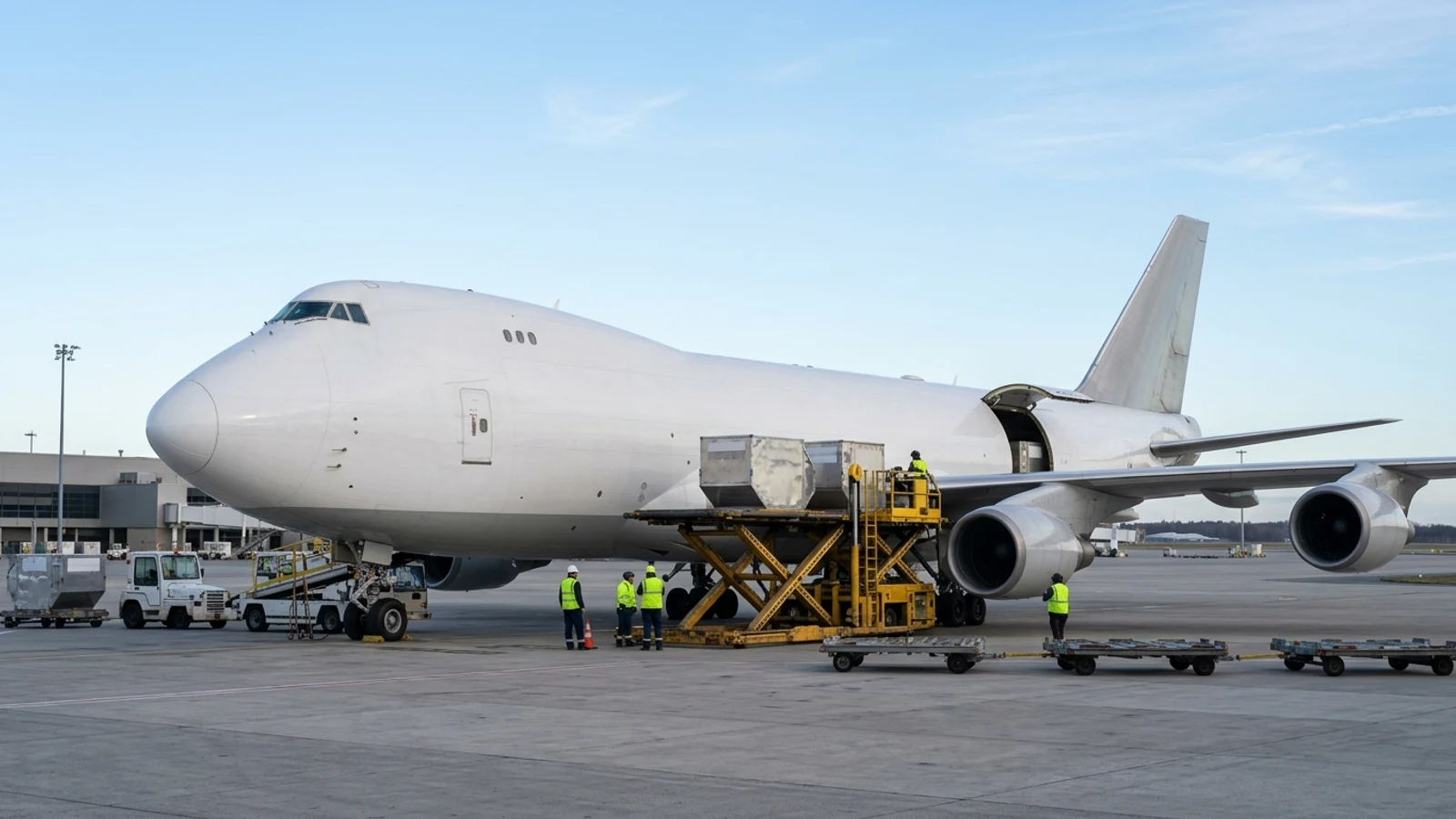
Kalitta Air operates N740CK, a Boeing 747-400 freighter that originally entered service in 1989. The aircraft continues to perform daily flights across the Pacific Ocean, serving as a primary cargo workhorse for the company. Data provided by Simple Flying Aviation Discovery shows that between November 16 and November 22, 2026, the freighter completed 17 individual flight segments. These operations connected nine different airports across Asia and North America, illustrating the sustained utility of the jumbo jet despite its age. Source
Operational Routing and Fleet History
The aircraft, identified as a Boeing 747-4H6(BCF) with serial number 24405, began its operational life as a combi configuration for Malaysia Airlines, registered as 9M-MHM. Following its conversion into a full freighter, it was acquired by Kalitta Air. US Federal Aviation Administration records, as noted by Simple Flying Aviation Discovery, confirm the build year as 1989. The aircraft’s ongoing service cycle highlights the demand for heavy, outsized freight capacity that the 747 platform historically provides to major global carriers. Source
During the monitored week in November 2026, the aircraft’s schedule involved complex logistics. It moved between major hubs, including Chicago, Shanghai, Seoul, New York, Tokyo, Xiamen, Los Angeles, and Kuala Lumpur. Sixteen of the 17 flights were documented in standard schedules, while one flight segment from Seoul to Kuala Lumpur on November 22 was detected by ADS-B receivers. The total distance covered by the 16 scheduled legs reached approximately 49,000 miles, with individual flight durations varying based on the specific route requirements. Source
Ted Stevens Anchorage International Airport (ANC) acted as a central pivot for these transpacific operations. Simple Flying Aviation Discovery reports that 12 of the 17 flights recorded for N740CK either originated or terminated at this hub. Anchorage is frequently utilized by freight operators as a technical stop to maximize payload capacity. By stopping to refuel in Alaska, operators can reduce the initial fuel load required for a nonstop transpacific crossing, thereby allowing for a larger maximum cargo payload of up to 249,000 pounds. Source
The operational data reveals a clear strategic pattern for cargo movement between North America and Asia, summarized in the following flight distribution table: Source
| Flight Metric | Detail |
|---|---|
| Monitored Dates | November 16–22, 2026 |
| Total Recorded Flights | 17 |
| Total Distance (16 Legs) | 49,000 miles (78,860 km) |
| Longest Leg | Chicago to Tokyo (6,260 miles) |
| Shortest Leg | Shanghai to Seoul (511 miles) |
| Anchorage Transit Frequency | 6 of 7 Pacific crossings |
Fleet Sustainability and Future Outlook
While N740CK remains active, the long-term future of the 747-400 fleet is increasingly defined by its gradual replacement. Simple Flying Aviation Discovery reports that Kalitta Air has begun incorporating Israel Aerospace Industries-converted 777-300ERSF freighters into its operations. These twin-engine aircraft offer a 14% increase in cargo volume and a 21% improvement in fuel efficiency compared to the 747-400. As maintenance costs for aging airframes like N740CK rise, the shift toward these more modern platforms is expected to continue. Source
The 747-400 program reached its conclusion with the final delivery in 2009. Consequently, every operational 747-400 in existence is at least 16 years old. Aside from the N740CK, other older 747 generations were also observed in the air during the same November week, including several 747-200, 747-300, and 747SP models, mostly registered in former Soviet states. Unlike the 747-400, which utilizes a two-pilot glass cockpit, these older models rely on flight engineers, which influences their ongoing operation and maintenance logistics within niche cargo markets. Source
The regulatory landscape in Alaska, specifically the cargo transfer rules, further supports the use of hubs like Anchorage for fleet management. According to Simple Flying Aviation Discovery, these rules enable carriers to shuffle cargo between different aircraft heading to various destinations in Asia and North America. For Kalitta Air, this flexibility allows the optimization of assets, ensuring that older but high-capacity airframes remain economically viable for specific heavy-lift routes despite the entry of newer technology into the market. Source
Despite the aging fleet, the 747-400 continues to satisfy a demand for outsized transport that newer narrowbody freighters cannot match. No direct replacements of similar capacity exist in the current commercial manufacturing pipeline from alternative markets, keeping the surviving 747s in high demand. Kalitta Air, as a significant operator of the type, continues to manage these assets as part of a broader fleet strategy that blends legacy jumbo jets with newly acquired widebody twin-engine freighters to maintain a consistent transpacific network. Source
Maintenance remains a significant factor for the continued airworthiness of N740CK. Each additional year in service involves increasing inspection and structural repair requirements. The technical history of the aircraft, documented since its initial Malaysia Airlines delivery, provides a comprehensive record for the current operators at Kalitta Air. The reliance on this specific airframe, along with its sister ship N741CK, underscores the longevity of the Boeing 747 design in global logistics operations at the conclusion of the 2026 operational year. Source
Simple Flying Aviation Discovery confirmed that the tracker data is limited by registry information for US-based aircraft, preventing a precise age-based ranking of all international 747s. Therefore, while N740CK is established as one of the oldest 747-400s, the exact comparative age relative to other non-US registered 747-400s remains an open question for industry analysts. Nevertheless, the aircraft's performance during the late November period serves as evidence of the continued operational role of these classic long-haul freighters. Source

