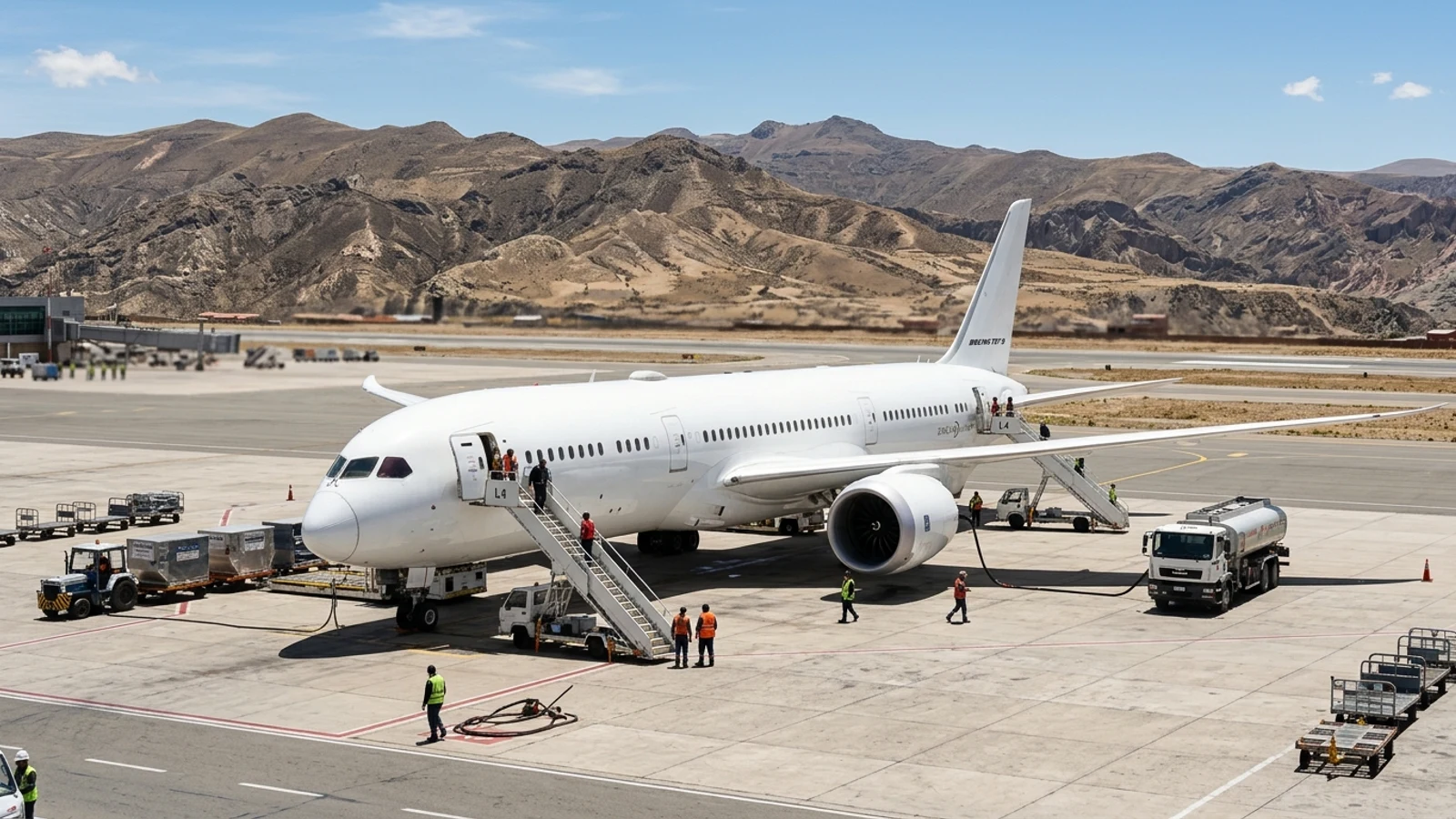
The operational efficiency of the Boeing 787-9 Dreamliner during takeoff is heavily influenced by environmental factors that dictate its performance capabilities. According to Simple Flying Aviation Discovery, an aircraft's ability to lift off within a specific runway length is governed by rigorous performance limits. While these are often codified in Pilot Operating Handbooks, heavy commercial operators rely on specialized dispatch teams to calculate if a flight can safely depart under hot, high, and heavy conditions. Source
The primary challenge identified by Simple Flying Aviation Discovery relates to density altitude. Standard atmosphere is based on 59 degrees Fahrenheit (15 degrees Celsius) at sea level. When temperatures exceed this baseline, air molecules spread apart, reducing the air's density. This reduction directly impacts the power output of the 787-9’s General Electric GEnx-1B or Rolls-Royce Trent 1000 engines, as fewer air molecules are available for the engine to process, resulting in less thrust. Source
Aerodynamic performance also suffers during hot, high-elevation operations. The decreased air density means that the aircraft's wings generate less lift, requiring higher true airspeeds to achieve takeoff. This forces the aircraft to utilize more runway length and reduces overall climb performance. Consequently, pilots and dispatchers must carefully factor in these variables to ensure that the required takeoff roll remains well within the actual length of the available airport runways. Source
Beyond temperature, atmospheric pressure plays a critical role in determining performance. Simple Flying Aviation Discovery notes that lower pressure conditions mimic the performance of higher-altitude airports, even at lower elevations. Because performance calculation software incorporates real-time pressure data, airlines must treat every departure as a unique scenario. These pressure variations, while often less extreme than temperature shifts, add another layer of complexity when combined with high payloads. Source
Operational Impact of High Elevation and Temperature
Operating from high-elevation hubs presents a distinct challenge, as demonstrated by the operational environment at Denver International Airport (DEN). Situated at roughly 5,434 feet above sea level, Denver provides significantly less dense air than sea-level airports like San Francisco (SFO). This means that a 787-9 departing from Denver under identical payload weights as one departing from San Francisco will face higher takeoff speed requirements and reduced climb margins, potentially limiting its mission capability. Source
The intersection of altitude and temperature creates density altitude values that can drastically alter the takeoff performance of the 787-9. When these environmental factors are at their most extreme, aircraft weight becomes the most manageable variable for airlines. Every passenger, bag, or unit of fuel adds to the lift required for flight. If environmental conditions demand a longer takeoff run than the runway provides, operators must take decisive action to maintain safety and compliance. Source
Airlines utilize several tools to mitigate performance constraints at challenging airports. Common strategies include reducing the number of passengers sold on a flight, leaving cargo containers behind, or decreasing the total fuel load. In some instances, a technical stop for refueling may be required. While these measures directly impact the economics of a route, they are necessary workarounds when a full-capacity, long-haul flight cannot safely clear the departure threshold under local weather and altitude conditions. Source
United Airlines, which maintains a major hub in Denver, faces these trade-offs frequently. While the airline operates a vast network, some ultra-long-haul routes that are viable from lower-altitude airports are simply not feasible from Denver during summer months. The excessive fuel weight needed for long-distance missions can push the required takeoff weight beyond the safety limits allowed by the airport’s physical runway and local ambient conditions, forcing the airline to adjust its network planning. Source
Carriers operating at extremely high-altitude hubs, such as Boliviana de Aviación at La Paz (LPB) or Aeromexico at Mexico City (MEX), face similar hurdles. These airports combine elevation with warm surface temperatures, creating a permanent environmental challenge for large widebody aircraft. Consequently, these airlines must maintain a rigorous focus on balancing their payloads to avoid exceeding performance limits during the departure phase of their scheduled transcontinental or long-haul operations. Source
Comparing Aircraft Performance and Future Requirements
Industry experts often point to older airframes as benchmarks for high-altitude performance. The Boeing 757-200, for instance, became legendary for its ability to operate from hot-and-high airports while carrying significant loads, thanks in part to its efficient thrust-to-weight ratio and powerful engines. While the 787-9 represents a significant leap in efficiency and technology for long-haul flying, it does not necessarily offer the same operational flexibility in challenging takeoff environments as these purpose-built older models. Source
The dilemma for modern airlines is that no direct replacement exists for the operational niche the Boeing 757 once occupied. While the 787-9 is superior in terms of range and total passenger capacity, it requires more intensive planning to handle departures from airports with restrictive environments. For now, airlines must continue to balance the benefits of modern aircraft technology with the reality of airport-specific environmental limitations, opting for weight reductions or altered flight planning when necessary. Source
Ultimately, the flight of a 787-9 is not just about the aircraft's raw capabilities, but how those capabilities align with the specific constraints of the departure airport. As air travel continues to grow, the ability of dispatchers to manage these performance variables becomes increasingly important. Airlines will likely continue to evaluate which aircraft models are best suited for their specific route networks, considering runway performance at their primary hubs as a critical component of their fleet strategy. Source