Incident Overview and Operational Context
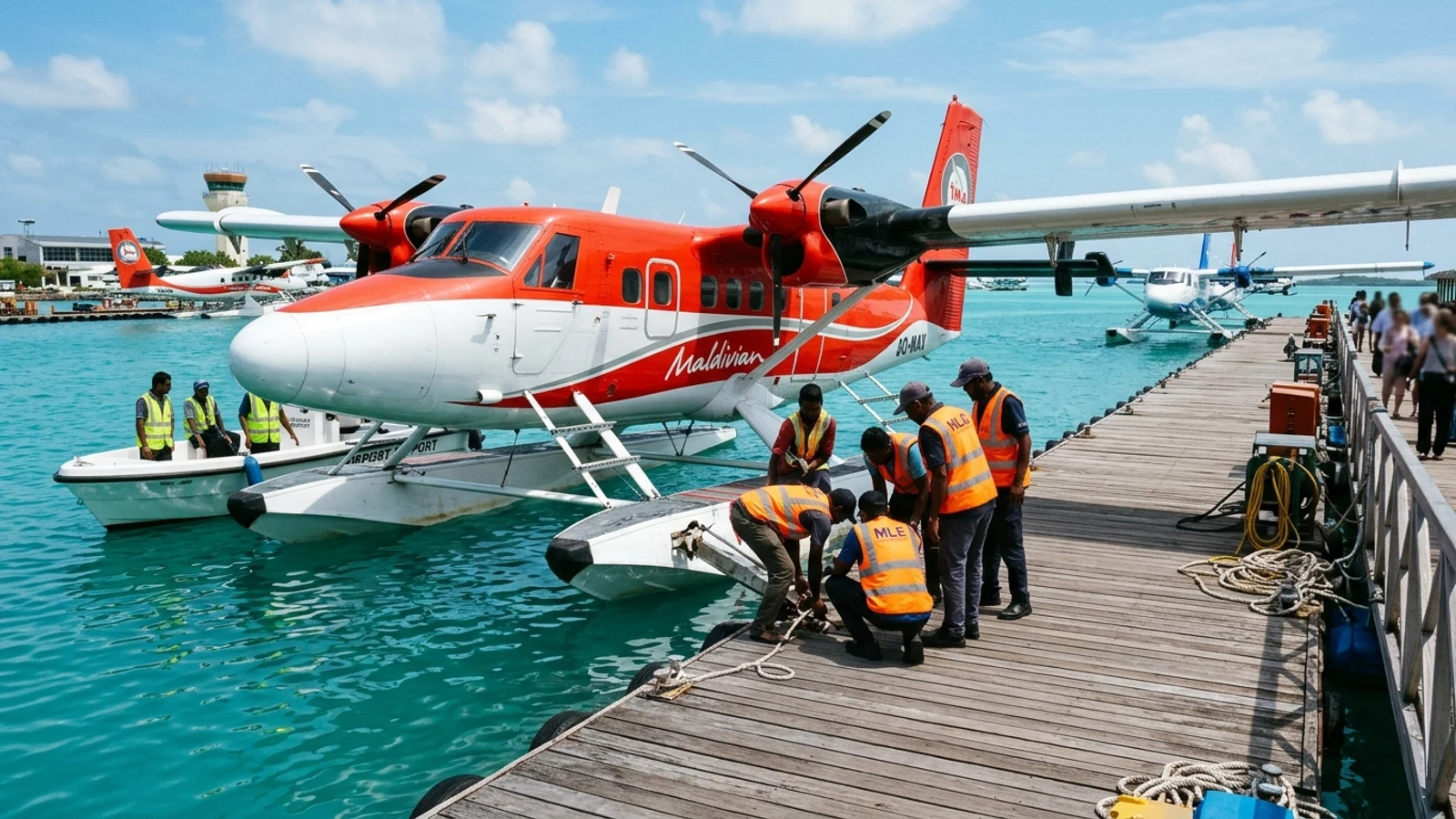
The Trans Maldivian Airways fleet experienced a significant maintenance-related event involving a Viking Air DHC-6-300 Twin Otter, identified by the registration number 8Q-TAL. The incident occurred at Velana International Airport, the primary aviation hub serving international travellers within the Maldives. According to Travel And Tour World Aviation Discovery, the Maldives Civil Aviation Authority maintains the aircraft register that confirms the specific airframe details for this vessel. The aircraft is a critical component of the operator's current fleet infrastructure. Source
The structural failure, which occurred at approximately 2:25 p.m., involved the partial detachment of the aircraft's float while operating in the maritime environment of the airport. These seaplanes are designed to operate as part of a highly synchronised daily schedule, meaning that any disruption to a single unit often triggers cascading delays across the broader island transfer network. Following the mechanical issue, the flight crew managed to return the aircraft safely to the designated fixed passenger platform for docking. Source
Operational challenges for these aircraft include the constant stress placed upon pontoons by saltwater corrosion and the physical impact of waves. Furthermore, the ingestion or collision with floating debris represents a constant risk to structural integrity. The operator is responsible for maintaining rigorous daily inspection schedules to mitigate these hazards. The DHC-6-300 Twin Otter is known for its durability, yet these marine conditions demand precise maintenance and handling protocols to ensure the ongoing airworthiness of the float system. Source
Regulatory Investigation and Passenger Impact
The Maldives Civil Aviation Authority, through its Accident Investigation Coordinating Committee, has commenced management of the aftermath. While a preliminary incident report is expected to provide formal government details, such comprehensive findings are currently absent from official regulatory channels. Media statements have confirmed that an active investigation is in progress, which will focus on maintenance logs, potential metallic corrosion, and the inspection of strut attachment points for signs of mechanical shear or prior repairs. Source
Tracking seaplane flights in this region presents unique technical hurdles, as remote water aerodromes lack the comprehensive terrestrial ADS-B receivers found in larger urban hubs. This lack of coverage creates significant blind spots for official databases, making granular telemetry for this specific flight unavailable to external observers. Consequently, aviation authorities and passengers are currently reliant upon delayed regulatory bulletins rather than real-time data to reconstruct the sequence of events during the incident. Source
The incident has immediate consequences for travellers, particularly regarding connections to international flights departing from the main airport. The sudden grounding of the aircraft necessitates emergency hotel bookings for those unable to reach their resort destinations. There are also concerns regarding visa overstays for tourists whose international departures are disrupted. The Ministry of Foreign Affairs is expected to facilitate necessary visa extensions, ensuring that travellers are not penalised for delays caused by these aviation-related failures. Source
Stranded passengers have clear entitlements under existing aviation regulations, including the right to a duty of care, which encompasses meals, communication, and suitable overnight accommodation. For those covered by UK package travel regulations, rerouting must be facilitated at no additional cost. While claims for emotional distress remain legally complex, documented out-of-pocket expenses resulting from the interruption of transit are generally recoverable. Passengers are advised to maintain all records of expenses incurred during this disruption. Source
The long-term implications for the tourism sector remain a point of concern, as resorts rely exclusively on these seaplane transfers to maintain guest satisfaction and revenue streams. Any fluctuation in service reliability may impact consumer confidence in remote island destinations. Multilateral bodies and local ministries are now evaluating the infrastructure at Velana International Airport, with specific attention directed toward water runway safety zones and the effectiveness of current docking facility inspection programmes to prevent future incidents. Source