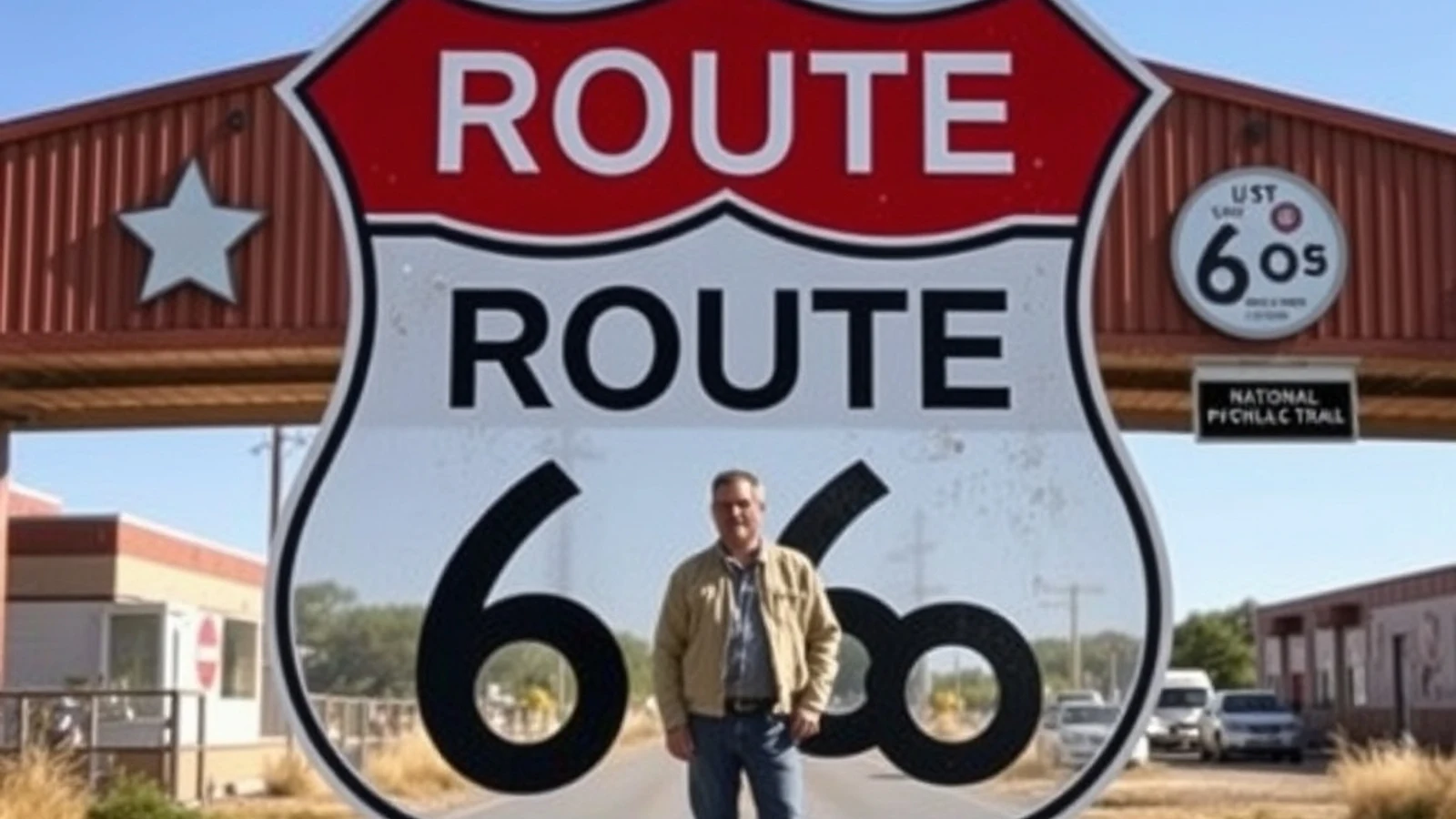
A Century of American Motoring
The United States is currently marking the centennial anniversary of Route 66, an iconic transport corridor that was established on November 11, 1926. This historic road, which connects eight states from Chicago, Illinois, to Santa Monica, California, represents a significant chapter in American history, serving as a primary route for trade, migration, and the growth of automobile tourism throughout the twentieth century. The 2,400-mile stretch remains a globally recognized symbol of the American road trip and motoring culture. Source
As the highway observes its 100th year, the route has seen a resurgence of interest from international and domestic travelers. In St. Louis, Missouri, local sites and museums have reported an influx of visitors seeking to experience the legacy of the road. Landmarks such as the Gateway Arch and family-owned businesses like Ted Drewes Frozen Custard, which opened in 1929, continue to draw crowds. The National Museum of Transportation has also introduced a commemorative exhibit titled Roads, River, Rooms, and Reels to honor the Mother Road. Source
While Route 66 remains a major focus for heritage tourism, it is no longer a continuous federally designated highway. The system was officially removed from the federal highway list in 1985 following the expansion of the Interstate Highway System, which diverted much of the original traffic. Today, travelers rely on a mix of modern roads and preserved historic alignments. The diversity of the route, spanning Illinois, Missouri, Kansas, Oklahoma, Texas, New Mexico, Arizona, and California, requires careful planning as access varies between locations. Source
Legislative efforts are currently underway to provide formal federal recognition for the route. Bills designated as S. 2887 and H.R. 5470 seek to classify the corridor as a National Historic Trail under the National Trails System Act. Proponents argue that this designation would help preserve historic communities and roadside landmarks. The Senate Committee on Energy and Natural Resources reported the proposal in September 2026, though congressional approval is still pending and the status of the highway remains unchanged at this time. Source
The potential designation as a National Historic Trail does not guarantee funding for individual sites or the restoration of all original road sections. Instead, it aims to establish a framework for public interpretation and preservation. Critics and analysts suggest that while the recognition could boost heritage tourism in bypassed towns, economic outcomes will depend on local marketing and infrastructure development. The anniversary does not mark the creation of a new federal program, but rather serves as a milestone for ongoing preservation discussions. Source
Historical Context and Community Impact
The celebration of the centennial is reflected in the diverse activities across the country. In Flagstaff, Arizona, residents and members of the Route 66 Car Club held events to showcase classic vehicles, which enthusiasts view as time machines reflecting family history. Curtis Deibel, a lifelong resident of Flagstaff, noted that the road has seen significant changes over the decades. These local community-led events underscore the cultural importance of the highway to the towns that have grown and evolved alongside it. Source
While Route 66 receives the most national attention, other highways also marked their centennial this month. U.S. Highway 80, established on the same date in 1926, was once a primary southern transcontinental route stretching from Savannah, Georgia, to San Diego, California. Unlike Route 66, which developed a mythic reputation through media, Highway 80 served as a critical path for military transport and commerce, passing through Ruston, Louisiana. This route also saw significant shifts in traffic patterns following the construction of Interstate 20. Source
The history of highway development in the United States often overlaps with the growth of other industries, including aviation. In Monroe, Louisiana, the path of U.S. 80 was tied to the origins of Delta Air Service, which evolved from an agricultural aviation company in 1925 into a commercial passenger airline. This history highlights how early highway infrastructure facilitated the development of modern commercial travel, connecting rural communities to the emerging national transportation network. Source
Reporting from the road has revealed deep connections between these routes and the communities they sustain. Journalists who have traversed the length of Route 66 in 2026 report that the significance of the highway lies in the stories of reinvention found in places such as Joplin, Missouri, where communities rebuilt after disaster. These perspectives provide a vivid portrait of American life, where towns are increasingly finding new ways to utilize historic buildings and landmarks to sustain local economies after the shift toward interstates. Source
For travelers looking to explore the full route, the journey remains a complex undertaking. A coast-to-coast trip requires approximately 2,400 miles of travel and typically takes at least two weeks for those intending to visit museums and national parks. Because the highway is not a continuous route, travelers must rely on specific mapping tools to identify preserved sections. Furthermore, weather conditions remain a concern, with winter ice in northern sections and extreme desert heat requiring careful preparation. Source
As of November 2026, no comprehensive data set tracks nationwide visitor spending increases directly tied to the Route 66 centenary. However, anecdotal evidence from local business owners and museum operators suggests a sustained interest in the history of the Mother Road. The ongoing legislative efforts in Washington, D.C., represent a long-term interest in formalizing this heritage, but the final outcome for the National Historic Trail status remains subject to the legislative process in the current Congress. Source
Ultimately, the centennial serves as a point of reflection for the role of surface transportation in the United States. Whether through the preservation of roadside motels or the documentation of the highway's impact on major events, the 100-year mark underscores the enduring legacy of the federal highway system established in 1926. For local communities, the challenge remains to ensure that the renewed attention garnered by the anniversary translates into effective preservation and long-term economic stability for the towns along the route. Source