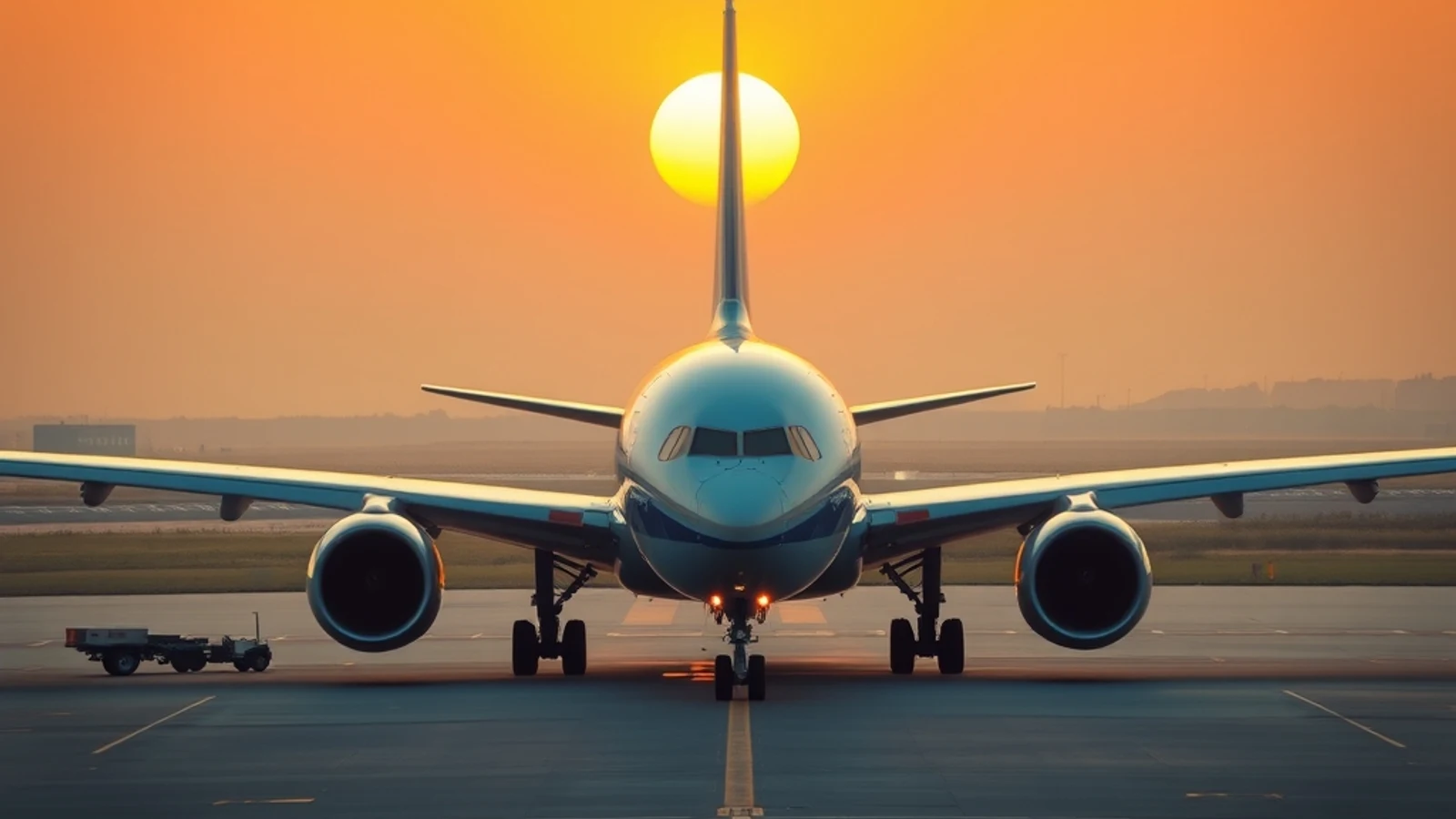
Emirates, as the world's largest operator of the Airbus A380, continues to leverage the aircraft's high passenger capacity to connect its hub at Dubai International Airport to destinations spanning all six continents. As of late 2026, the carrier operates more than 100 superjumbos, which serve as flagship assets for managing volume in slots-constrained environments. The airline utilizes these aircraft to maintain competitive market positions while focusing on high-demand international routes where the large passenger capacity provides significant operational advantages over smaller twin-engine aircraft. Source
Emirates A380 Operational Routes and Flight Times
The longest route within the Emirates A380 network is the daily one-stop service connecting Christchurch, New Zealand, to Dubai, which includes a stopover at Sydney Kingsford Smith Airport. This specific flight path results in a total block time of 20 hours and 10 minutes. Passengers on this route benefit from fifth freedom privileges, allowing for travel between Christchurch and Sydney or as an onward journey to Dubai. The service has remained popular for travelers seeking the A380 experience on trans-Tasman segments. Source
Data sourced from OAG based on the winter 2026 timetable highlights several other major ultra-long-haul routes. The longest nonstop A380 service is from Auckland to Dubai, with a duration of 17 hours and 25 minutes. Other significant segments include the Dubai to John F. Kennedy International Airport service via Milan, lasting 18 hours and 55 minutes, and the nonstop flight from Dubai to Los Angeles International Airport, which takes 17 hours and 20 minutes. Source
The following table outlines key ultra-long-haul routes identified within the Emirates A380 network as of November 2026: Source
| Route | Service Type | Duration |
|---|---|---|
| Christchurch - Dubai | One-stop (via SYD) | 20h 10m |
| Dubai - New York (JFK) | One-stop (via MXP) | 18h 55m |
| Auckland - Dubai | Nonstop | 17h 25m |
| Dubai - Los Angeles (LAX) | Nonstop | 17h 20m |
| Dubai - San Francisco (SFO) | Nonstop | 16h 45m |
Fleet Retrofit Strategy and Cabin Enhancements
Emirates is actively investing in the cabin interior of its A380 fleet as part of a $5 billion retrofit program that began in November 2022. By mid-November 2026, the company had completed the nose-to-tail refresh of 47 Superjumbos and 53 Boeing 777s, aiming for a total of 219 aircraft. The upgraded A380s feature a new Premium Economy section configured in a 2-3-2 layout, providing passengers with 40 inches of seat pitch and 13.3-inch personal entertainment screens. Source
The Premium Economy cabin uses the Recaro PL3530 seat model, which represents an upgrade from standard economy. On the A380, these cabins are positioned either on the upper deck or the main deck depending on the configuration. The soft product includes upgraded catering, served on chinaware with metal cutlery, and access to an expanded beverage list. This strategy aims to capture market share on premium-heavy routes between Europe, Asia, and North America, positioning the product between economy and business class. Source
Financially, the A380 remains highly significant for Emirates. Sir Tim Clark, the President of Emirates, noted that the A380 was the most profitable asset in the fleet during the 2025–2026 financial year. The company recorded a profit of $6.6 billion during this period. Consequently, Emirates plans to maintain its current A380 fleet until 2041, as no other aircraft currently in production offers comparable passenger capacity to serve its hub-and-spoke model effectively. Source
While Emirates focuses on maintaining and updating its A380 fleet, other operators are moving away from the type. Qantas, for instance, has announced plans to begin retiring its 10 A380s starting in 2028, with the phase-out expected to conclude by 2032. This shift is driven by the airline's transition to more fuel-efficient twin-engine aircraft, such as the Airbus A350-1000, in response to rising fuel costs and the evolving requirements of its long-haul network. Source
The long-term fleet strategy for Emirates also includes a significant commitment to the Boeing 777X, with 270 examples currently on order. This aircraft is intended to become the backbone of the Emirates fleet as the A380 is phased out over the coming decades. The Boeing 777-9 will eventually replace the capacity currently provided by the A380, although it will accommodate approximately 150 fewer passengers, necessitating a shift in how the airline manages its slot-constrained hubs. Source
Emirates' fleet composition also incorporates the Airbus A350-900, which is being used to expand the network to more marginal routes that do not require the mass-volume capacity of the 777 or A380. As of November 2026, the carrier has 30 A350-900s in service, with 43 remaining on order. This approach allows the airline to balance its reliance on high-volume hub operations with a more efficient, targeted expansion strategy in new or existing markets. Source
The combination of retrofitted interiors and a continued reliance on high-capacity widebodies underscores Emirates' unique market position. By investing $5 billion into the interior upgrades of its fleet, the airline intends to maintain its brand image and service standards until the transition to the 777X and other newer aircraft families is fully realized. This multi-year program reflects a commitment to the passenger experience that complements the carrier's broader economic and operational objectives. Source