
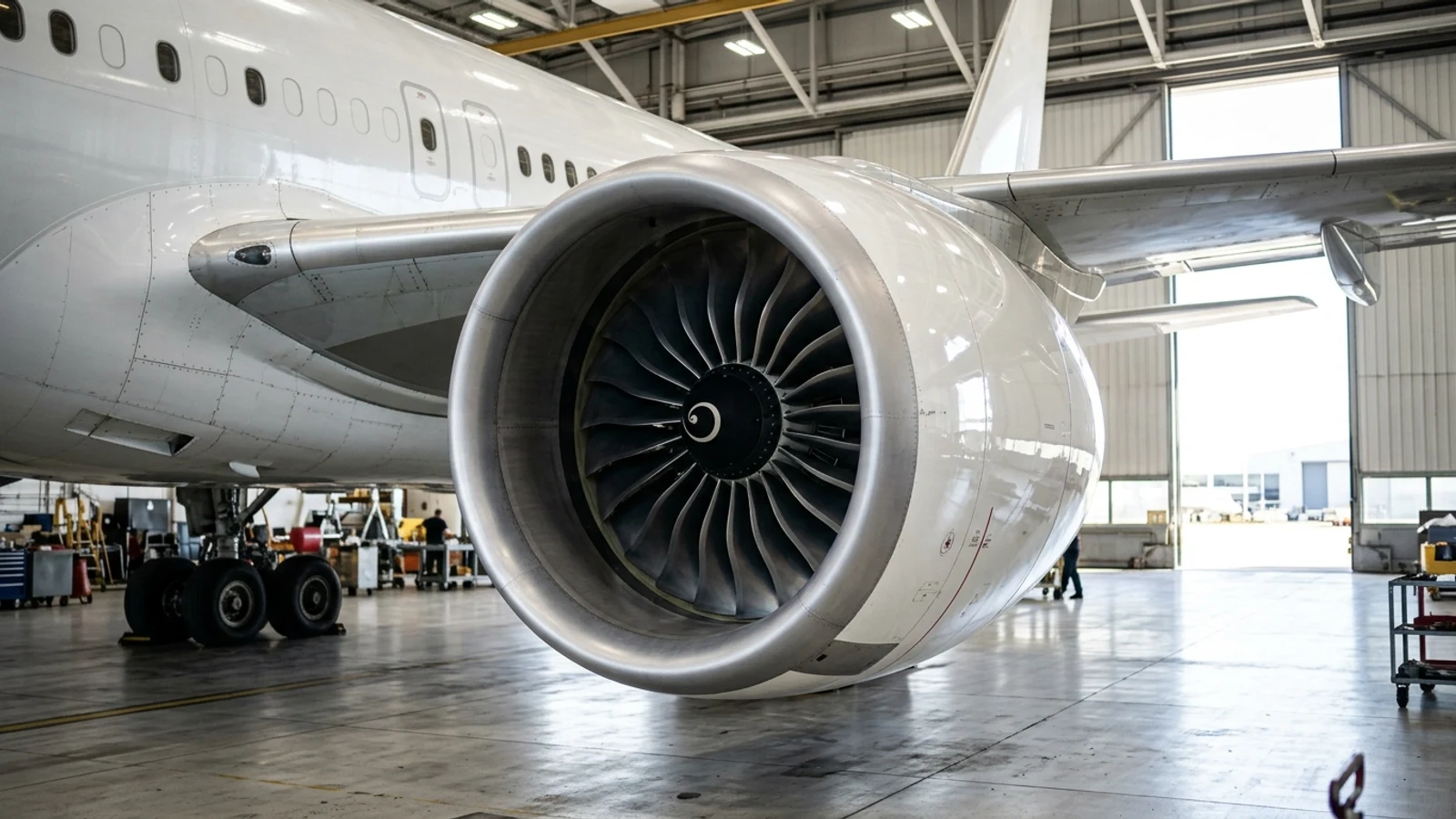
The Boeing 787 Dreamliner fleet relies on two primary engine options, with the Rolls-Royce Trent 1000 being a major choice since the aircraft's inception. However, the engine's long-term service history has been characterized by significant challenges. Various airlines that were once heavy users of the powerplant have recently opted for General Electric's GEnx engine for their latest deliveries, signaling a notable shift in fleet management strategy across several major international carriers. Source
All Nippon Airways, the world's largest operator of the 787, has been particularly affected by these reliability concerns. Following a period where Trent 1000 engines suffered from cracked high-pressure turbine blades and corrosion around blade shanks—issues that led to groundings and operational disruptions—the airline committed to the GEnx for its future fleet growth. This move mirrors a wider trend as airlines look to improve dispatch reliability for their long-haul operations. Source
British Airways and Air New Zealand have similarly diversified their fleets by selecting GE engines for incoming Dreamliners. British Airways, which has historically maintained a large Trent-powered fleet, ordered GE engines for six of its newer deliveries in 2024. Meanwhile, Air New Zealand recently incorporated the GEnx into its expansion plans after facing significant supply chain and maintenance challenges that kept several of its 787s grounded during the height of the engine's reliability difficulties. Source
Singapore Airlines, which launched the 787-10 in 2018, continues to operate a substantial fleet powered by the Trent 1000. With 28 Dreamliners currently in its possession, the airline remains a key user of the Rolls-Royce powerplant. These aircraft are configured for high-capacity regional and medium-haul routes, with the airline having utilized the initial delivery of the 787-10 for services connecting Singapore to Osaka and Perth to meet regional market demand. Source
To address the historic durability issues, Rolls-Royce has introduced the Trent 1000 XE, the latest iteration of its Dreamliner engine family. The XE variant includes a redesigned high-pressure turbine blade and a modified cooling-hole pattern, which together aim to lower core metal temperatures by 45 degrees Celsius (113 degrees Fahrenheit) and increase cooling airflow by 40%. These improvements are designed to facilitate significantly longer intervals between necessary overhauls. Source
The performance enhancements of the XE model, particularly its durability, are central to Rolls-Royce's strategy for regaining market momentum. According to Rolls-Royce, the XE version can theoretically operate for three times longer between overhauls than the preceding Trent 1000 TEN model. Furthermore, turbine tip clearance optimization provides a 0.2% improvement in specific fuel consumption. These metrics are critical for operators as they attempt to minimize aircraft-on-ground (AOG) events and stabilize fleet planning. Source
Royal Brunei Airlines recently announced an order for eight Trent 1000 XE engines to power four new 787-9 aircraft. This selection, disclosed on November 19, 2026, serves as a significant commercial win for the manufacturer. The airline, a long-standing user of the Trent 1000 since 2013, will have its new engines covered under the company's comprehensive TotalCare service agreement, which manages maintenance health to support fleet availability as the airline grows its long-haul capabilities. Source
LATAM Airlines has also returned to Rolls-Royce, choosing the Trent 1000 XE for its next 787 deliveries. This follows a period where the airline previously moved toward GE engines due to the durability issues encountered with the earlier Trent 1000 Package C units. The recent selection is being highlighted by Rolls-Royce as a sign of rebuilding customer confidence, alongside a similar order from Somon Air, which firmed up its selection earlier in 2026. Source
While Rolls-Royce is making efforts to improve its position, the market balance remains skewed heavily toward General Electric. Boeing's delivery backlog data indicates that for the 1,182 remaining 787 aircraft yet to be delivered, approximately 80% have been selected to use GEnx powerplants. In contrast, the Trent 1000 XE accounts for a much smaller portion of current orders, leaving Rolls-Royce with a continuing challenge to compete effectively against the established GE engine footprint. Source
Rolls-Royce has expanded its maintenance, repair, and overhaul (MRO) capacity in the UK, Singapore, and Germany to support its updated engine standards. The manufacturer is currently working through a program to retrofit the existing worldwide fleet of Trent 1000 TEN-powered Dreamliners to the XE standard. Roughly half of the global fleet has already undergone this transition, with the company aiming for a full completion of these refurbishments throughout 2027. Source
The evolution of the Dreamliner engine market is summarized by the contrasting choices made by major airlines. The following table provides a snapshot of the current engine dynamics for key operators based on fleet activity and order trends: Source
| Airline | Primary Engine Direction | Key Development |
|---|---|---|
| All Nippon Airways | Shift toward GEnx | Previous Trent reliability issues |
| British Airways | Shift toward GEnx | Recent GE order for new 787-10s |
| Royal Brunei | Maintained Trent | Ordered XE for new 787-9s |
| LATAM Airlines | Returned to Trent | Selected XE for new aircraft |
| Air New Zealand | Shift toward GEnx | New 787s to use GEnx-1B |

