
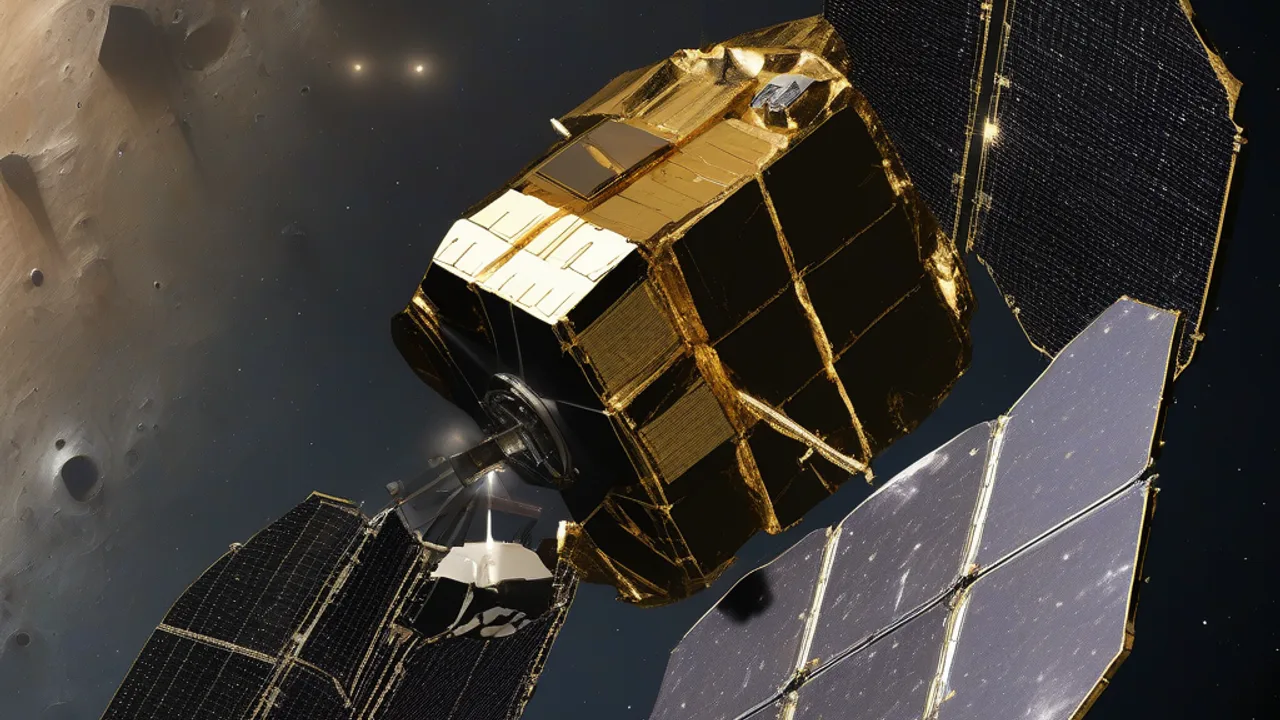
The European Space Agency (ESA) has officially begun close-range inspections of the binary asteroid system targeted by NASA's planetary defense experiment four years ago, according to a report by The Seattle Times.
On Wednesday, November 11, 2026, ESA announced that its Hera spacecraft is currently surveying the asteroid Didymos and its smaller moonlet, Dimorphos, from a distance of 15 to 18 miles (25 to 30 kilometers). The mission serves as a follow-up crash site investigation to evaluate the full scientific outcomes of NASA's Double Asteroid Redirection Test (DART).
Assessing the Aftermath of DART
In 2022, NASA intentionally crashed its DART spacecraft into Dimorphos to determine whether kinetic impact could effectively alter the path of a hazardous space rock. The impact successfully shortened the moonlet's orbital period around Didymos and shifted its overall trajectory around the sun.
The high-velocity collision expelled significant quantities of debris, flinging rocks and boulders thousands of miles into space and creating a dust trail exceeding 10,000 kilometers that persisted for months. Mission scientists report that residual debris may still remain in the immediate surroundings of the pair.
Scientific Payload and Upcoming Operations
Launched in 2024, the car-sized Hera probe carries 25 specialized scientific instruments. It also transports two shoebox-sized CubeSats equipped to perform fine-scale surveys and attempt landings on Dimorphos's surface.
Dimorphos is estimated at 500 feet (151 meters) in diameter, while the primary asteroid Didymos measures approximately 2,560 feet (780 meters) across. Next month, Hera is scheduled to navigate even closer to the asteroid pair, closing the distance to 12 miles (20 kilometers) to gather further detailed observations of the impact crater and surrounding structure.
