
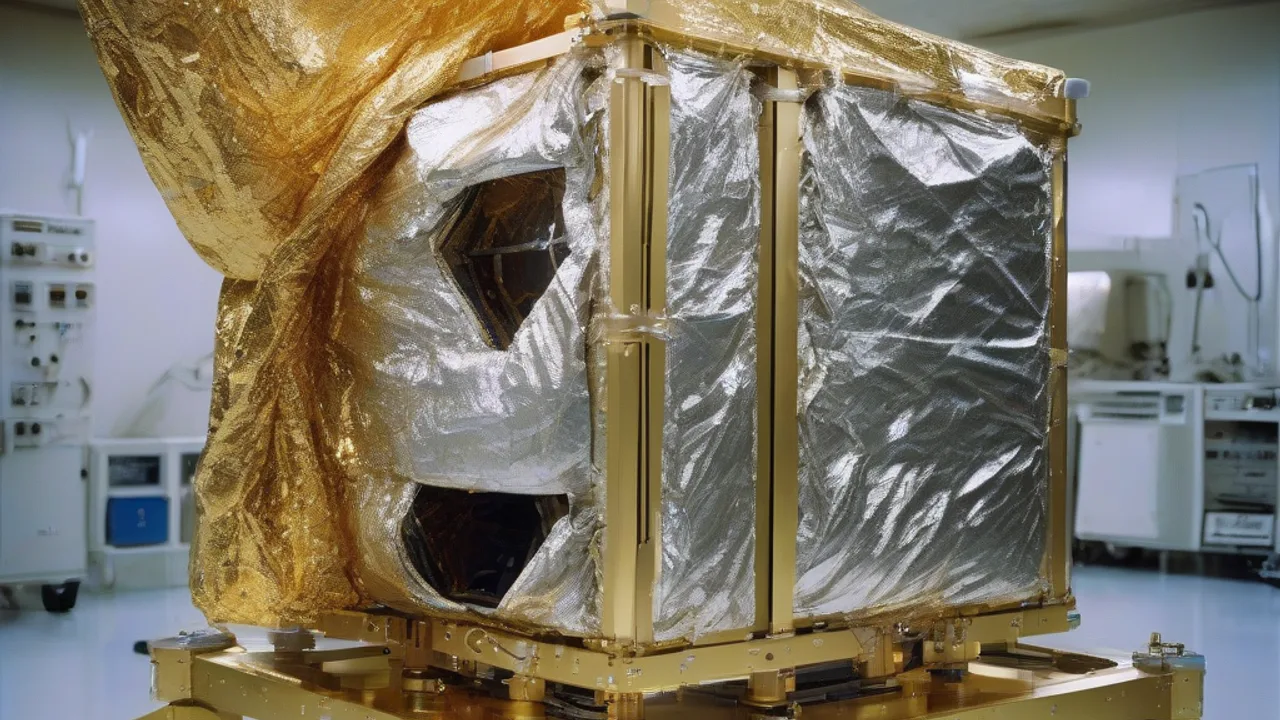
According to NASA Science (.gov), NASA is developing the Stratosphere Troposphere Response using Infrared Vertically-resolved light Explorer (STRIVE) mission to address critical observing gaps in Earth's upper atmosphere. STRIVE will provide daily, near-global measurements of atmospheric temperature, ozone, trace gases, aerosols, and clouds from the upper troposphere through the stratosphere at a higher spatial density than prior missions.
The three-year mission will operate in a Sun-synchronous orbit, achieving near-global coverage spanning from 82ºN to 82ºS. Built on a Northrop Grumman LEOStar-2 spacecraft bus, the observatory will pair an infrared imaging spectrometer with a near-infrared multi-directional radiometer to produce global, three-dimensional atmospheric composition and temperature profiles.
STRIVE features two limb-viewing instruments: the Advanced Limb Infrared Chemistry Experiment (ALICE) and the Aerosol Radiometer for Global Observations of the Stratosphere (ARGOS). Utilizing a limb-viewing geometry that measures radiation along a slanted path near Earth’s horizon, the instruments achieve a 1-kilometer vertical resolution. Together, ALICE and ARGOS will record more than 400,000 profiles daily. This high sampling density allows the observatory to resolve small-scale phenomena, including convective outflow from severe weather, atmospheric gravity waves, and emissions from large wildfires and volcanic eruptions.
Data collected by STRIVE is intended to advance next-generation models for weather, climate, and air-quality forecasting, extending predictive capabilities from days to seasons ahead. In addition to monitoring ozone layer recovery and tracking ozone-destroying molecules, the mission will trace urban emissions, smoke, and dust to assist public health officials with real-time air quality alerts. Furthermore, detecting volcanic ash, wildfire plumes, and atmospheric turbulence will support aviation safety and flight planning.
The STRIVE mission represents a joint collaboration led by the University of Washington (UW), in partnership with NASA’s Goddard Space Flight Center (GSFC), Northrop Grumman (NG), and BAE Systems Space and Mission Systems, Inc. (BAE).
