
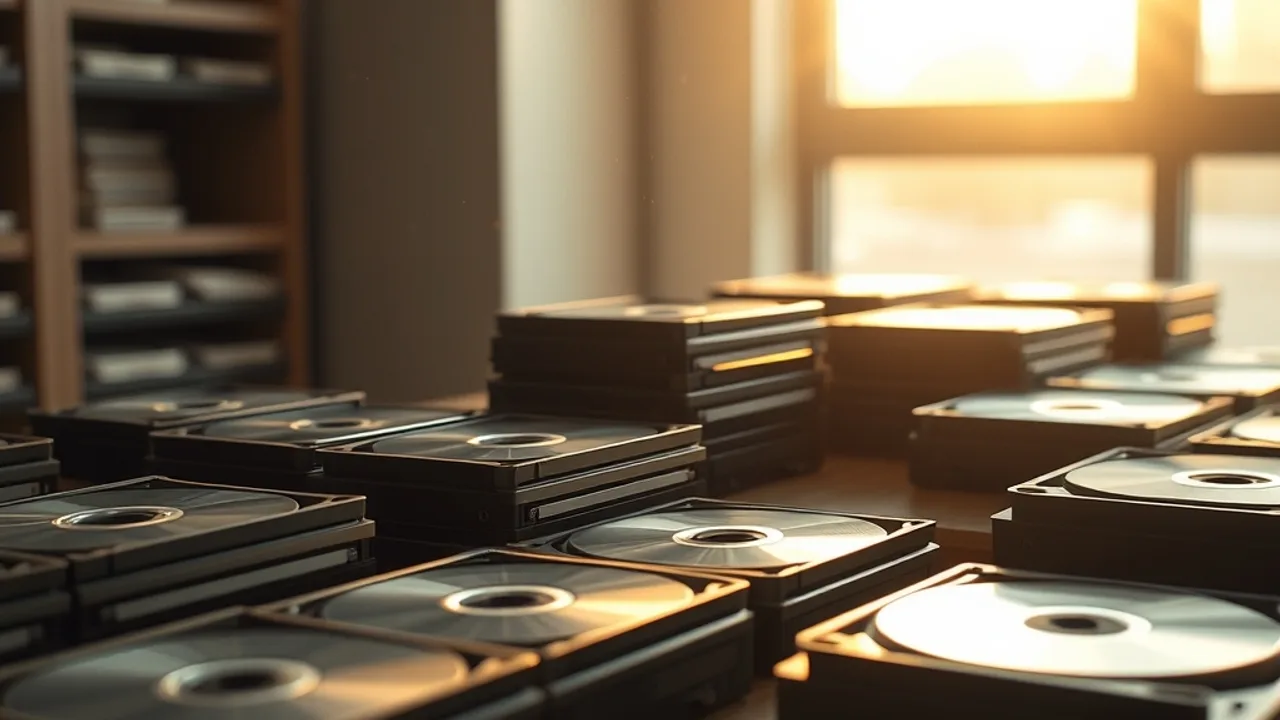
As digital storage needs grow, recordable Blu-ray discs (BD-R) remain a niche but relevant option for archiving data, according to an analysis reported by Engadget on November 11, 2026. While streaming and flash storage have become dominant, Blu-ray discs serve as a cost-effective alternative for long-term archiving.
The durability of these discs is largely defined by their resistance to 'disc rot,' an umbrella term for physical decay processes such as oxidation of the reflective layer, moisture-induced mold, or layer separation. According to data cited from the Canadian Conservation Institute, the lifespan of a BD-R is highly dependent on manufacturing quality. Budget-tier discs are estimated to last between five and 10 years, a range that competes poorly with modern external SSDs. In contrast, higher-quality discs—often utilizing a silicon and copper alloy recording layer and a gold metal layer—are estimated to last between 10 and 20 years.
Rewritable Blu-ray (BD-RE) media show higher potential longevity, with estimates ranging from 20 to 50 years. However, physical fragility remains a primary concern for the format, as discs are susceptible to scratches, cracks, and environmental damage that can render data inaccessible.
Beyond physical degradation, the long-term viability of the format faces industry-level challenges. As optical drives become increasingly rare on modern hardware and manufacturers continue to scale back production, the ability to access archived discs in the coming decades remains uncertain. Even if a disc remains perfectly preserved, the availability of compatible hardware and software drivers may be limited.
Experts advise against relying solely on any single storage medium. For critical data, maintaining a strategy that includes cloud storage and two separate forms of local storage is recommended to ensure file accessibility. For further details, visit the original report from Engadget.
