
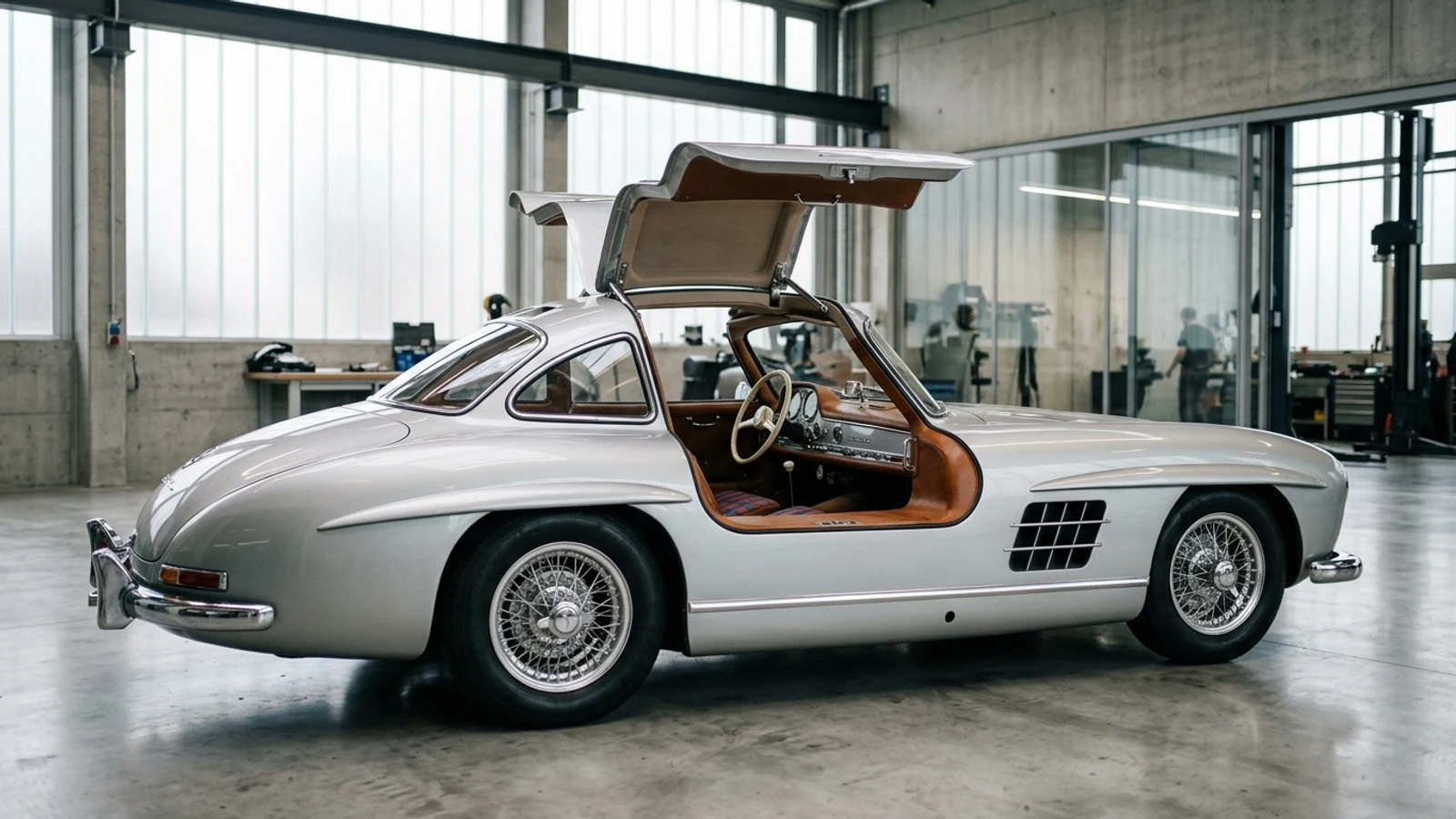
The Mercedes-Benz 300SL remains one of the most recognizable vehicles of the 20th century, primarily due to its signature vertical-opening doors. According to CarBuzz, these doors were not originally conceived as a aesthetic fashion trend, but rather were a forced solution to a fundamental engineering challenge. Mercedes-Benz designers had aimed to create a road-going version of its successful racing machines, yet the requirement for a stiff chassis created a unique dilemma for passenger access that resulted in the gullwing layout. Source
Engineering the Iconic Silhouette
During the early 1950s, following global post-war recovery, Mercedes-Benz sought to capitalize on the increasing commercial interest in high-performance sports cars. The company drew heavy inspiration from its 1952 Le Mans-winning W194 race car when developing the consumer-facing W198 production model. While the race car utilized a 3.0-liter straight-six M194 engine, the production 300SL version employed an evolved powerplant known as the M198, marking the transition from track-focused prototype to limited-run production supercar. Source
The structural foundation of the 300SL was a steel tubular chassis. This design offered significant rigidity, which was critical to minimizing chassis flex during high-speed cornering and enhancing overall handling dynamics. Furthermore, the robust frame was intended to provide increased safety for the driver in the event of a collision. However, the high-running nature of this tubular design meant it interfered with the traditional placement of side doors, necessitating the unique vertical entry solution that defined the model. Source
Because the tubular frame extended higher along the body than a conventional car frame, engineers could not cut out sections for standard doors without compromising structural integrity. Consequently, the bottom edge of the gullwing doors sat approximately halfway up the side of the vehicle. This design forced occupants to climb over both the chassis and the bodywork to enter or exit the cabin. While this created a more difficult entry process, it preserved the intended performance characteristics of the 300SL platform. Source
The body construction utilized lightweight materials to maintain a low weight-to-performance ratio. Specifically, the hood, trunk lid, and door skins were manufactured from advanced aluminum, while the primary body shell remained steel. This attention to weight reduction, paired with aerodynamic sculpting to minimize drag, was intended to maximize the vehicle's top speed. Every design decision, from the door hinge placement to the body shape, was prioritized for mechanical function rather than just visual appeal. Source
The M198 engine further showcased technical ambition, utilizing direct fuel injection by Bosch instead of common carbureted systems of the era. This configuration allowed for smoother operation and improved efficiency, delivering 240 horsepower to the rear wheels through a four-speed manual transmission. To prevent oil pressure loss during intense cornering, engineers implemented a dry sump lubrication system. The result was a vehicle capable of a 0-60 mph acceleration time of less than 7.5 seconds, given its curb weight of 2,855 lbs. Source
Handling was managed by a sophisticated, for the time, all-around independent suspension setup. The front featured double wishbones, while the rear employed a swing-axle configuration. CarBuzz notes that the rear setup introduced specific handling challenges; as the axle moved under load, the wheels experienced extreme camber changes. This often resulted in a reduction of the tire's contact patch, which could cause sudden snap oversteer. While advanced, this characteristic required significant driver focus compared to modern performance standards. Source
Performance and Legacy of the W198
Despite the practical difficulties introduced by the high doors, the design became a celebrated feature of the 300SL. The positive reception to the unconventional entry style encouraged Mercedes-Benz to embrace the unique identity of the Coupe. The subsequent Roadster variant, necessitated by its lack of a roof, moved to standard side-opening doors, but it lacked the specific visual character that the gullwing doors provided to the original Coupe model, remaining a central component of the car's historical significance. Source
When comparing the performance and design aspects of the 300SL Coupe to other vehicles of the early 1950s, the model stood out for its technical complexity. The table below outlines key technical specifications reported regarding the 300SL Coupe. These figures highlight the specialized approach taken by the engineering team to ensure the vehicle performed effectively as both a high-speed track-capable machine and a road-legal vehicle for the public market, balancing structural rigidity with weight management and aerodynamic efficiency. Source
| Feature | Specification |
|---|---|
| Power Output | 240 horsepower |
| Transmission | 4-speed manual |
| Curb Weight | 2,855 lbs |
| 0-60 mph Time | Under 7.5 seconds |
| Engine Type | M198 I6 |
| Induction System | Direct Fuel Injection (Bosch) |
The legacy of the 300SL's design influence is evidenced by the modern Mercedes-Benz SLS supercar, which featured gullwing doors roughly 60 years after the original model's debut. This tribute suggests that the accidental necessity of the original design had a lasting impact on the brand's identity. The 300SL serves as a case study in how design limitations—such as the requirement for a tubular chassis—can sometimes lead to the development of enduring automotive features that become synonymous with a marque. Source
Ultimately, the Mercedes-Benz 300SL represents a historical period where engineers were tasked with bridging the gap between track racing and road production. By refusing to compromise on the tubular chassis that provided the necessary stiffness for its performance goals, Mercedes-Benz established a new silhouette. While the accessibility of the cabin was initially viewed as a trade-off, the resulting aesthetic turned the 300SL into an example of how necessity can drive significant innovation in high-end automotive engineering. Source

