
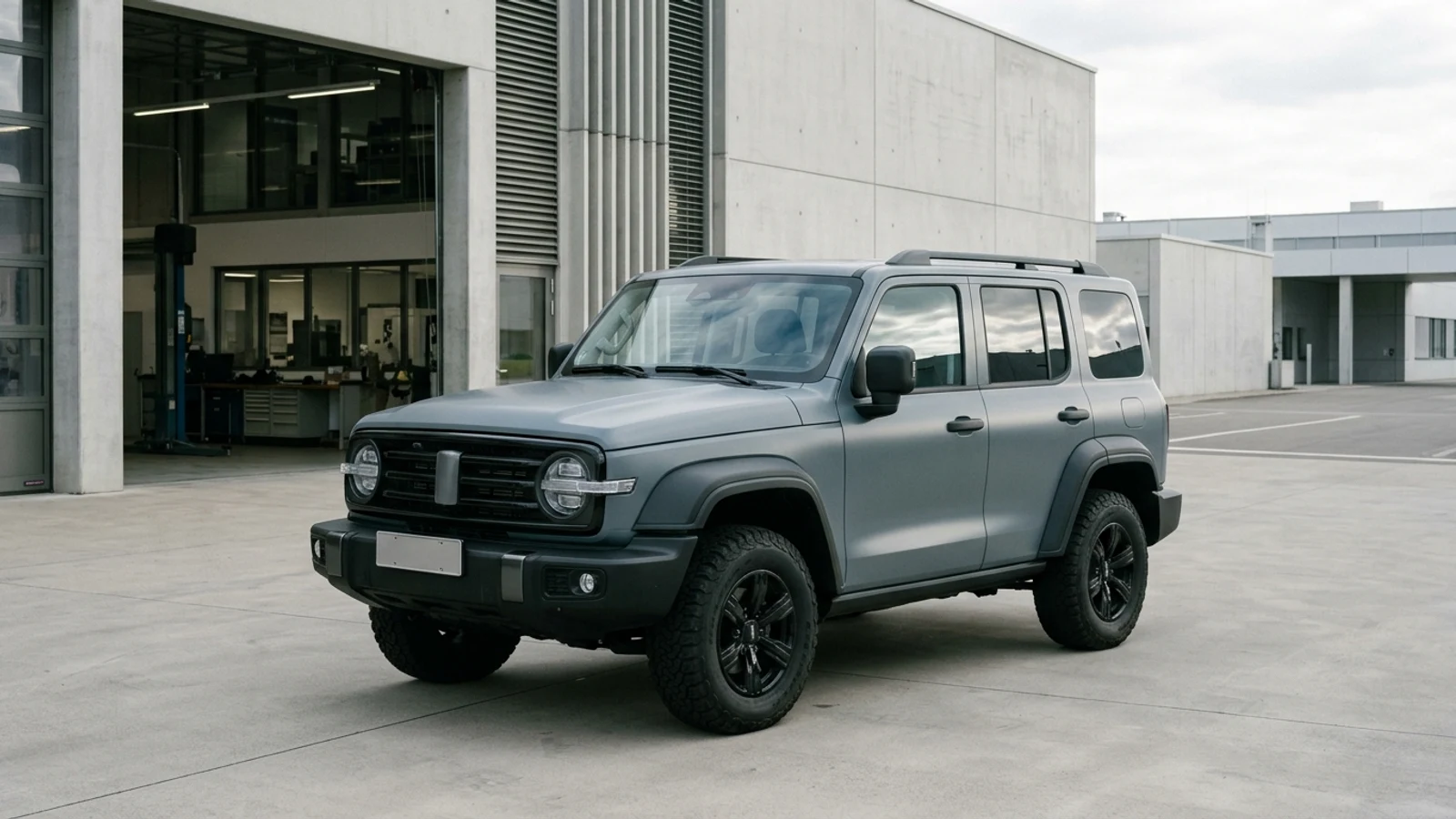
Terrano Engineering and Design
Regulatory documentation from the Chinese Ministry of Industry and Information Technology has revealed the specifications of the upcoming Nissan Terrano, marking a significant step in the model's return to the automotive market. This leaked data, which precedes the manufacturer's own public rollout, provides a comprehensive view of the vehicle's architecture. The SUV, which is built on a body-on-frame platform, is expected to make its formal global debut in early 2027. Source
The Terrano is structurally supported by a ladder-frame chassis, a design choice shared with the Nissan Navara Pro pickup truck, also manufactured by the Dongfeng-Nissan joint venture in China. According to official filings, the SUV measures 5,098 millimeters in length, 1,979 millimeters in width, and 1,961 millimeters in height. With a wheelbase of 2,850 millimeters, the vehicle is categorized as a full-size SUV, designed to offer a robust and spacious interior for passengers. Source
Regarding its off-road capabilities, the Nissan Terrano is engineered with a 36-degree approach angle and a 31-degree departure angle. The production model, which closely mirrors the design language seen in the concept version unveiled in April 2026, features an upright front fascia with squarish LED headlamps and a distinctive three-slot grille. The exterior is further characterized by large wheel arches and a tailgate-mounted spare tire, emphasizing its traditional utility-focused design. Source
Inside, the vehicle is configured exclusively with two rows of seating, distinguishing it from family-oriented three-row haulers. While specific interior features have not been officially confirmed, it is expected that some technology may be sourced from the related Frontier Pro pickup platform. Potential interior equipment includes a 10-inch digital instrument cluster and a 14.6-inch touchscreen infotainment system to satisfy contemporary connectivity demands for the target market. Source
Powertrain and Performance Specifications
The powertrain options confirmed by the Chinese regulatory filings reflect a diverse strategy to meet different operational requirements. The lineup includes a 2.3-liter four-cylinder turbodiesel engine producing 190 horsepower and a 2.0-liter turbocharged four-cylinder gas engine rated at 254 horsepower. For users requiring a hybrid solution, a plug-in hybrid variant is also included in the production plan, which is positioned as the range-topping version of the Terrano. Source
The plug-in hybrid model combines a 2.0-liter turbocharged gasoline engine with an electric motor. The gasoline engine is rated at 204 horsepower, while the electric motor adds 78 horsepower. This configuration results in a combined peak output of 272 horsepower. The hybrid system utilizes a lithium iron phosphate battery, though the specific capacity of this unit remains undisclosed in current documentation. All powertrain versions come standard with a mechanical, shaft-driven four-wheel-drive system. Source
Performance figures suggest different operational limits for the variants. The petrol and diesel versions are reported to have a top speed of 170 km/h. Conversely, the plug-in hybrid variant is rated for a slightly higher top speed of 180 km/h. Towing capacity for the SUV is confirmed at 2,500 kilograms, although this figure is lower than the 3,500 kilogram capacity typically found on its sibling, the Navara Pro pickup. Source
The following table summarizes the key performance specifications for the upcoming Nissan Terrano powertrain variants as documented in the Chinese regulatory filings: Source
| Powertrain | Engine | Total Output | Top Speed | Source
| :--- | :--- | :--- | :--- | Source
| Petrol | 2.0L Turbo | 258 PS | 170 km/h | Source
| Diesel | 2.3L Turbo | 190 PS | 170 km/h | Source
| PHEV | 2.0L Turbo + Electric | 272 PS | 180 km/h | Source
Market availability for the new Terrano is primarily focused on China, where it is produced through a joint venture with Dongfeng. While there is speculation regarding potential releases in other regions like Australia, Japan, and India, Nissan has not issued an official statement regarding global export strategies for this specific nameplate. Some reports indicate that the company has evaluated the possibility of localized assembly for the Indian market as part of a broader revival project. Source
For the North American market, Nissan has maintained a different strategy. Industry reports suggest that the United States will not receive the Terrano. Instead, North America is expected to receive a separate vehicle, identified in reports as an Xterra revival. This US-specific model is projected to enter production in 2028 at the Canton, Mississippi, assembly plant and will feature V6 and V6 hybrid powertrains to comply with local emissions regulations, differing from the four-cylinder setups in the Terrano. Source

